Brunec Iva K, Javadi Amir-Homayoun, Zisch Fiona E L, Spiers Hugo J
Department of Psychology, University of Toronto, Toronto, Canada; Rotman Research Institute, Toronto, Canada.
Institute of Behavioural Neuroscience, Department of Experimental Psychology, University College London, London, UK; School of Psychology, University of Kent, Canterbury, UK.
Cognition. 2017 Sep;166:425-432. doi: 10.1016/j.cognition.2017.06.004. Epub 2017 Jun 16.
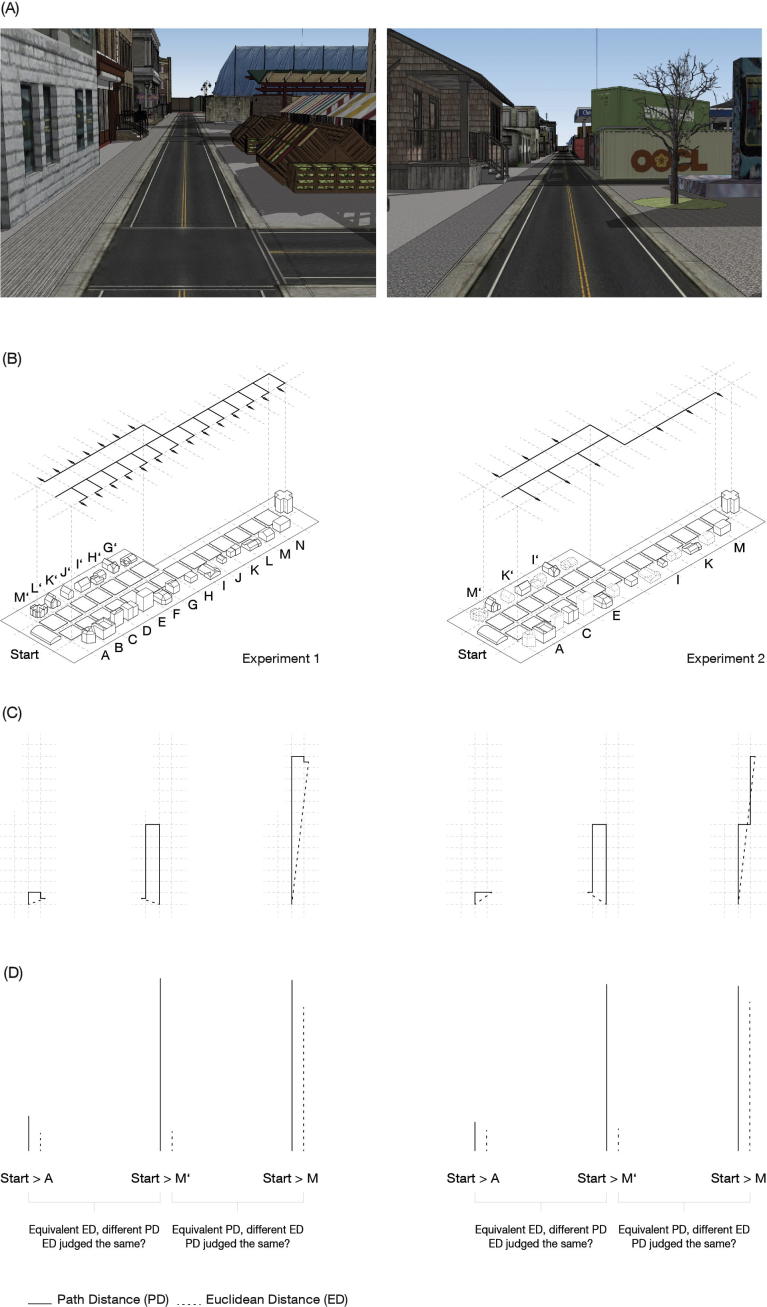
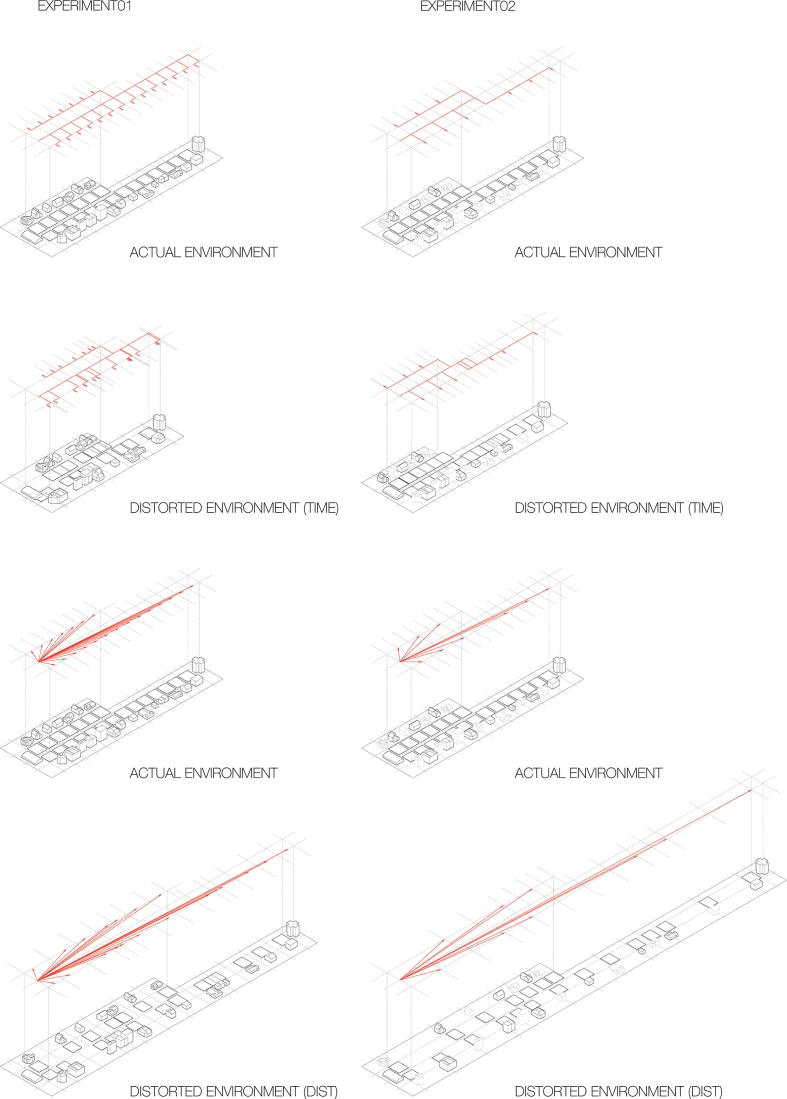
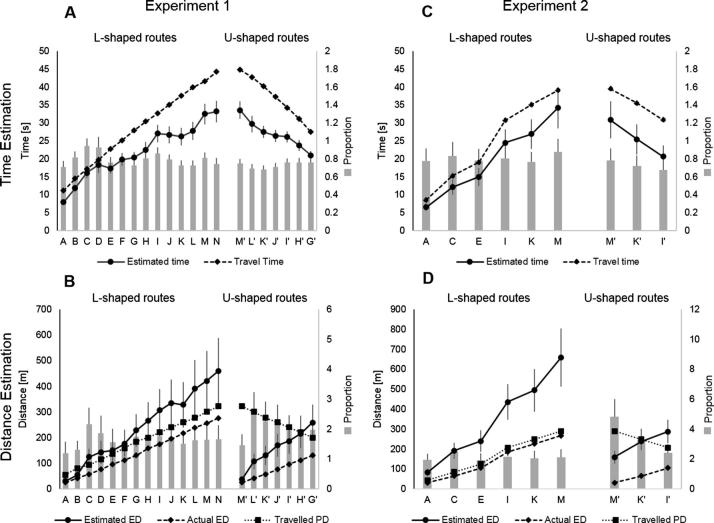
The ability to estimate distance and time to spatial goals is fundamental for survival. In cases where a region of space must be navigated around to reach a location (circumnavigation), the distance along the path is greater than the straight-line Euclidean distance. To explore how such circumnavigation impacts on estimates of distance and time, we tested participants on their ability to estimate travel time and Euclidean distance to learned destinations in a virtual town. Estimates for approximately linear routes were compared with estimates for routes requiring circumnavigation. For all routes, travel times were significantly underestimated, and Euclidean distances overestimated. For routes requiring circumnavigation, travel time was further underestimated and the Euclidean distance further overestimated. Thus, circumnavigation appears to enhance existing biases in representations of travel time and distance.
估计到达空间目标的距离和时间的能力是生存的基础。在必须绕过某个空间区域才能到达某个位置(绕行)的情况下,沿路径的距离大于直线欧几里得距离。为了探究这种绕行如何影响距离和时间的估计,我们测试了参与者在虚拟城镇中估计到达已学习目的地的旅行时间和欧几里得距离的能力。将近似直线路线的估计与需要绕行的路线的估计进行比较。对于所有路线,旅行时间都被显著低估,而欧几里得距离被高估。对于需要绕行的路线,旅行时间被进一步低估,欧几里得距离被进一步高估。因此,绕行似乎会增强旅行时间和距离表征中现有的偏差。