• 文献检索
  • 文档翻译
  • 深度研究
  • 学术资讯
  • Suppr Zotero 插件Zotero 插件
  • 邀请有礼
  • 套餐&价格
  • 历史记录
应用&插件
Suppr Zotero 插件Zotero 插件浏览器插件Mac 客户端Windows 客户端微信小程序
定价
高级版会员购买积分包购买API积分包
服务
文献检索文档翻译深度研究API 文档MCP 服务
关于我们
关于 Suppr公司介绍联系我们用户协议隐私条款
关注我们

Suppr 超能文献

核心技术专利:CN118964589B侵权必究
粤ICP备2023148730 号-1Suppr @ 2026

文献检索

告别复杂PubMed语法,用中文像聊天一样搜索,搜遍4000万医学文献。AI智能推荐,让科研检索更轻松。

立即免费搜索

文件翻译

保留排版,准确专业,支持PDF/Word/PPT等文件格式,支持 12+语言互译。

免费翻译文档

深度研究

AI帮你快速写综述,25分钟生成高质量综述,智能提取关键信息,辅助科研写作。

立即免费体验

茄科枸杞属植物化学成分的系统综述。

Systematic Review of Chemical Constituents in the Genus Lycium (Solanaceae).

作者信息

Qian Dan, Zhao Yaxing, Yang Guang, Huang Luqi

机构信息

Experimental Research Center, China Academy of Chinese Medical Sciences, Beijing 100700, China.

The State Key Laboratory Breeding Base of Dao-di Herbs, National Resource Center for Chinese Materia Medica, China Academy of Chinese Medical Sciences, Beijing 100700, China.

出版信息

Molecules. 2017 Jun 8;22(6):911. doi: 10.3390/molecules22060911.

DOI:10.3390/molecules22060911
PMID:28629116
原文链接:https://pmc.ncbi.nlm.nih.gov/articles/PMC6152755/
Abstract

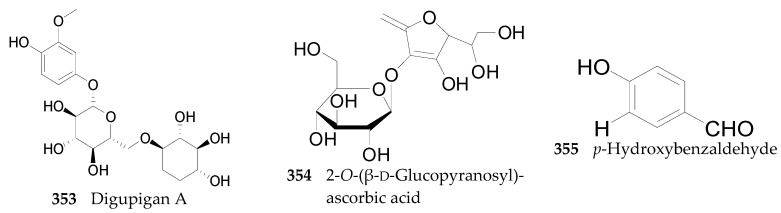
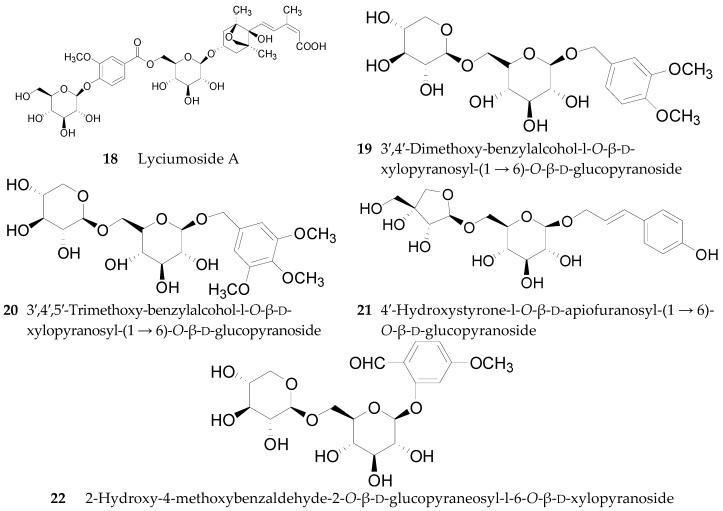
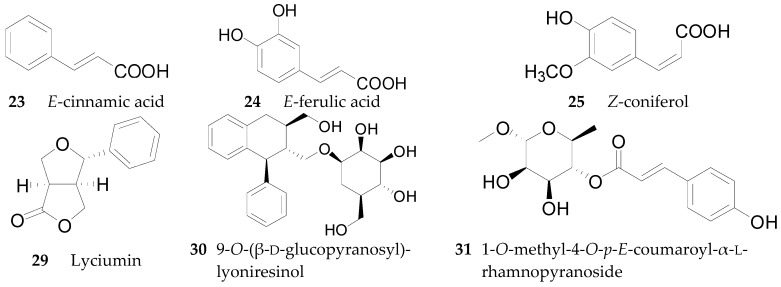
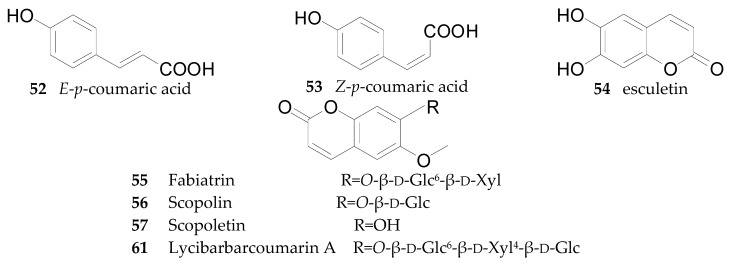
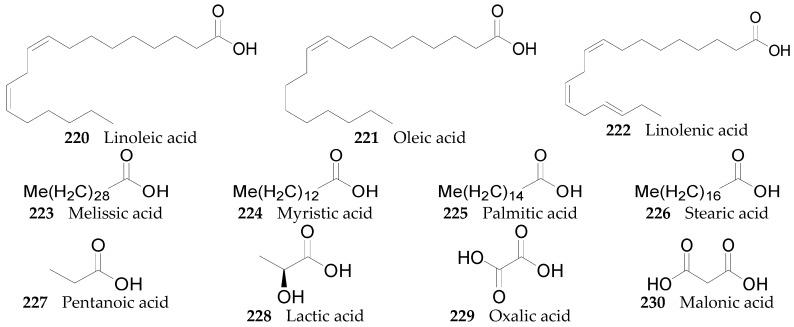
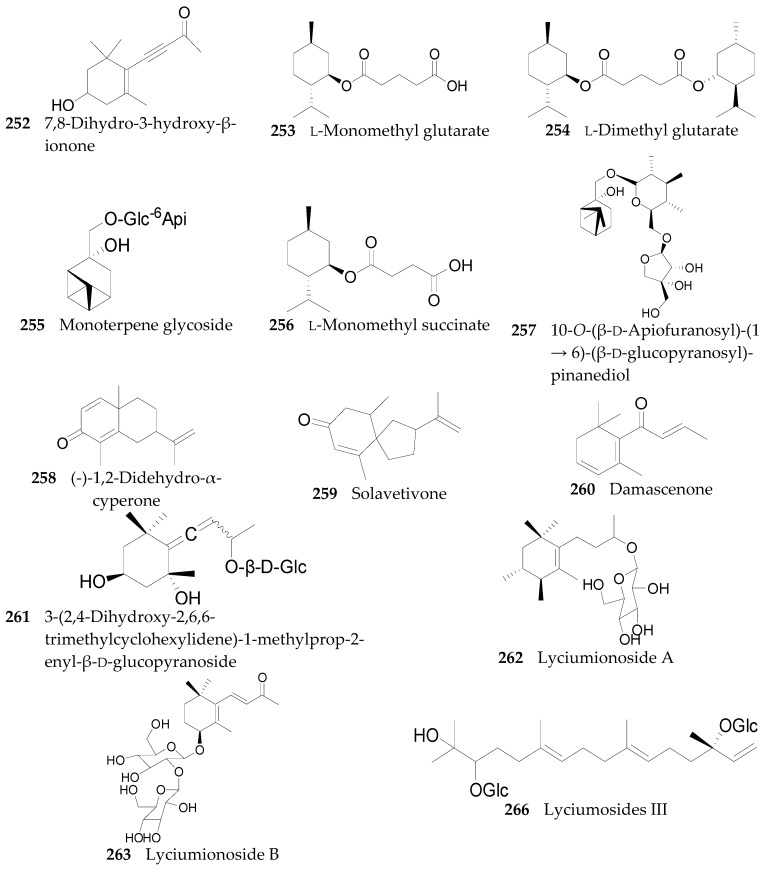
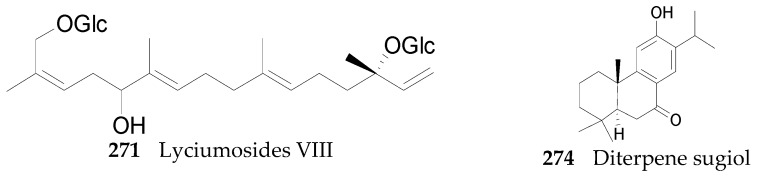
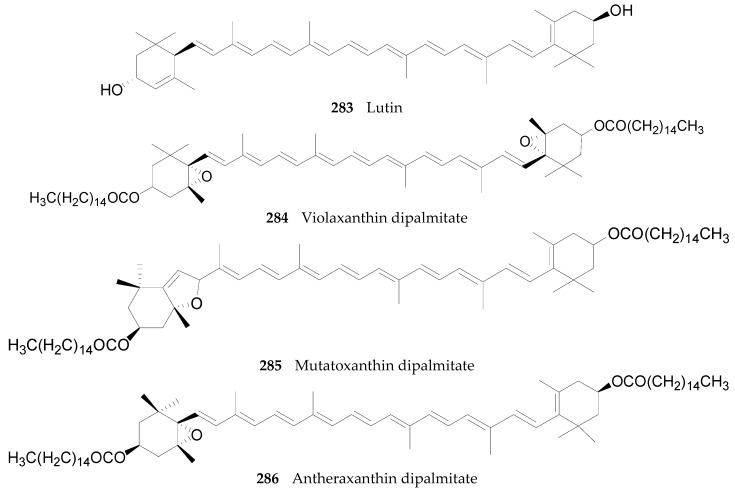
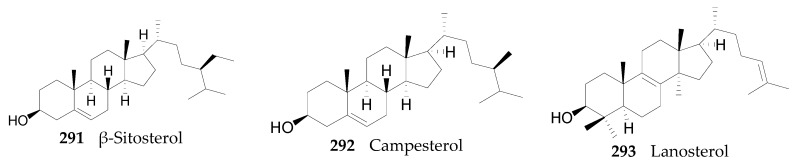
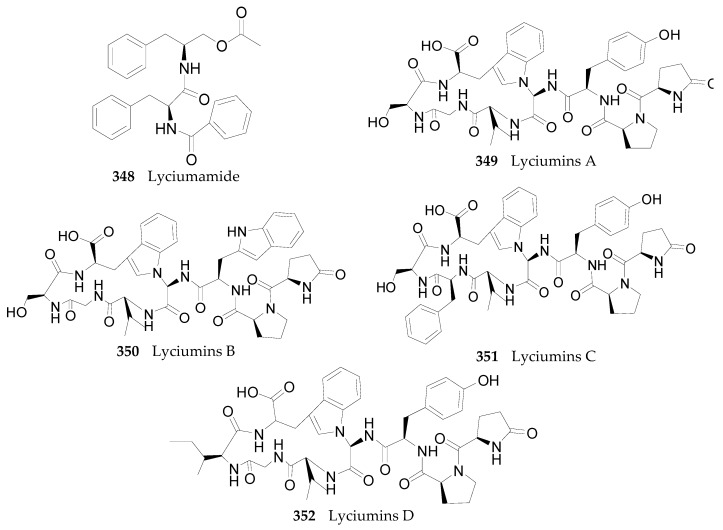
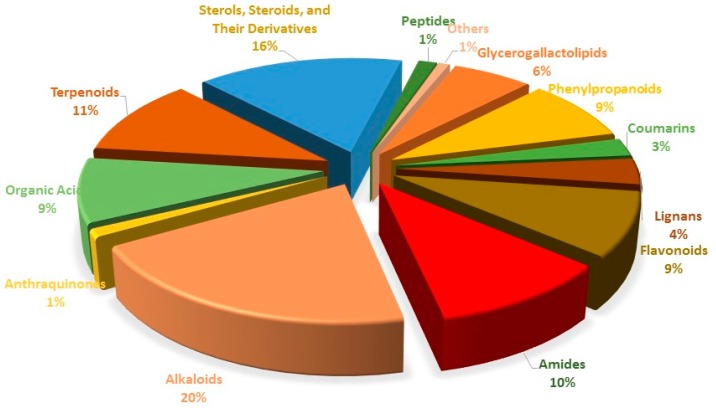
The genus is widely used as a traditional Chinese medicine and functional food. Many of the chemical constituents of the genus were reported previously. In this review, in addition to the polysaccharides, we have enumerated 355 chemical constituents and nutrients, including 22 glycerogalactolipids, 29 phenylpropanoids, 10 coumarins, 13 lignans, 32 flavonoids, 37 amides, 72 alkaloids, four anthraquinones, 32 organic acids, 39 terpenoids, 57 sterols, steroids, and their derivatives, five peptides and three other constituents. This comprehensive study could lay the foundation for further research on the genus.

摘要

该属植物被广泛用作传统中药和功能性食品。此前已报道过该属植物的许多化学成分。在本综述中,除多糖外,我们还列举了355种化学成分和营养成分,包括22种甘油半乳糖脂、29种苯丙素类、10种香豆素、13种木脂素、32种黄酮类、37种酰胺类、72种生物碱、4种蒽醌类、32种有机酸、39种萜类、57种甾醇、类固醇及其衍生物、5种肽和3种其他成分。这项综合性研究可为该属植物的进一步研究奠定基础。
https://cdn.ncbi.nlm.nih.gov/pmc/blobs/c4bf/6152755/b6d2c2b45f76/molecules-22-00911-g024.jpg
https://cdn.ncbi.nlm.nih.gov/pmc/blobs/c4bf/6152755/f80642e3426b/molecules-22-00911-g001.jpg
https://cdn.ncbi.nlm.nih.gov/pmc/blobs/c4bf/6152755/21c812082dd5/molecules-22-00911-g002.jpg
https://cdn.ncbi.nlm.nih.gov/pmc/blobs/c4bf/6152755/d33f80f90aa1/molecules-22-00911-g003.jpg
https://cdn.ncbi.nlm.nih.gov/pmc/blobs/c4bf/6152755/920602752530/molecules-22-00911-g004.jpg
https://cdn.ncbi.nlm.nih.gov/pmc/blobs/c4bf/6152755/46bf38705b54/molecules-22-00911-g005.jpg
https://cdn.ncbi.nlm.nih.gov/pmc/blobs/c4bf/6152755/b8beb22fca42/molecules-22-00911-g006.jpg
https://cdn.ncbi.nlm.nih.gov/pmc/blobs/c4bf/6152755/e95cc6404c4c/molecules-22-00911-g007.jpg
https://cdn.ncbi.nlm.nih.gov/pmc/blobs/c4bf/6152755/dac2254241f8/molecules-22-00911-g008a.jpg
https://cdn.ncbi.nlm.nih.gov/pmc/blobs/c4bf/6152755/e0c7f418c192/molecules-22-00911-g009a.jpg
https://cdn.ncbi.nlm.nih.gov/pmc/blobs/c4bf/6152755/df613765399b/molecules-22-00911-g010.jpg
https://cdn.ncbi.nlm.nih.gov/pmc/blobs/c4bf/6152755/5b1431a4837f/molecules-22-00911-g011.jpg
https://cdn.ncbi.nlm.nih.gov/pmc/blobs/c4bf/6152755/cf5a20fe6275/molecules-22-00911-g012.jpg
https://cdn.ncbi.nlm.nih.gov/pmc/blobs/c4bf/6152755/830c96b2d333/molecules-22-00911-g013.jpg
https://cdn.ncbi.nlm.nih.gov/pmc/blobs/c4bf/6152755/7e3b490b2b8a/molecules-22-00911-g014.jpg
https://cdn.ncbi.nlm.nih.gov/pmc/blobs/c4bf/6152755/ef91e3e9e0d8/molecules-22-00911-g015.jpg
https://cdn.ncbi.nlm.nih.gov/pmc/blobs/c4bf/6152755/ff9f4b325f8e/molecules-22-00911-g016a.jpg
https://cdn.ncbi.nlm.nih.gov/pmc/blobs/c4bf/6152755/1d6fc0c661e1/molecules-22-00911-g017.jpg
https://cdn.ncbi.nlm.nih.gov/pmc/blobs/c4bf/6152755/570884f227b6/molecules-22-00911-g018a.jpg
https://cdn.ncbi.nlm.nih.gov/pmc/blobs/c4bf/6152755/c311f0136b5d/molecules-22-00911-g019.jpg
https://cdn.ncbi.nlm.nih.gov/pmc/blobs/c4bf/6152755/f06867d80bba/molecules-22-00911-g020.jpg
https://cdn.ncbi.nlm.nih.gov/pmc/blobs/c4bf/6152755/be73170d161d/molecules-22-00911-g021a.jpg
https://cdn.ncbi.nlm.nih.gov/pmc/blobs/c4bf/6152755/6198ebe11291/molecules-22-00911-g022a.jpg
https://cdn.ncbi.nlm.nih.gov/pmc/blobs/c4bf/6152755/3d1d1490bd1c/molecules-22-00911-g023.jpg
https://cdn.ncbi.nlm.nih.gov/pmc/blobs/c4bf/6152755/b6d2c2b45f76/molecules-22-00911-g024.jpg
https://cdn.ncbi.nlm.nih.gov/pmc/blobs/c4bf/6152755/f80642e3426b/molecules-22-00911-g001.jpg
https://cdn.ncbi.nlm.nih.gov/pmc/blobs/c4bf/6152755/21c812082dd5/molecules-22-00911-g002.jpg
https://cdn.ncbi.nlm.nih.gov/pmc/blobs/c4bf/6152755/d33f80f90aa1/molecules-22-00911-g003.jpg
https://cdn.ncbi.nlm.nih.gov/pmc/blobs/c4bf/6152755/920602752530/molecules-22-00911-g004.jpg
https://cdn.ncbi.nlm.nih.gov/pmc/blobs/c4bf/6152755/46bf38705b54/molecules-22-00911-g005.jpg
https://cdn.ncbi.nlm.nih.gov/pmc/blobs/c4bf/6152755/b8beb22fca42/molecules-22-00911-g006.jpg
https://cdn.ncbi.nlm.nih.gov/pmc/blobs/c4bf/6152755/e95cc6404c4c/molecules-22-00911-g007.jpg
https://cdn.ncbi.nlm.nih.gov/pmc/blobs/c4bf/6152755/dac2254241f8/molecules-22-00911-g008a.jpg
https://cdn.ncbi.nlm.nih.gov/pmc/blobs/c4bf/6152755/e0c7f418c192/molecules-22-00911-g009a.jpg
https://cdn.ncbi.nlm.nih.gov/pmc/blobs/c4bf/6152755/df613765399b/molecules-22-00911-g010.jpg
https://cdn.ncbi.nlm.nih.gov/pmc/blobs/c4bf/6152755/5b1431a4837f/molecules-22-00911-g011.jpg
https://cdn.ncbi.nlm.nih.gov/pmc/blobs/c4bf/6152755/cf5a20fe6275/molecules-22-00911-g012.jpg
https://cdn.ncbi.nlm.nih.gov/pmc/blobs/c4bf/6152755/830c96b2d333/molecules-22-00911-g013.jpg
https://cdn.ncbi.nlm.nih.gov/pmc/blobs/c4bf/6152755/7e3b490b2b8a/molecules-22-00911-g014.jpg
https://cdn.ncbi.nlm.nih.gov/pmc/blobs/c4bf/6152755/ef91e3e9e0d8/molecules-22-00911-g015.jpg
https://cdn.ncbi.nlm.nih.gov/pmc/blobs/c4bf/6152755/ff9f4b325f8e/molecules-22-00911-g016a.jpg
https://cdn.ncbi.nlm.nih.gov/pmc/blobs/c4bf/6152755/1d6fc0c661e1/molecules-22-00911-g017.jpg
https://cdn.ncbi.nlm.nih.gov/pmc/blobs/c4bf/6152755/570884f227b6/molecules-22-00911-g018a.jpg
https://cdn.ncbi.nlm.nih.gov/pmc/blobs/c4bf/6152755/c311f0136b5d/molecules-22-00911-g019.jpg
https://cdn.ncbi.nlm.nih.gov/pmc/blobs/c4bf/6152755/f06867d80bba/molecules-22-00911-g020.jpg
https://cdn.ncbi.nlm.nih.gov/pmc/blobs/c4bf/6152755/be73170d161d/molecules-22-00911-g021a.jpg
https://cdn.ncbi.nlm.nih.gov/pmc/blobs/c4bf/6152755/6198ebe11291/molecules-22-00911-g022a.jpg
https://cdn.ncbi.nlm.nih.gov/pmc/blobs/c4bf/6152755/3d1d1490bd1c/molecules-22-00911-g023.jpg
https://cdn.ncbi.nlm.nih.gov/pmc/blobs/c4bf/6152755/b6d2c2b45f76/molecules-22-00911-g024.jpg

相似文献

1
Systematic Review of Chemical Constituents in the Genus Lycium (Solanaceae).茄科枸杞属植物化学成分的系统综述。
Molecules. 2017 Jun 8;22(6):911. doi: 10.3390/molecules22060911.
2
Aconitum carmichaelii Debeaux: A systematic review on traditional use, and the chemical structures and pharmacological properties of polysaccharides and phenolic compounds in the roots.北乌头:对其块根中的多糖和酚类化合物的传统用途、化学结构和药理性质的系统评价。
J Ethnopharmacol. 2022 Jun 12;291:115148. doi: 10.1016/j.jep.2022.115148. Epub 2022 Feb 28.
3
Traditional processing, uses, phytochemistry, pharmacology and toxicology of Aconitum sinomontanum Nakai: A comprehensive review.滇西乌头的传统加工、用途、植物化学、药理学及毒理学:综述
J Ethnopharmacol. 2022 Jul 15;293:115317. doi: 10.1016/j.jep.2022.115317. Epub 2022 Apr 22.
4
Traditional uses, phytochemistry, pharmacology, toxicology and formulation aspects of Glycosmis species: A systematic review.甘桔属植物的传统用途、植物化学、药理学、毒理学和制剂研究:系统评价。
Phytochemistry. 2021 Oct;190:112865. doi: 10.1016/j.phytochem.2021.112865. Epub 2021 Jul 24.
5
Systematic review of the alkaloid constituents in several important medicinal plants of the Genus Corydalis.几种重要紫堇属药用植物生物碱成分的系统综述。
Phytochemistry. 2021 Mar;183:112644. doi: 10.1016/j.phytochem.2020.112644. Epub 2021 Jan 9.
6
Antioxidant property of Silver Nanoparticles Loaded with Alcoholic Extraction of Lycium Shawii.负载肖枸杞醇提物的银纳米颗粒的抗氧化性能
Asian Pac J Cancer Prev. 2025 Jun 1;26(6):2197-2204. doi: 10.31557/APJCP.2025.26.6.2197.
7
A review of the ethnopharmacology, phytochemistry and pharmacology of Notopterygium incisum.对羌活的民族药理学、植物化学和药理学的综述。
J Ethnopharmacol. 2017 Apr 18;202:241-255. doi: 10.1016/j.jep.2017.03.022. Epub 2017 Mar 21.
8
The melanin inhibitory effect of plants and phytochemicals: A systematic review.植物和植物化学物质的黑色素抑制作用:系统评价。
Phytomedicine. 2022 Dec;107:154449. doi: 10.1016/j.phymed.2022.154449. Epub 2022 Sep 6.
9
Comprehensive Profiling of Chemical Constituents and Metabolites of the Angelica sinensis-Sophora flavescens Herbal Pair in Plasma and Urine via UHPLC-Q-TOF-MS Coupled With Multi-Platform Data Integration.基于UHPLC-Q-TOF-MS联用多平台数据整合技术对当归-苦参药对血浆和尿液中化学成分及代谢产物的全面分析
J Sep Sci. 2025 Jun;48(6):e70201. doi: 10.1002/jssc.70201.
10
Unveiling the components, physiological functions and emerging trends of hydroxycinnamic acid amides in goji berry (Lycium).揭示枸杞(枸杞属)中羟基肉桂酸酰胺的成分、生理功能及新趋势。
Food Res Int. 2025 Aug;214:116696. doi: 10.1016/j.foodres.2025.116696. Epub 2025 May 19.

引用本文的文献

1
A 20-Year Retrospective Analysis of Plant Poisoning Cases at the Naval Hospital, Varna, Bulgaria.保加利亚瓦尔纳海军医院植物中毒病例的20年回顾性分析。
Toxins (Basel). 2025 Apr 12;17(4):197. doi: 10.3390/toxins17040197.
2
Research progress in the treatment of an immune system disease-type 1 diabetes-by regulating the intestinal flora with Chinese medicine and food homologous drugs.通过药食同源药物调节肠道菌群治疗免疫系统疾病——1型糖尿病的研究进展
Biosci Microbiota Food Health. 2024;43(3):150-161. doi: 10.12938/bmfh.2023-068. Epub 2024 Feb 21.
3
Anticancer Therapies Based on Oxidative Damage: Inhibits the Proliferation of MCF-7 Cells by Activating Pyroptosis through Endoplasmic Reticulum Stress.

本文引用的文献

1
Chinese herbal drugs for the treatment of diabetic retinopathy.用于治疗糖尿病视网膜病变的中草药
J Pharm Pharmacol. 2017 Mar;69(3):223-235. doi: 10.1111/jphp.12683. Epub 2017 Jan 26.
2
Densitometric TLC analysis for the control of tropane and steroidal alkaloids in Lycium barbarum.用密度测定 TLC 分析法控制枸杞中的莨菪烷和甾体生物碱。
Food Chem. 2017 Apr 15;221:535-540. doi: 10.1016/j.foodchem.2016.11.142. Epub 2016 Nov 28.
3
Effect of Raw Material, Pressing and Glycosidase on the Volatile Compound Composition of Wine Made From Goji Berries.
基于氧化损伤的抗癌疗法:通过内质网应激激活细胞焦亡抑制MCF-7细胞增殖。
Antioxidants (Basel). 2024 Jun 11;13(6):708. doi: 10.3390/antiox13060708.
4
The Medicinal Species of the Lycium Genus (Goji Berries) in East Asia: A Review of Its Effect on Cell Signal Transduction Pathways.东亚枸杞属药用植物(枸杞):对细胞信号转导通路影响的综述
Plants (Basel). 2024 May 31;13(11):1531. doi: 10.3390/plants13111531.
5
Functional and structural dissection of glycosyltransferases underlying the glycodiversity of wolfberry-derived bioactive ingredients lycibarbarspermidines.解析枸杞源生物活性成分甜茅定碱糖基转移酶的功能和结构多样性。
Nat Commun. 2024 May 30;15(1):4588. doi: 10.1038/s41467-024-49010-9.
6
Effects of different nitrogen application rates and picking batches on the nutritional components of L. fruits.不同施氮量和采摘批次对枸杞果实营养成分的影响。
Front Plant Sci. 2024 Apr 24;15:1355832. doi: 10.3389/fpls.2024.1355832. eCollection 2024.
7
Diversity of Arbuscular Mycorrhizal Fungi of the Rhizosphere of L. from Four Main Producing Areas in Northwest China and Their Effect on Plant Growth.中国西北四个主要产区枸杞根际丛枝菌根真菌的多样性及其对植物生长的影响
J Fungi (Basel). 2024 Apr 12;10(4):286. doi: 10.3390/jof10040286.
8
Unveiling the Antioxidant, Cytotoxic, and Anti-Inflammatory Activities and Chemical Compositional Information of an Invasive Plant: Miers.揭示一种入侵植物——米尔氏草的抗氧化、细胞毒性、抗炎活性及化学组成信息
Plants (Basel). 2024 Apr 6;13(7):1035. doi: 10.3390/plants13071035.
9
Antitumor Mechanisms of Fruit: An Overview of In Vitro and In Vivo Potential.水果的抗肿瘤机制:体内外潜力概述
Life (Basel). 2024 Mar 21;14(3):420. doi: 10.3390/life14030420.
10
Evidence-based herbal treatments in liver diseases.肝病的循证草药治疗
Hepatol Forum. 2024 Jan 16;5(1):50-60. doi: 10.14744/hf.2022.2022.0052. eCollection 2024.
原料、压榨和糖苷酶对枸杞酒挥发性化合物组成的影响
Molecules. 2016 Oct 2;21(10):1324. doi: 10.3390/molecules21101324.
4
Polyphenols from wolfberry and their bioactivities.枸杞中的多酚及其生物活性。
Food Chem. 2017 Jan 1;214:644-654. doi: 10.1016/j.foodchem.2016.07.105. Epub 2016 Jul 19.
5
Simultaneous determination of molecular weights and contents of water-soluble polysaccharides and their fractions from Lycium barbarum collected in China.同时测定中国产枸杞中水溶性多糖及其级分的分子量和含量
J Pharm Biomed Anal. 2016 Sep 10;129:210-218. doi: 10.1016/j.jpba.2016.07.005. Epub 2016 Jul 6.
6
Structure characterization, chemical and enzymatic degradation, and chain conformation of an acidic polysaccharide from Lycium barbarum L.枸杞酸性多糖的结构表征、化学和酶降解及链构象
Carbohydr Polym. 2016 Aug 20;147:114-124. doi: 10.1016/j.carbpol.2016.03.087. Epub 2016 Apr 1.
7
Two new sesquiterpenoid glycosides from the leaves of Lycium barbarum.来自枸杞叶的两种新倍半萜糖苷。
J Asian Nat Prod Res. 2016 Sep;18(9):871-7. doi: 10.1080/10286020.2016.1171756. Epub 2016 May 13.
8
Lycibarbarspermidines A-O, New Dicaffeoylspermidine Derivatives from Wolfberry, with Activities against Alzheimer's Disease and Oxidation.枸杞中的新二咖啡酰亚精胺衍生物枸杞碱A - O,具有抗阿尔茨海默病和抗氧化活性。
J Agric Food Chem. 2016 Mar 23;64(11):2223-37. doi: 10.1021/acs.jafc.5b05274. Epub 2016 Mar 8.
9
Identification of new pyrrole alkaloids from the fruits of Lycium chinense.从宁夏枸杞果实中鉴定新的吡咯生物碱。
Arch Pharm Res. 2016 Mar;39(3):321-7. doi: 10.1007/s12272-015-0695-3. Epub 2015 Dec 17.
10
Characterization and comparison of polysaccharides from Lycium barbarum in China using saccharide mapping based on PACE and HPTLC.采用基于 PACE 和 HPTLC 的糖谱分析对中国枸杞中的多糖进行表征和比较。
Carbohydr Polym. 2015 Dec 10;134:12-9. doi: 10.1016/j.carbpol.2015.07.052. Epub 2015 Jul 18.