Ma Xiaojun, Lin Ligen, Yue Jing, Wu Chia-Shan, Guo Cathy A, Wang Ruitao, Yu Kai-Jiang, Devaraj Sridevi, Murano Peter, Chen Zheng, Sun Yuxiang
Department of Internal Medicine, Zhengzhou University, Zhengzhou 450052, China.
Department of Pediatrics, Baylor College of Medicine, Houston, TX 77030, USA.
Int J Mol Sci. 2017 Jun 19;18(6):1302. doi: 10.3390/ijms18061302.
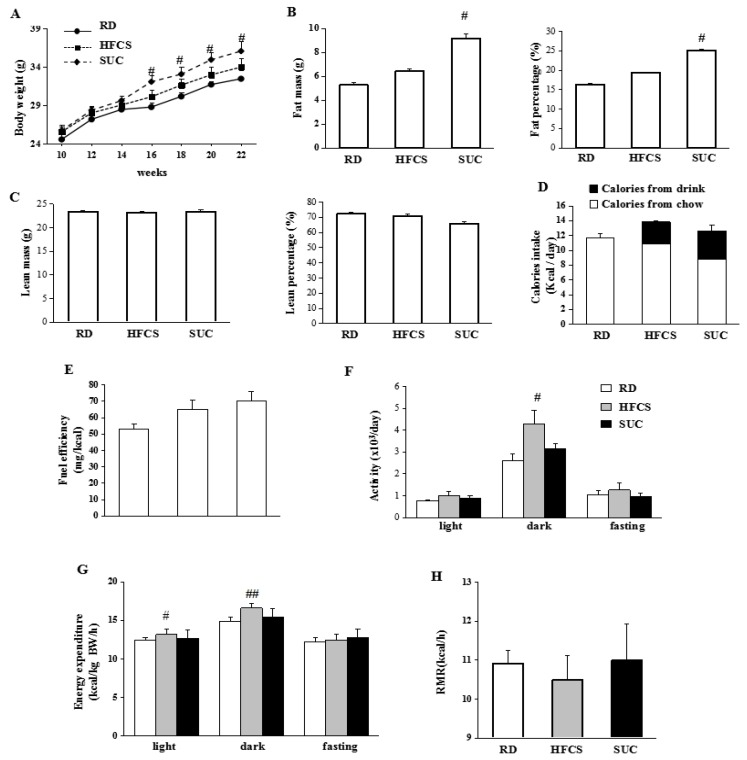
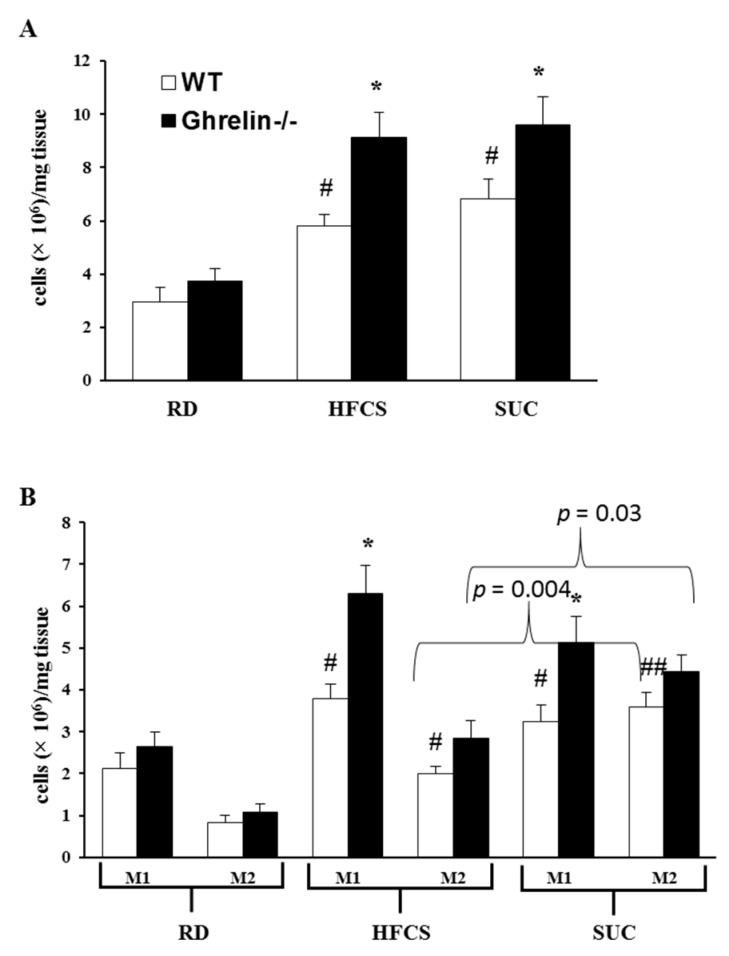
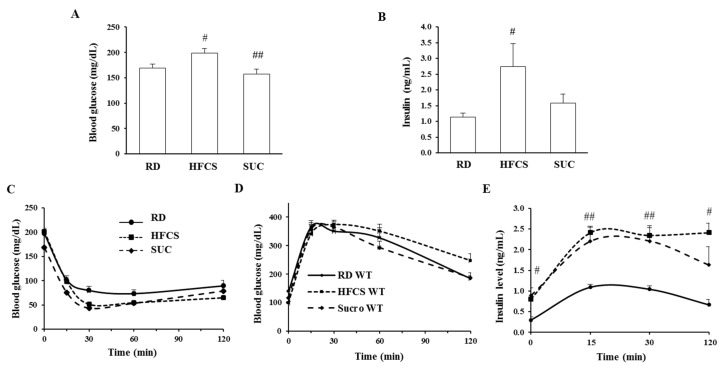
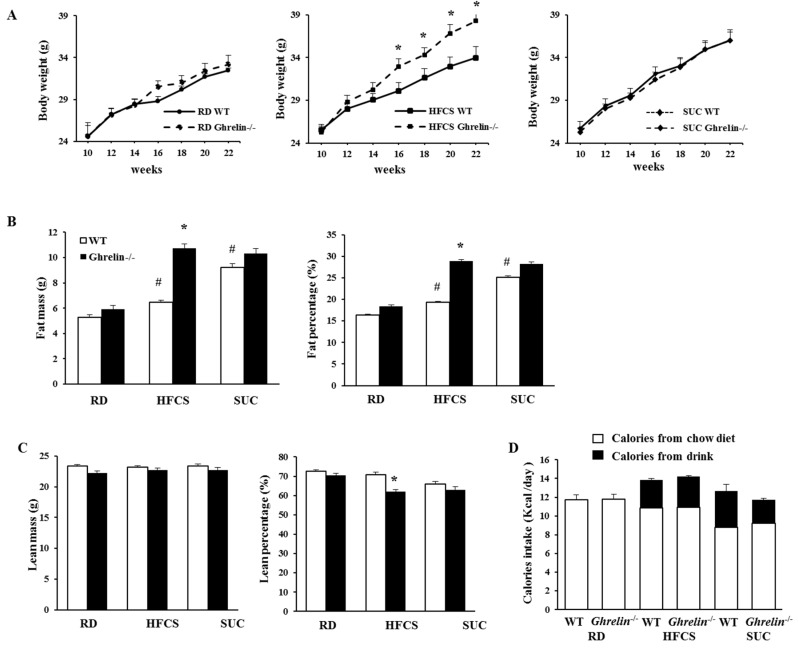
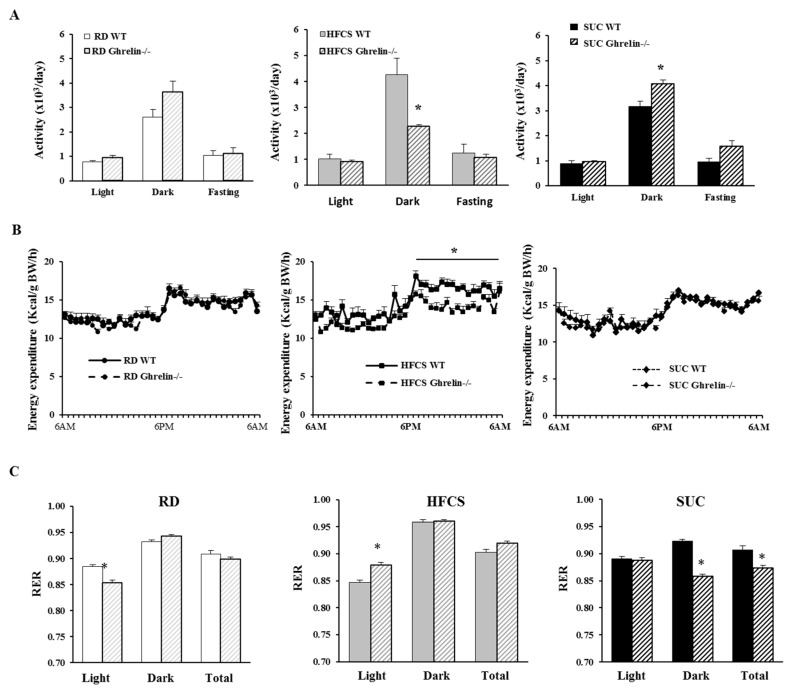
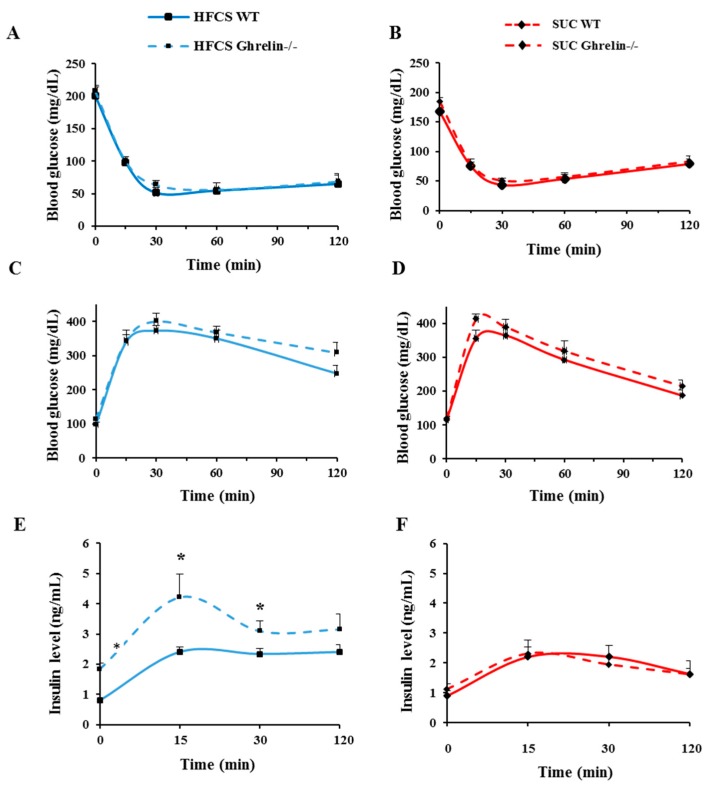
High fructose corn syrup (HFCS) is widely used as sweetener in processed foods and soft drinks in the United States, largely substituting sucrose (SUC). The orexigenic hormone ghrelin promotes obesity and insulin resistance; ghrelin responds differently to HFCS and SUC ingestion. Here we investigated the roles of ghrelin in HFCS- and SUC-induced adiposity and insulin resistance. To mimic soft drinks, 10-week-old male wild-type (WT) and ghrelin knockout () mice were subjected to ad lib. regular chow diet supplemented with either water (RD), 8% HFCS (HFCS), or 10% sucrose (SUC). We found that SUC-feeding induced more robust increases in body weight and body fat than HFCS-feeding. Comparing to SUC-fed mice, HFCS-fed mice showed lower body weight but higher circulating glucose and insulin levels. Interestingly, we also found that ghrelin deletion exacerbates HFCS-induced adiposity and inflammation in adipose tissues, as well as whole-body insulin resistance. Our findings suggest that HFCS and SUC have differential effects on lipid metabolism: while sucrose promotes obesogenesis, HFCS primarily enhances inflammation and insulin resistance, and ghrelin confers protective effects for these metabolic dysfunctions.
高果糖玉米糖浆(HFCS)在美国被广泛用作加工食品和软饮料中的甜味剂,很大程度上替代了蔗糖(SUC)。食欲肽胃饥饿素会促进肥胖和胰岛素抵抗;胃饥饿素对摄入HFCS和SUC的反应不同。在此,我们研究了胃饥饿素在HFCS和SUC诱导的肥胖及胰岛素抵抗中的作用。为模拟软饮料,对10周龄雄性野生型(WT)和胃饥饿素基因敲除()小鼠随意喂食正常饮食,并补充水(RD)、8% HFCS(HFCS)或10%蔗糖(SUC)。我们发现,与喂食HFCS相比,喂食SUC能更显著地增加体重和体脂。与喂食SUC的小鼠相比,喂食HFCS的小鼠体重较低,但循环葡萄糖和胰岛素水平较高。有趣的是,我们还发现胃饥饿素缺失会加剧HFCS诱导的脂肪组织肥胖和炎症以及全身胰岛素抵抗。我们的研究结果表明,HFCS和SUC对脂质代谢有不同影响:蔗糖促进肥胖发生,而HFCS主要增强炎症和胰岛素抵抗,并且胃饥饿素对这些代谢功能障碍具有保护作用。