Rohweder Gitta, Salvesen Øyvind, Ellekjær Hanne, Indredavik Bent
From the Stroke Unit, Department of Internal Medicine, St Olav's Hospital, University Hospital of Trondheim, Harald Hardraades gate 5, 7030, Trondheim, Norway.
The Institute for Neuromedicine (INM), Faculty of Medicine and Health Sciences, Norwegian University of Science And Technology (NTNU), Trondheim, Norway.
BMC Neurol. 2017 Jun 19;17(1):116. doi: 10.1186/s12883-017-0897-z.
The aim of this study was to examine the hospital readmissions in a 10 year follow-up of a stroke cohort previously studied for acute and subacute complications and to focus on their frequency, their causes and their timing.
The hospital records of 243 patients, 50% of a cohort of 489 patients acutely and consecutively admitted to our stroke unit in 2002/3, were subjected to review 10 years after the incidental stroke and all acute admissions were examined. The main admitting diagnoses were attributed to one of 18 predefined categories of illness. Additionally, the occurrence of death was registered.
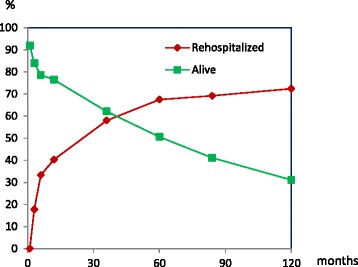
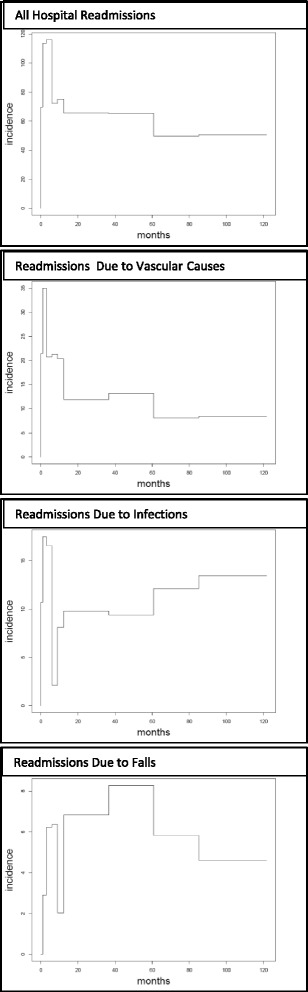
After 10 years 68.9% of patients had died and 72.4% had been readmitted to the hospital with a mean number of readmissions of 3.4 (+15.1 SD). 20% of the readmissions were due to a vascular cause, 17.3% were caused by infection, 9.3% by falls with (6.1%) and without fracture, 5.7% by a hemorrhagic event. The readmission rate was highest in the first 6 months post stroke with a rate of 116.2 admissions/100 live patient-years. Falls with fractures occurred maximally 3-5 years post stroke.
Hospital readmissions over the 10 years following stroke are caused by vascular events, infections, falls and hemorrhagic events, where the first 6 months are a period of particular vulnerability. The magnitude and the spectrum of these long-term complications suggest the need for a more comprehensive approach to post stroke prophylaxis.
本研究旨在对一个曾针对急性和亚急性并发症进行研究的卒中队列进行10年随访,以检查其再入院情况,并关注再入院的频率、原因及时间。
对2002/2003年急性且连续入住我们卒中单元的489例患者队列中的243例患者(占50%)的医院记录,在发生偶发性卒中10年后进行回顾,并检查所有急性入院情况。主要入院诊断归因于18个预定义疾病类别中的一种。此外,记录死亡的发生情况。
10年后,68.9%的患者死亡,72.4%的患者再次入院,平均再入院次数为3.4次(标准差为15.1)。20%的再入院是由于血管性原因,17.3%是由感染引起,9.3%是因跌倒(其中6.1%伴有骨折,3.2%不伴有骨折),5.7%是由出血事件导致。卒中后前6个月的再入院率最高,为116.2次入院/100存活患者年。伴有骨折的跌倒最多发生在卒中后3 - 5年。
卒中后10年的医院再入院是由血管事件、感染、跌倒和出血事件引起的,其中前6个月是特别易发生再入院的时期。这些长期并发症的严重程度和范围表明需要采取更全面的卒中后预防方法。