Aglago Elom Kouassivi, Landais Edwige, Nicolas Geneviève, Margetts Barrie, Leclercq Catherine, Allemand Pauline, Aderibigbe Olaide, Agueh Victoire Damienne, Amuna Paul, Annor George Amponsah, El Ati Jalila, Coates Jennifer, Colaiezzi Brooke, Compaore Ella, Delisle Hélène, Faber Mieke, Fungo Robert, Gouado Inocent, El Hamdouchi Asmaa, Hounkpatin Waliou Amoussa, Konan Amoin Georgette, Labzizi Saloua, Ledo James, Mahachi Carol, Maruapula Segametsi Ditshebo, Mathe Nonsikelelo, Mbabazi Muniirah, Mirembe Mandy Wilja, Mizéhoun-Adissoda Carmelle, Nzi Clement Diby, Pisa Pedro Terrence, El Rhazi Karima, Zotor Francis, Slimani Nadia
Nutrition and Metabolism Section (NME), International Agency for Research on Cancer (IARC/WHO), 150 Cours Albert Thomas, 69372, Lyon, France.
UMR 204 'Nutripass' IRD/UM/SupAgro, Montpellier, France.
Global Health. 2017 Jun 19;13(1):35. doi: 10.1186/s12992-017-0260-6.
Collection of reliable and comparable individual food consumption data is of primary importance to better understand, control and monitor malnutrition and its related comorbidities in low- and middle-income countries (LMICs), including in Africa. The lack of standardised dietary tools and their related research support infrastructure remains a major obstacle to implement concerted and region-specific research and action plans worldwide. Citing the magnitude and importance of this challenge, the International Agency for Research on Cancer (IARC/WHO) launched the "Global Nutrition Surveillance initiative" to pilot test the use of a standardized 24-h dietary recall research tool (GloboDiet), validated in Europe, in other regions. In this regard, the development of the GloboDiet-Africa can be optimised by better understanding of the local specific methodological needs, barriers and opportunities. The study aimed to evaluate the standardized 24-h dietary recall research tool (GloboDiet) as a possible common methodology for research and surveillance across Africa.
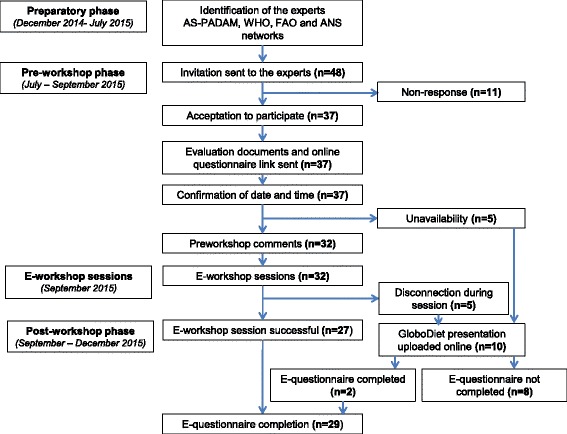
A consultative panel of African and international experts in dietary assessment participated in six e-workshop sessions. They completed an in-depth e-questionnaire to evaluate the GloboDiet dietary methodology before and after participating in the e-workshop.
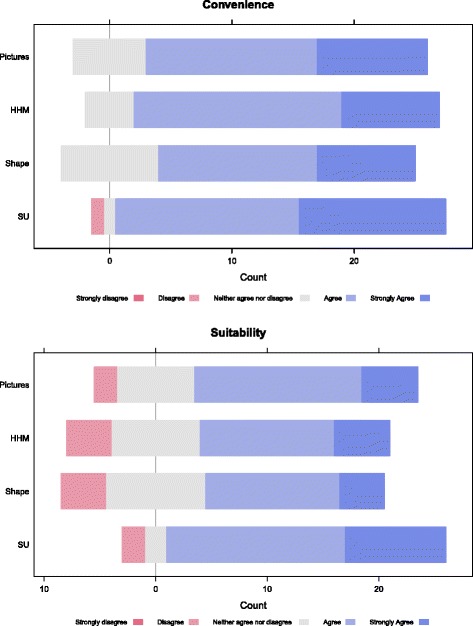
The 29 experts expressed their satisfaction on the potential of the software to address local specific needs when evaluating the main structure of the software, the stepwise approach for data collection and standardisation concept. Nevertheless, additional information to better describe local foods and recipes, as well as particular culinary patterns (e.g. mortar pounding), were proposed. Furthermore, food quantification in shared-plates and -bowls eating situations and interviewing of populations with low literacy skills, especially in rural settings, were acknowledged as requiring further specific considerations and appropriate solutions.
An overall positive evaluation of the GloboDiet methodology by both African and international experts, supports the flexibility and potential applicability of this tool in diverse African settings and sets a positive platform for improved dietary monitoring and surveillance. Following this evaluation, prerequisite for future implementation and/or adaptation of GloboDiet in Africa, rigorous and robust capacity building as well as knowledge transfer will be required to roadmap a stepwise approach to implement this methodology across pilot African countries/regions.
收集可靠且具有可比性的个人食物消费数据对于更好地理解、控制和监测低收入和中等收入国家(LMICs)(包括非洲国家)的营养不良及其相关合并症至关重要。缺乏标准化的饮食工具及其相关的研究支持基础设施仍然是在全球范围内实施协调一致的、针对特定区域的研究和行动计划的主要障碍。鉴于这一挑战的规模和重要性,国际癌症研究机构(IARC/WHO)发起了“全球营养监测倡议”,以试点测试在欧洲经过验证的标准化24小时饮食回顾研究工具(GloboDiet)在其他地区的使用情况。在这方面,通过更好地了解当地特定的方法需求、障碍和机遇,可以优化非洲版GloboDiet(GloboDiet-Africa)的开发。本研究旨在评估标准化的24小时饮食回顾研究工具(GloboDiet)作为非洲各地研究和监测的一种可能的通用方法。
一个由非洲和国际饮食评估专家组成的咨询小组参加了六次电子研讨会。他们在参加电子研讨会之前和之后完成了一份深入的电子问卷,以评估GloboDiet饮食方法。
29位专家在评估软件的主要结构、数据收集的逐步方法和标准化概念时,对该软件满足当地特定需求的潜力表示满意。然而,他们建议提供更多信息以更好地描述当地食物和食谱,以及特定的烹饪方式(如舂捣)。此外,大家认识到在共享盘碗用餐情况下的食物定量以及对低识字技能人群(尤其是农村地区)的访谈需要进一步的具体考虑和适当解决方案。
非洲和国际专家对GloboDiet方法的总体积极评价,支持了该工具在非洲不同环境中的灵活性和潜在适用性,并为改善饮食监测和监督奠定了积极的基础。经过此次评估,未来在非洲实施和/或调整GloboDiet的前提条件是,需要进行严格且有力的能力建设以及知识转移,以便规划出在非洲试点国家/地区逐步实施该方法的路线。