Bi Sheng, Chai Linlin, Yuan Xi, Cao Chuan, Li Shirong
Department of Plastic and Reconstructive Surgery, Southwest Hospital, Third Military Medical University, 29 Gaotanyan Main Street, Shapingba District, Chongqing, 400038, China.
Biol Res. 2017 Jun 19;50(1):22. doi: 10.1186/s40659-017-0127-6.
Hypertrophic scarring (HS) is a severe disease, and results from unusual wound healing. Col1A1 could promote the hypertrophic scar formation, and the expression of Col1A1 in HS tissue was markedly higher than that in the normal. In present study, we aimed to identify miRNAs as post-transcriptional regulators of Col1A1 in HS.
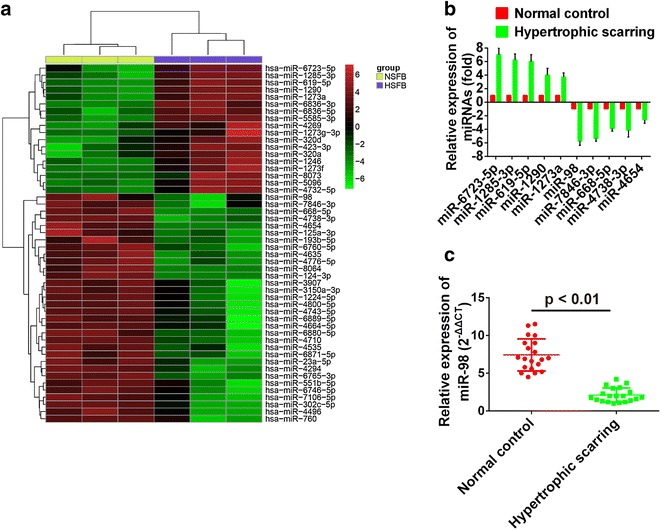
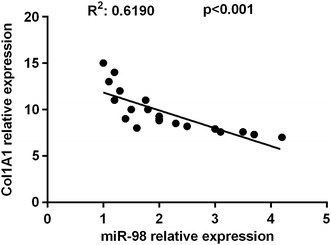
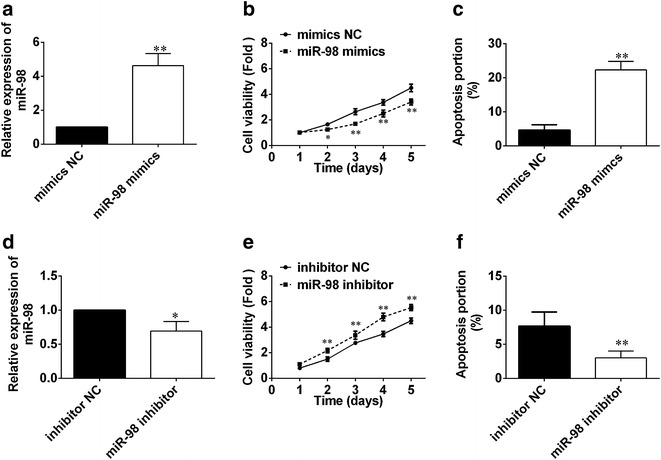
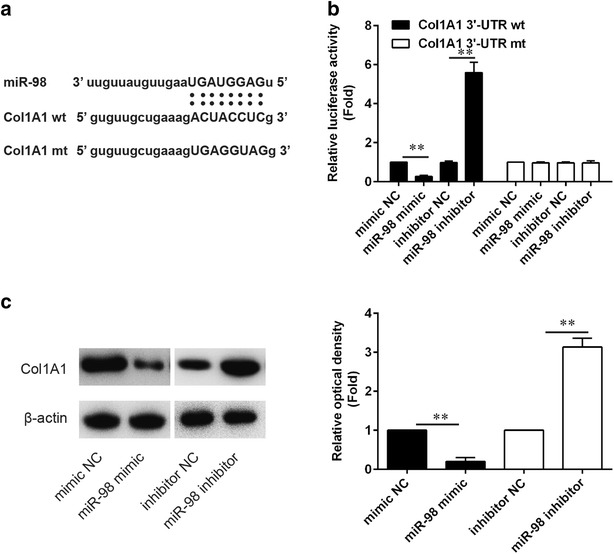
MicroRNA-98 was selected as the key miRNA comprised in HS. The mRNA levels of miR-98 in HS tissues and the matched normal skin tissues were determined by qRT-PCR. MTT and flow cytometry were used to determine the influence of miR-98 on cell proliferation and apoptosis of HSFBs, respectively. Col1A1 was found to be the target gene of miR-98 using luciferase reporter assay. Luciferase assay was performed to determine the relative luciferase activity in mimic NC, miR-98 mimic, inhibitor NC and miR-98 inhibitor with Col1A13'-UTR wt or Col1A13'-UTR mt reporter plasmids. The protein expression of Col1A1 in HSFBs after transfection with mimic NC, miR-98 mimic, inhibitor NC and miR-98 inhibitor were determined by western blotting.
The mRNA level of miR-98 in HS tissues was much higher than that in the control. Transfection of HSFBs with a miR-98 mimic reduced the cell viability of HSFBs and increased the apoptosis portion of HSFBs, while inhibition of miR-98 increased cell viability and decreased apoptosis portion of HSFBs. miR-98 inhibitor increased the relative luciferase activity significantly when cotransfected with the Col1A1-UTR reporter plasmid, while the mutant reporter plasmid abolished the miR-98 inhibitor-mediated increase in luciferase activity. Western blotting revealed that overexpression of miR-98 decreased the expression of Col1A1.
Overexpression of miR-98 repressed the proliferation of HSFBs by targeting Col1A1.
肥厚性瘢痕(HS)是一种严重疾病,由异常伤口愈合导致。Ⅰ型胶原蛋白α1(Col1A1)可促进肥厚性瘢痕形成,且HS组织中Col1A1的表达明显高于正常组织。在本研究中,我们旨在鉴定作为HS中Col1A1转录后调节因子的微小RNA(miRNA)。
选择微小RNA-98(miR-98)作为HS中的关键miRNA。通过定量逆转录聚合酶链反应(qRT-PCR)测定HS组织及配对的正常皮肤组织中miR-98的信使核糖核酸(mRNA)水平。分别使用噻唑蓝(MTT)法和流式细胞术测定miR-98对人肥厚性瘢痕成纤维细胞(HSFBs)细胞增殖和凋亡的影响。使用荧光素酶报告基因检测法发现Col1A1是miR-98的靶基因。进行荧光素酶检测以确定在模拟对照(mimic NC)、miR-98模拟物、抑制剂对照(inhibitor NC)和miR-98抑制剂与野生型Col1A1 3'-非翻译区(Col1A1 3'-UTR wt)或突变型Col1A1 3'-非翻译区(Col1A1 3'-UTR mt)报告质粒共转染时的相对荧光素酶活性。通过蛋白质免疫印迹法测定在转染模拟对照、miR-98模拟物、抑制剂对照和miR-98抑制剂后HSFBs中Col1A1的蛋白表达。
HS组织中miR-98的mRNA水平远高于对照组。用miR-98模拟物转染HSFBs降低了HSFBs的细胞活力并增加了HSFBs的凋亡比例,而抑制miR-98则增加了细胞活力并降低了HSFBs的凋亡比例。当与Col1A1-UTR报告质粒共转染时,miR-98抑制剂显著增加了相对荧光素酶活性,而突变型报告质粒消除了miR-98抑制剂介导的荧光素酶活性增加。蛋白质免疫印迹法显示miR-98的过表达降低了Col1A1的表达。
miR-98的过表达通过靶向Col1A1抑制HSFBs的增殖。