Gras Simon, Jackson Allison, Woods Stuart, Pall Gurman, Whitelaw Jamie, Leung Jacqueline M, Ward Gary E, Roberts Craig W, Meissner Markus
Wellcome Trust Centre For Molecular Parasitology, Institute of Infection, Immunity & Inflammation, Glasgow Biomedical Research Centre, University of Glasgow, Glasgow, G12 8TA, UK.
Strathclyde Institute of Pharmacy and Biomedical Sciences, Glasgow, G4 0RE, UK.
Wellcome Open Res. 2017 Jul 24;2:32. doi: 10.12688/wellcomeopenres.11594.2. eCollection 2017.
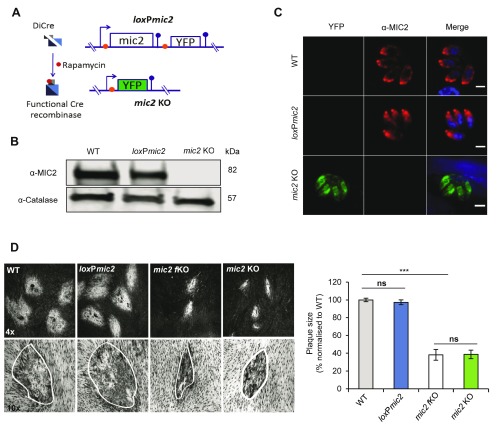
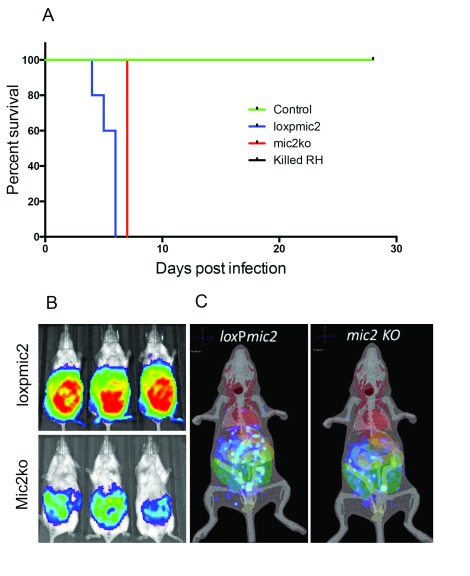
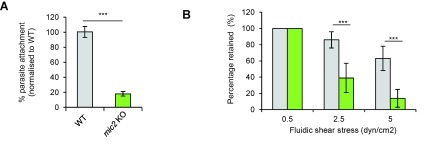
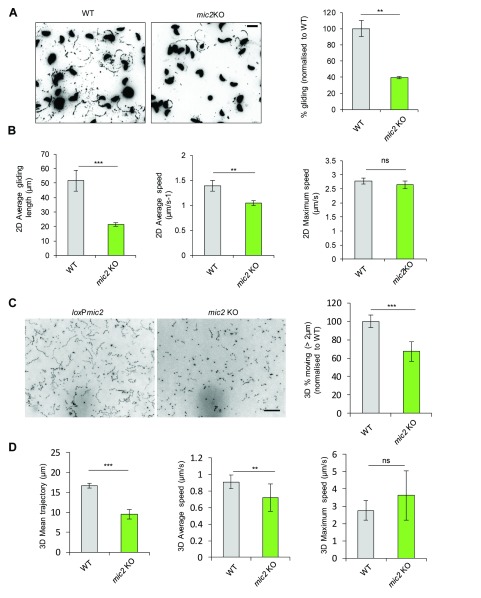
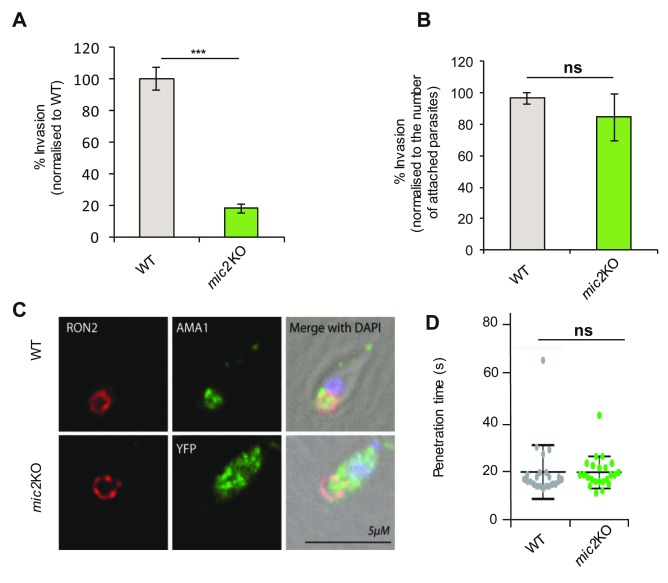
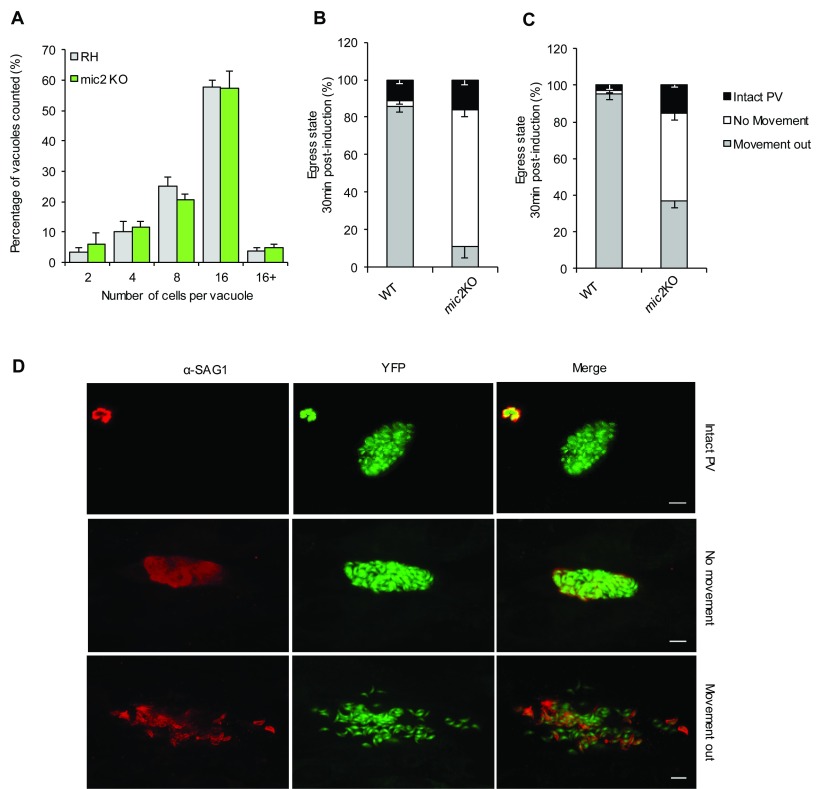
Micronemal proteins of the thrombospondin-related anonymous protein (TRAP) family are believed to play essential roles during gliding motility and host cell invasion by apicomplexan parasites, and currently represent major vaccine candidates against , the causative agent of malaria. However, recent evidence suggests that they play multiple and different roles than previously assumed. Here, we analyse a null mutant for MIC2, the TRAP homolog in . We performed a careful analysis of parasite motility in a 3D-environment, attachment under shear stress conditions, host cell invasion and virulence. We verified the role of MIC2 in efficient surface attachment, but were unable to identify any direct function of MIC2 in sustaining gliding motility or host cell invasion once initiated. Furthermore, we find that deletion of causes a slightly delayed infection leading only to mild attenuation of virulence; like with wildtype parasites, inoculation with even low numbers of KO parasites causes lethal disease in mice. However, deletion of causes delayed host cell egress , possibly via disrupted signal transduction pathways. We confirm a critical role of MIC2 in parasite attachment to the surface, leading to reduced parasite motility and host cell invasion. However, MIC2 appears to not be critical for gliding motility or host cell invasion, since parasite speed during these processes is unaffected. Furthermore, deletion of MIC2 leads only to slight attenuation of the parasite.
血小板反应蛋白相关无名蛋白(TRAP)家族的微线体蛋白被认为在顶复门寄生虫的滑行运动和宿主细胞入侵过程中发挥着重要作用,目前是对抗疟疾病原体疟原虫的主要候选疫苗。然而,最近的证据表明它们发挥的作用比之前设想的更多且不同。在这里,我们分析了疟原虫中TRAP同源物MIC2的无效突变体。我们在三维环境中对寄生虫运动、剪切应力条件下的附着、宿主细胞入侵和疟原虫毒力进行了仔细分析。我们证实了MIC2在有效表面附着中的作用,但一旦启动,无法确定MIC2在维持滑行运动或宿主细胞入侵方面有任何直接功能。此外,我们发现缺失MIC2会导致感染略有延迟,仅导致毒力轻度减弱;与野生型寄生虫一样,用即使少量的MIC2敲除寄生虫接种也会在小鼠中引起致命疾病。然而,缺失MIC2会导致宿主细胞逸出延迟,可能是通过破坏信号转导途径。我们证实了MIC2在寄生虫附着于表面中的关键作用,导致寄生虫运动性和宿主细胞入侵减少。然而,MIC2似乎对滑行运动或宿主细胞入侵并不关键,因为这些过程中的寄生虫速度不受影响。此外,缺失MIC2仅导致寄生虫轻度减弱。