Schröders Julia, Wall Stig, Hakimi Mohammad, Dewi Fatwa Sari Tetra, Weinehall Lars, Nichter Mark, Nilsson Maria, Kusnanto Hari, Rahajeng Ekowati, Ng Nawi
Unit of Epidemiology and Global Health, Department of Public Health and Clinical Medicine, Umeå University, Umeå, Sweden.
Centre for Reproductive Health, Faculty of Medicine, Universitas Gadjah Mada, Yogyakarta, Indonesia.
PLoS One. 2017 Jun 20;12(6):e0179186. doi: 10.1371/journal.pone.0179186. eCollection 2017.
Chronic noncommunicable diseases (NCDs) have emerged as a huge global health problem in low- and middle-income countries. The magnitude of the rise of NCDs is particularly visible in Southeast Asia where limited resources have been used to address this rising epidemic, as in the case of Indonesia. Robust evidence to measure growing NCD-related burdens at national and local levels and to aid national discussion on social determinants of health and intra-country inequalities is needed. The aim of this review is (i) to illustrate the burden of risk factors, morbidity, disability, and mortality related to NCDs; (ii) to identify existing policy and community interventions, including disease prevention and management strategies; and (iii) to investigate how and why an inequitable distribution of this burden can be explained in terms of the social determinants of health.
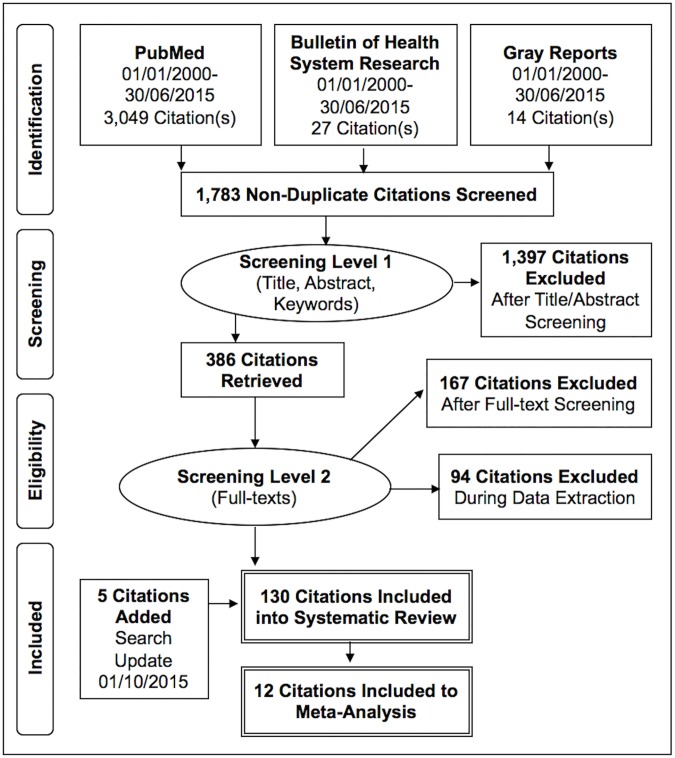
Our review followed the PRISMA guidelines for identifying, screening, and checking the eligibility and quality of relevant literature. We systematically searched electronic databases and gray literature for English- and Indonesian-language studies published between Jan 1, 2000 and October 1, 2015. We synthesized included studies in the form of a narrative synthesis and where possible meta-analyzed their data.
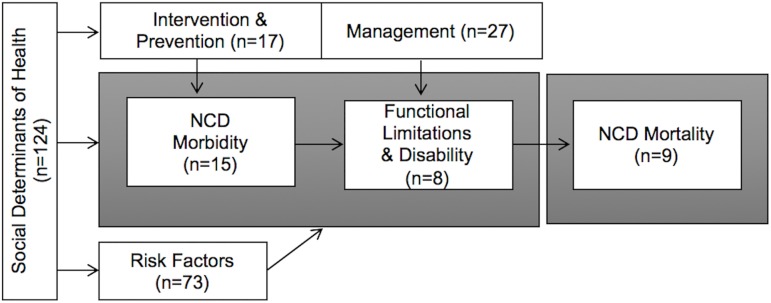
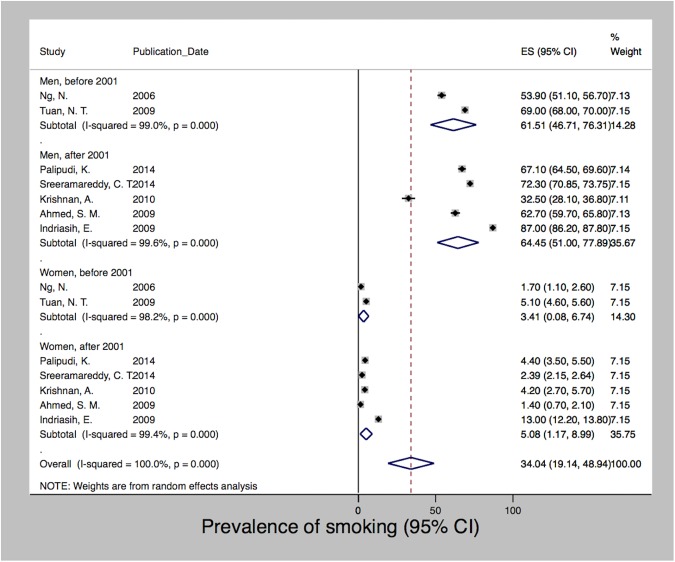
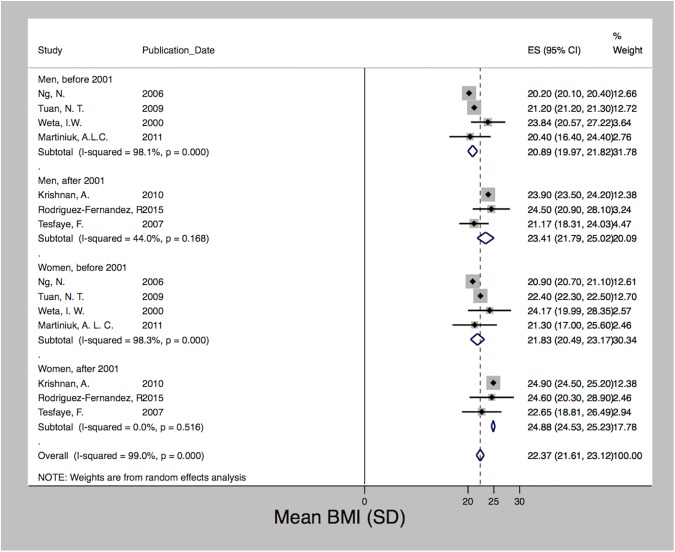
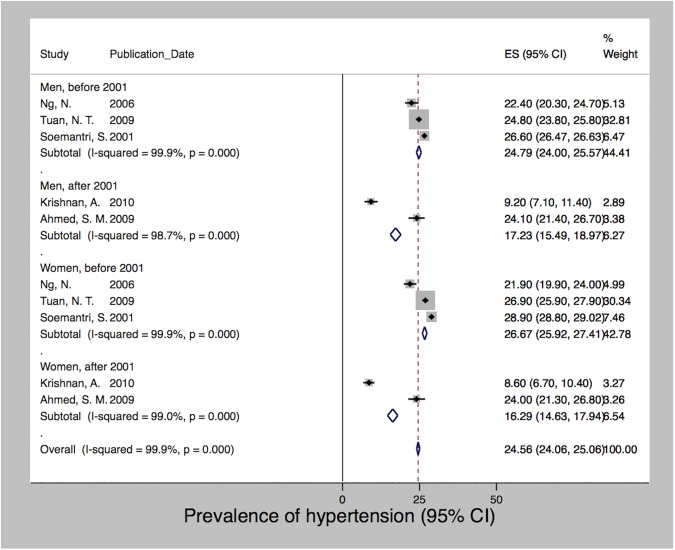
On the basis of deductive qualitative content analysis, 130 included citations were grouped into seven topic areas: risk factors; morbidity; disability; mortality; disease management; interventions and prevention; and social determinants of health. A quantitative synthesis meta-analyzed a subset of studies related to the risk factors smoking, obesity, and hypertension.
Our findings echo the urgent need to expand routine risk factor surveillance and outcome monitoring and to integrate these into one national health information system. There is a stringent necessity to reorient and enhance health system responses to offer effective, realistic, and affordable ways to prevent and control NCDs through cost-effective interventions and a more structured approach to the delivery of high-quality primary care and equitable prevention and treatment strategies. Research on social determinants of health and policy-relevant research need to be expanded and strengthened to the extent that a reduction of the total NCD burden and inequalities therein should be treated as related and mutually reinforcing priorities.
慢性非传染性疾病(NCDs)已成为低收入和中等收入国家巨大的全球健康问题。在东南亚地区,非传染性疾病的增长幅度尤为明显,如印度尼西亚,当地用于应对这一日益严重的流行病的资源有限。需要有力的证据来衡量国家和地方层面与非传染性疾病相关的负担日益加重的情况,并协助国家就健康的社会决定因素和国内不平等问题展开讨论。本综述的目的是:(i)说明与非传染性疾病相关的风险因素、发病率、残疾率和死亡率负担;(ii)确定现有的政策和社区干预措施,包括疾病预防和管理策略;(iii)调查如何以及为何能从健康的社会决定因素角度解释这种负担的不公平分配。
我们的综述遵循PRISMA指南来识别、筛选以及检查相关文献的合格性和质量。我们系统地搜索了电子数据库和灰色文献,查找2000年1月1日至2015年10月1日期间发表的英文和印尼文研究。我们以叙述性综述的形式综合纳入的研究,并在可能的情况下对其数据进行荟萃分析。
基于演绎性定性内容分析,130条纳入的引用文献被归为七个主题领域:风险因素;发病率;残疾率;死亡率;疾病管理;干预措施和预防;以及健康的社会决定因素。定量综合分析对与吸烟、肥胖和高血压等风险因素相关的一部分研究进行了荟萃分析。
我们的研究结果呼应了迫切需要扩大常规风险因素监测和结果监测,并将这些纳入一个国家卫生信息系统。迫切需要重新调整和加强卫生系统的应对措施,通过具有成本效益的干预措施以及更有条理的方式提供高质量的初级保健和公平的预防及治疗策略,来提供有效、切实可行且负担得起的方法以预防和控制非传染性疾病。对健康的社会决定因素的研究以及与政策相关的研究需要得到扩展和加强,以至于将减少非传染性疾病的总体负担及其不平等视为相关且相互促进的优先事项。