Pastore Chiara, Dal Santo Silvia, Zenoni Sara, Movahed Nushin, Allegro Gianluca, Valentini Gabriele, Filippetti Ilaria, Tornielli Giovanni Battista
Department of Agricultural Sciences, University of BolognaBologna, Italy.
Department of Biotechnology, University of VeronaVerona, Italy.
Front Plant Sci. 2017 Jun 6;8:929. doi: 10.3389/fpls.2017.00929. eCollection 2017.
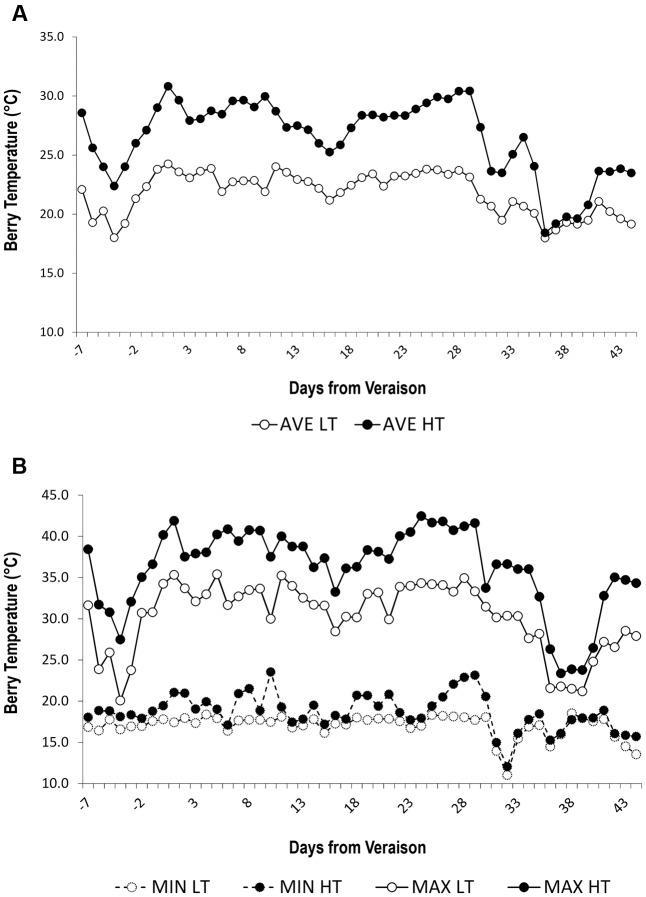
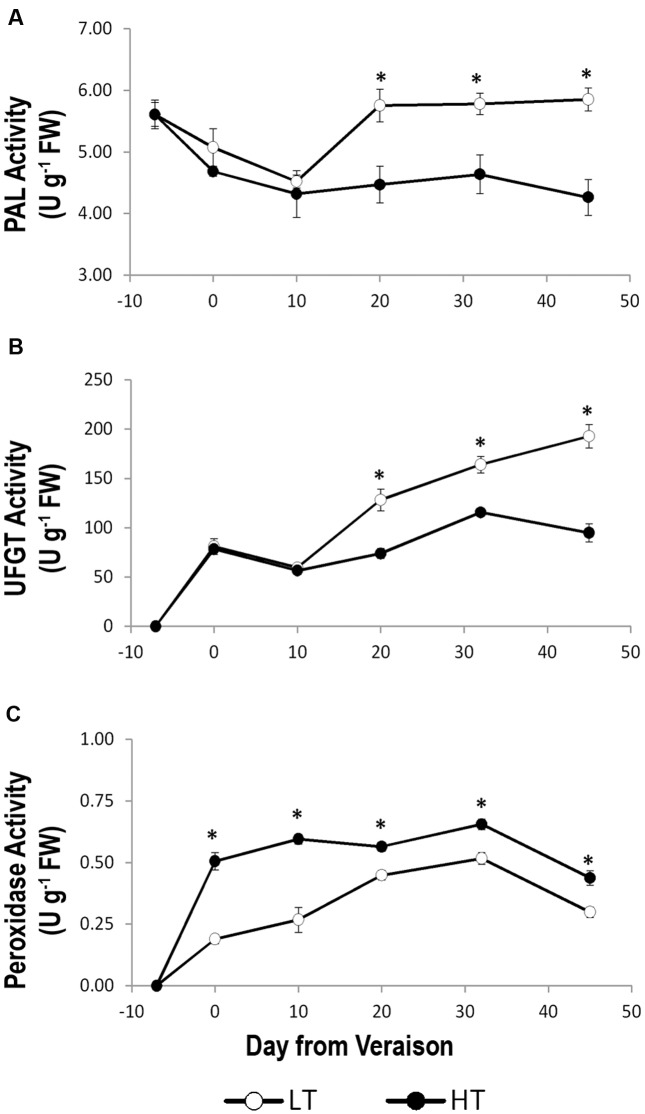
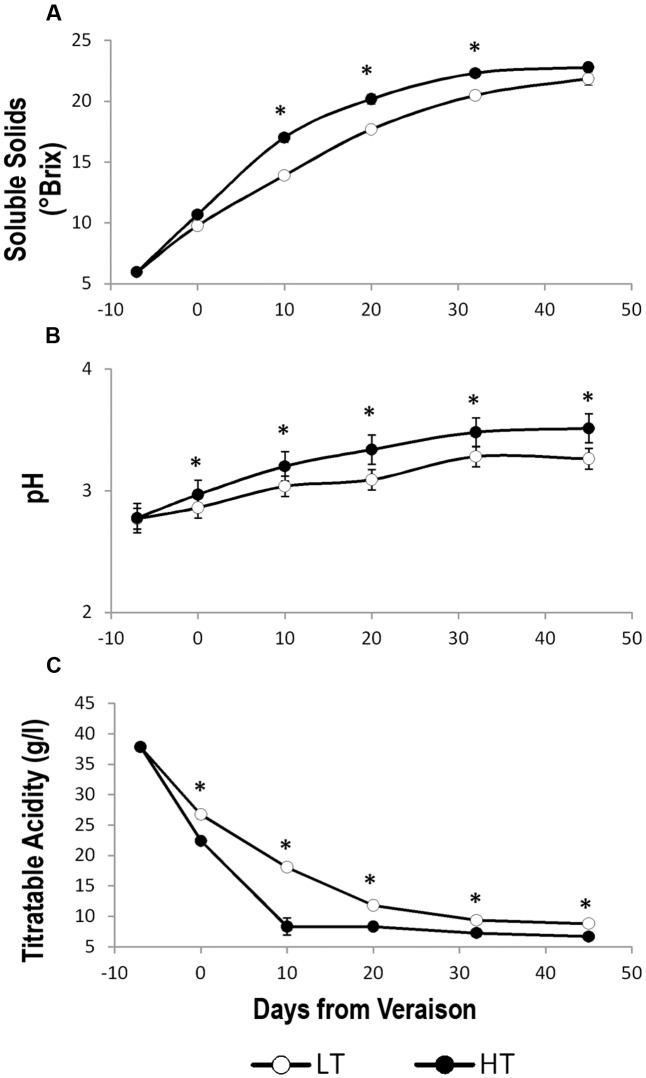
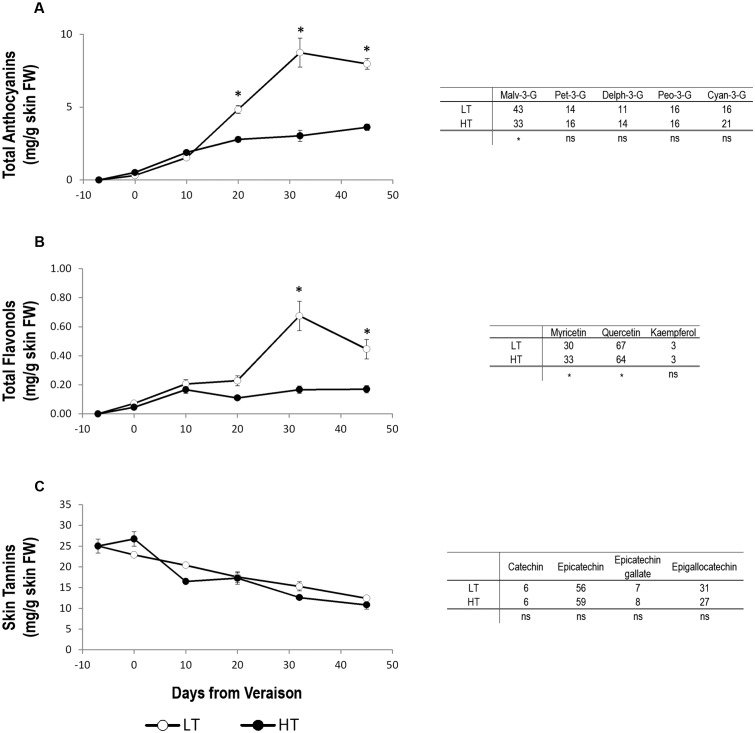
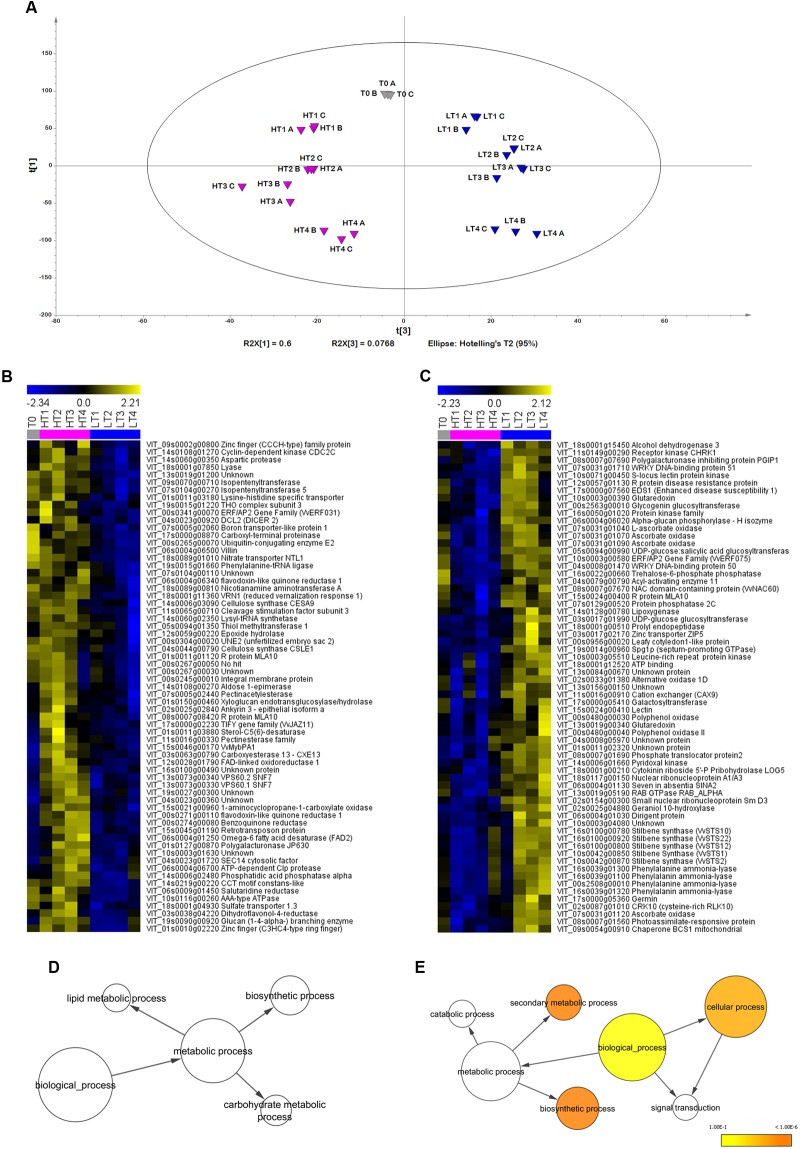
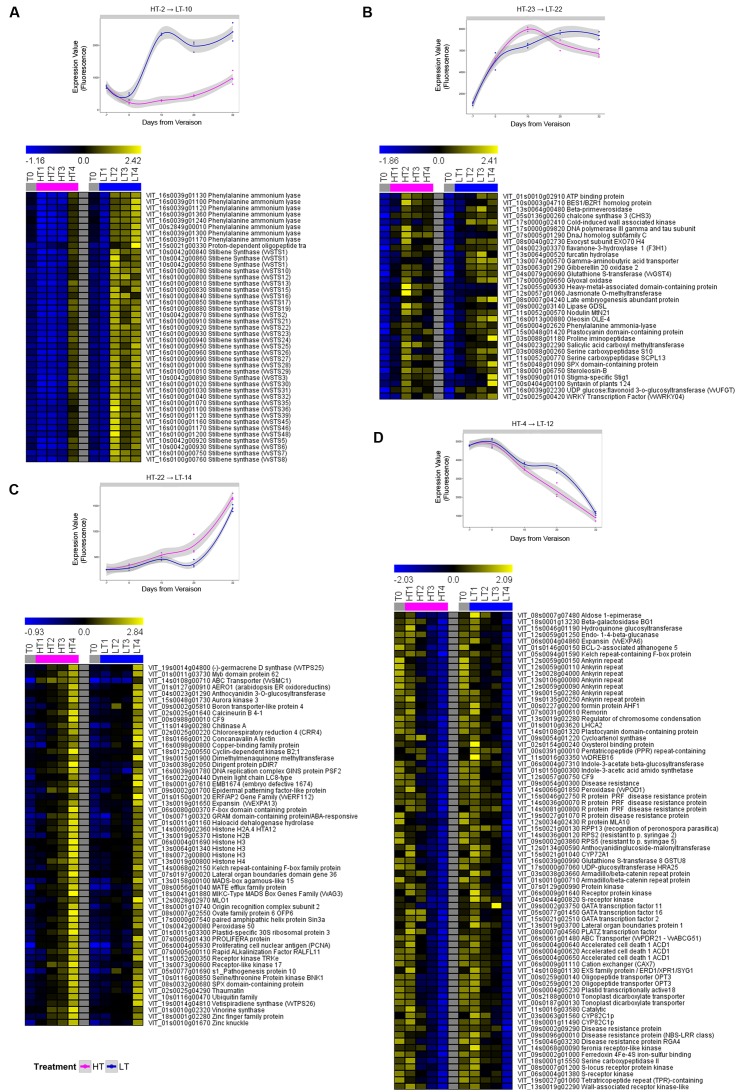
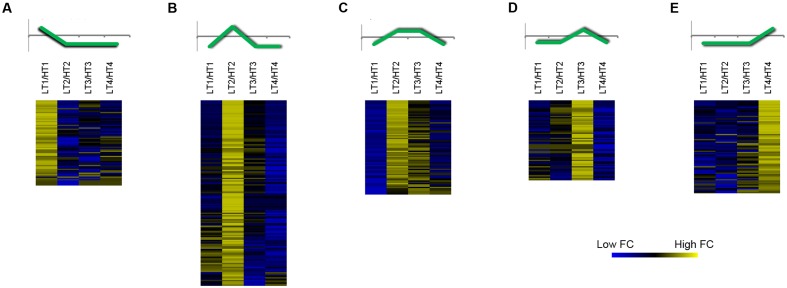
Among environmental factors, temperature is the one that poses serious threats to viticulture in the present and future scenarios of global climate change. In this work, we evaluated the effects on berry ripening of two thermal regimes, imposed from veraison to harvest. Potted vines were grown in two air-conditioned greenhouses with High Temperature (HT) and Low Temperature (LT) regimes characterized by 26 and 21°C as average and 42 and 35°C as maximum air daily temperature, respectively. We conducted analyses of the main berry compositional parameters, berry skin flavonoids and berry skin transcriptome on HT and LT berries sampled during ripening. The two thermal conditions strongly differentiated the berries. HT regime increased sugar accumulation at the beginning of ripening, but not at harvest, when HT treatment contributed to a slight total acidity reduction and pH increase. Conversely, growing temperatures greatly impacted on anthocyanin and flavonol concentrations, which resulted as strongly reduced, while no effects were found on skin tannins accumulation. Berry transcriptome was analyzed with several approaches in order to identify genes with different expression profile in berries ripened under HT or LT conditions. The analysis of whole transcriptome showed that the main differences emerging from this approach appeared to be more due to a shift in the ripening process, rather than to a strong rearrangement at transcriptional level, revealing that the LT temperature regime could delay berry ripening, at least in the early stages. Moreover, the results of the in-depth screening of genes differentially expressed in HT and LT did not highlight differences in the expression of transcripts involved in the biosynthesis of flavonoids (with the exception of PAL and STS) despite the enzymatic activities of PALs and UFGT being significantly higher in LT than HT. This suggests only a partial correlation between molecular and biochemical data in our conditions and the putative existence of post-transcriptional and post-translational mechanisms playing significant roles in the regulation of flavonoid metabolic pathways and in particular of anthocyanins.
在环境因素中,温度是在当前和未来全球气候变化情景下对葡萄栽培构成严重威胁的因素。在这项研究中,我们评估了从转色期到收获期施加的两种温度 regime 对浆果成熟的影响。盆栽葡萄树种植在两个空调温室中,分别设置高温(HT)和低温(LT) regime,平均气温分别为26°C和21°C,每日最高气温分别为42°C和35°C。我们对成熟期间采集的HT和LT浆果的主要浆果成分参数、浆果表皮类黄酮和浆果表皮转录组进行了分析。这两种温度条件使浆果产生了显著差异。HT regime在成熟初期增加了糖分积累,但在收获时没有,此时HT处理导致总酸度略有降低和pH值升高。相反,生长温度对花青素和黄酮醇浓度有很大影响,导致其浓度大幅降低,而对表皮单宁积累没有影响。我们采用多种方法分析浆果转录组,以鉴定在HT或LT条件下成熟的浆果中具有不同表达谱的基因。全转录组分析表明,这种方法出现的主要差异似乎更多是由于成熟过程的转变,而不是转录水平的强烈重排,这表明LT温度 regime至少在早期阶段可能会延迟浆果成熟。此外,对HT和LT中差异表达基因的深入筛选结果并未突出参与类黄酮生物合成的转录本表达差异(PAL和STS除外),尽管LT中PAL和UFGT的酶活性显著高于HT。这表明在我们的条件下,分子和生化数据之间仅存在部分相关性,并且推测存在转录后和翻译后机制在类黄酮代谢途径特别是花青素的调控中发挥重要作用。