Khan Shahanavaj, Ansari Anees A, Rolfo Christian, Coelho Andreia, Abdulla Maha, Al-Khayal Khayal, Ahmad Rehan
Nanomedicine & Biotechnology Research Unit, Department of Pharmaceutics, College of Pharmacy, King Saud University, Riyadh, Saudi Arabia.
Department of Bioscience, Shri Ram Group of College (SRGC), Muzaffarnagar, India.
Sci Technol Adv Mater. 2017 May 31;18(1):364-373. doi: 10.1080/14686996.2017.1319731. eCollection 2017.
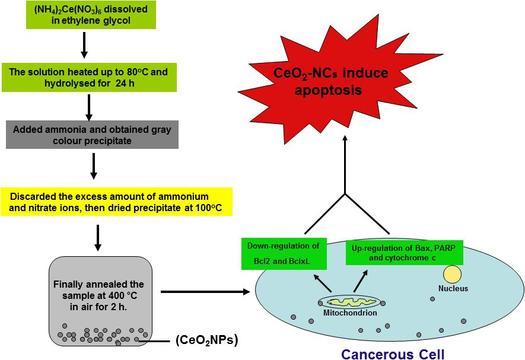
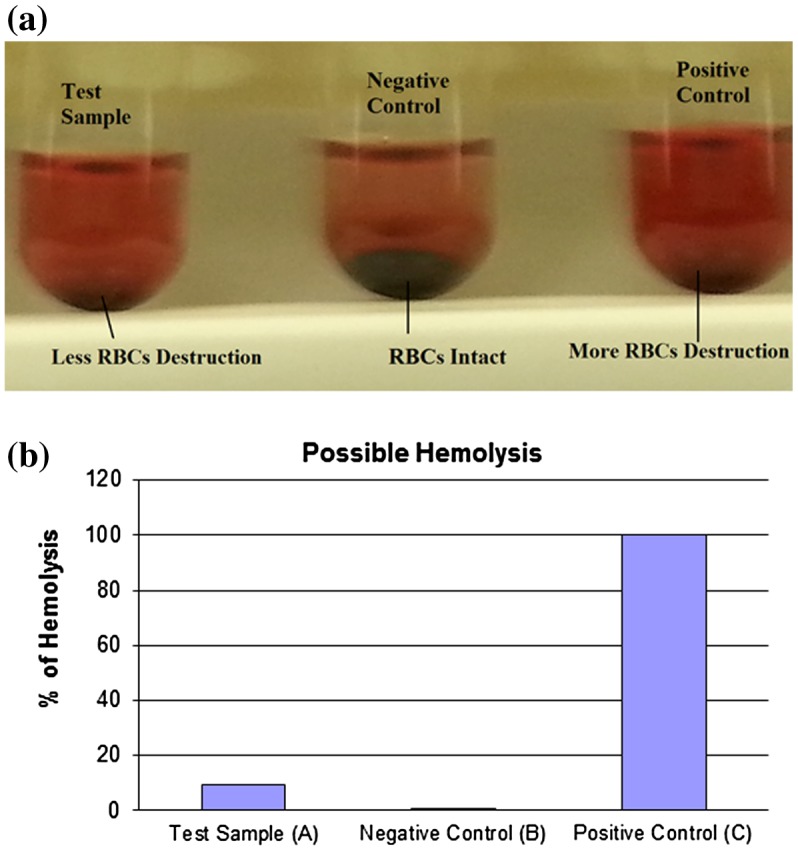
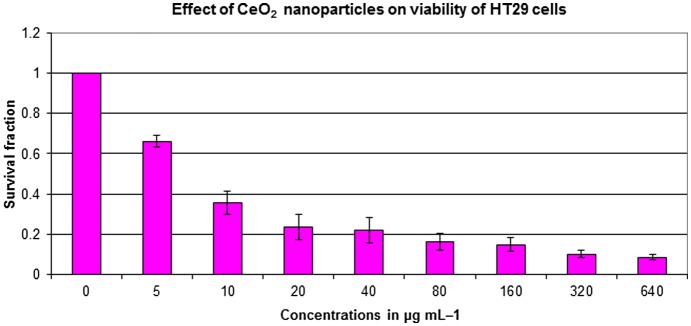
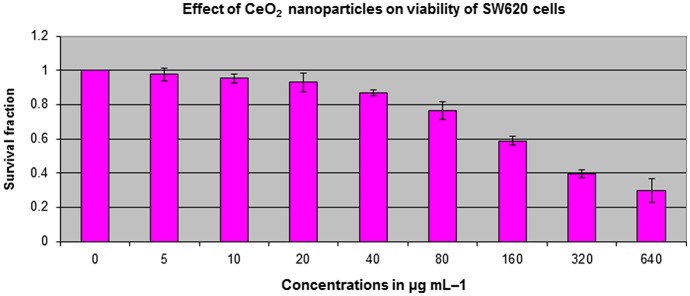
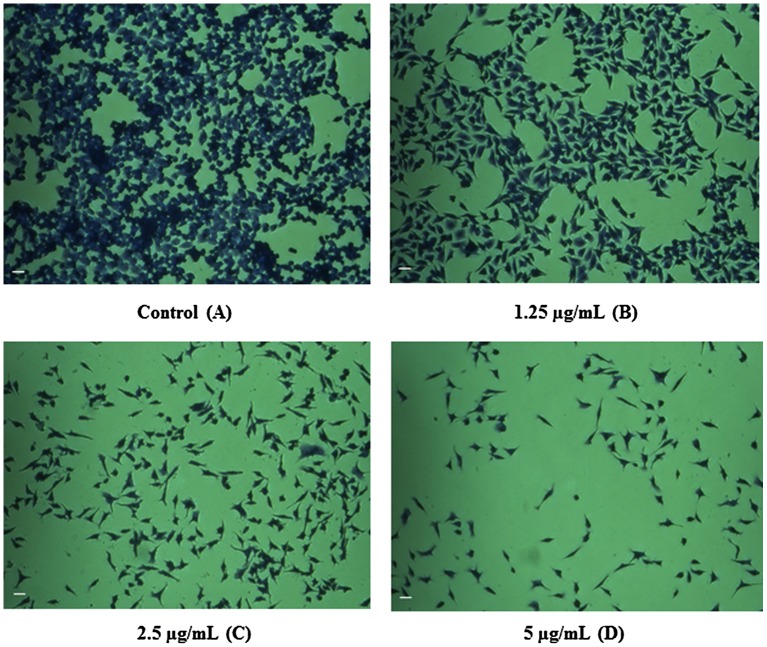
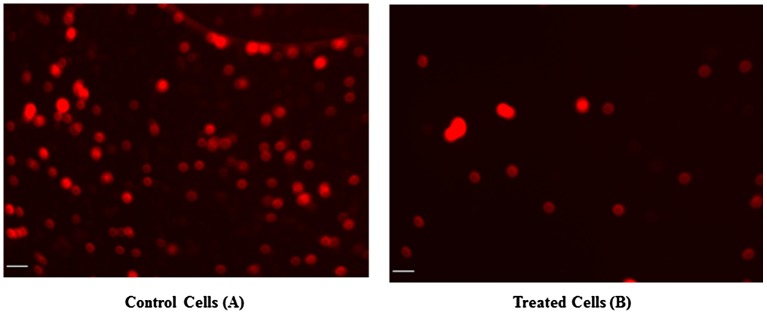
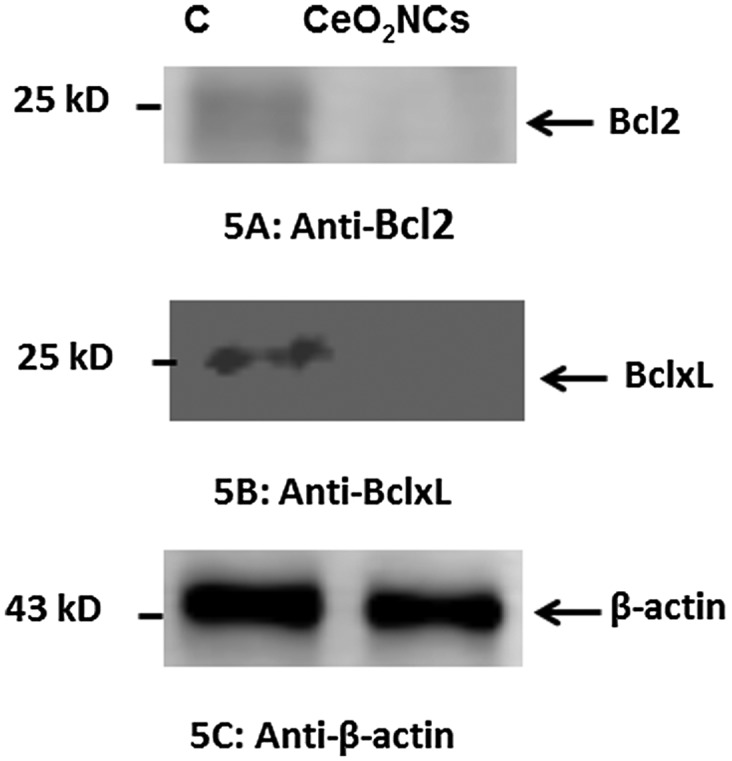
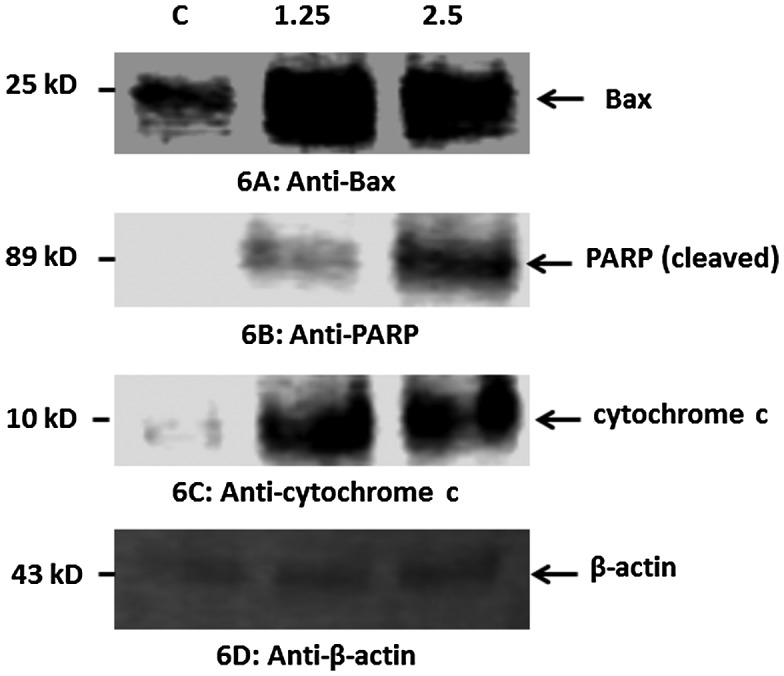
Cerium oxide nanocrystals (CeO-NCs) exhibit superoxide dismutase and catalase mimetic activities. Based on these catalytic activities, CeO-NCs have been suggested to have the potential to treat various diseases. The crystalline size of these materials is an important factor that influences the performance of CeO-NCs. Previous reports have shown that several metal-based nanocrystals, including CeO-NCs, can induce cytotoxicity in cancer cells. However, the underlying mechanisms have remained unclear. To characterize the anticancer activities of CeO-NCs, several assays related to the mechanism of cytotoxicity and induction of apoptosis has been performed. Here, we have carried out a systematic study to characterize CeO-NCs phase purity (X-ray diffraction), morphology (electron microscopy), and optical features (optical absorption, Raman scattering, and photoluminescence) to better establish their potential as anticancer drugs. Our study revealed anticancer effects of CeO-NCs in HT29 and SW620 colorectal cancer cell lines with half-maximal inhibitory concentration (IC) values of 2.26 and 121.18 μg ml, respectively. Reductions in cell viability indicated the cytotoxic potential of CeO-NCs in HT29 cells based on inverted and florescence microscopy assessments. The mechanism of cytotoxicity confirmed by estimating possible changes in the expression levels of Bcl2, BclxL, Bax, PARP, cytochrome c, and β-actin (control) proteins in HT29 cells. Down-regulation of Bcl2 and BclxL and up-regulation of Bax, PARP, and cytochrome c proteins suggested the significant involvement of CeO-NCs exposure in the induction of apoptosis. Furthermore, biocompatibility assay showed minimum effect of CeO-NCs on human red blood cells.
氧化铈纳米晶体(CeO-NCs)具有超氧化物歧化酶和过氧化氢酶模拟活性。基于这些催化活性,有人提出CeO-NCs具有治疗各种疾病的潜力。这些材料的晶体尺寸是影响CeO-NCs性能的一个重要因素。先前的报道表明,包括CeO-NCs在内的几种金属基纳米晶体可诱导癌细胞产生细胞毒性。然而,其潜在机制仍不清楚。为了表征CeO-NCs的抗癌活性,已经进行了几种与细胞毒性机制和细胞凋亡诱导相关的测定。在这里,我们进行了一项系统研究,以表征CeO-NCs的相纯度(X射线衍射)、形态(电子显微镜)和光学特征(光吸收、拉曼散射和光致发光),以便更好地确定它们作为抗癌药物的潜力。我们的研究揭示了CeO-NCs对HT29和SW620结肠癌细胞系具有抗癌作用,其半数抑制浓度(IC)值分别为2.26和121.18μg/ml。基于倒置显微镜和荧光显微镜评估,细胞活力的降低表明CeO-NCs在HT29细胞中具有细胞毒性潜力。通过估计HT29细胞中Bcl2、BclxL、Bax、PARP、细胞色素c和β-肌动蛋白(对照)蛋白表达水平的可能变化,证实了细胞毒性机制。Bcl2和BclxL的下调以及Bax、PARP和细胞色素c蛋白的上调表明CeO-NCs暴露在细胞凋亡诱导中起重要作用。此外,生物相容性测定表明CeO-NCs对人红细胞的影响最小。