Zollo Alen, Allen Zoe, Rasmussen Helle F, Iannuzzi Filomena, Shi Yichen, Larsen Agnete, Maier Thorsten J, Matrone Carmela
Department of Biomedicine, University of Aarhus, 6 Bartholins Allé, 8000 Aarhus, Denmark.
Department of Science and Technology, University of Sannio, 82100 Benevento, Italy.
Neural Plast. 2017;2017:1892612. doi: 10.1155/2017/1892612. Epub 2017 May 28.
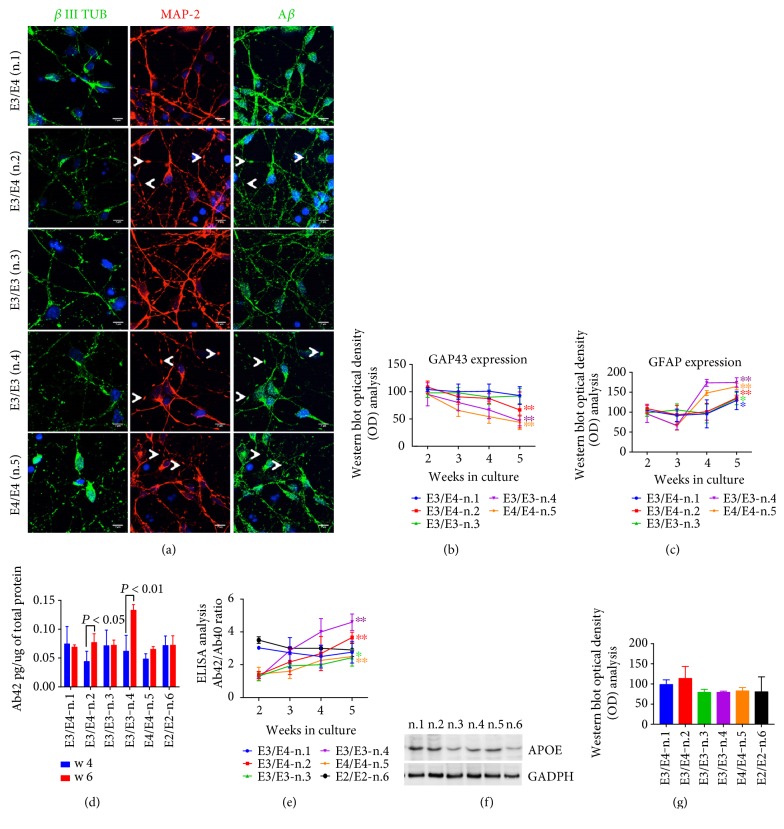
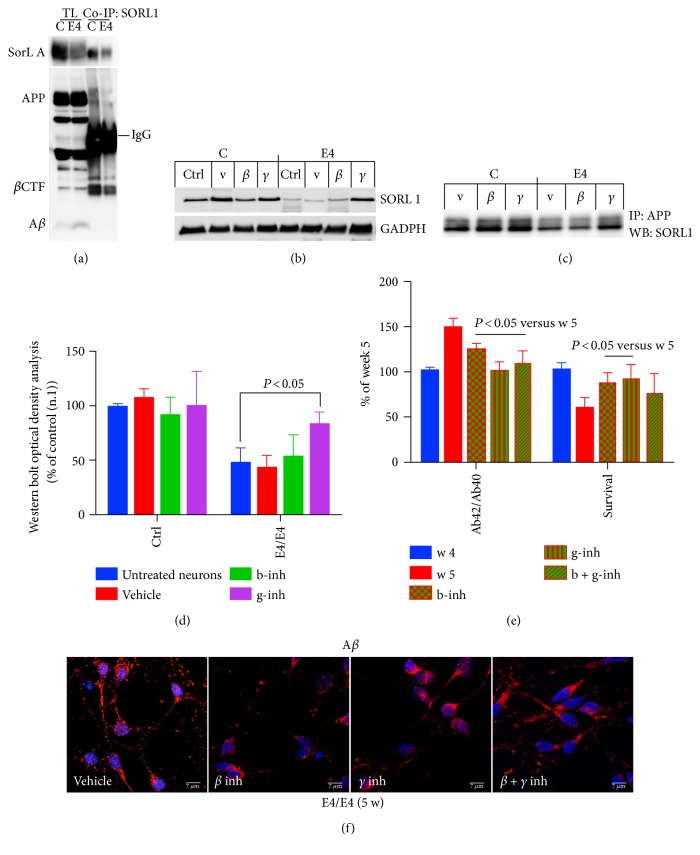
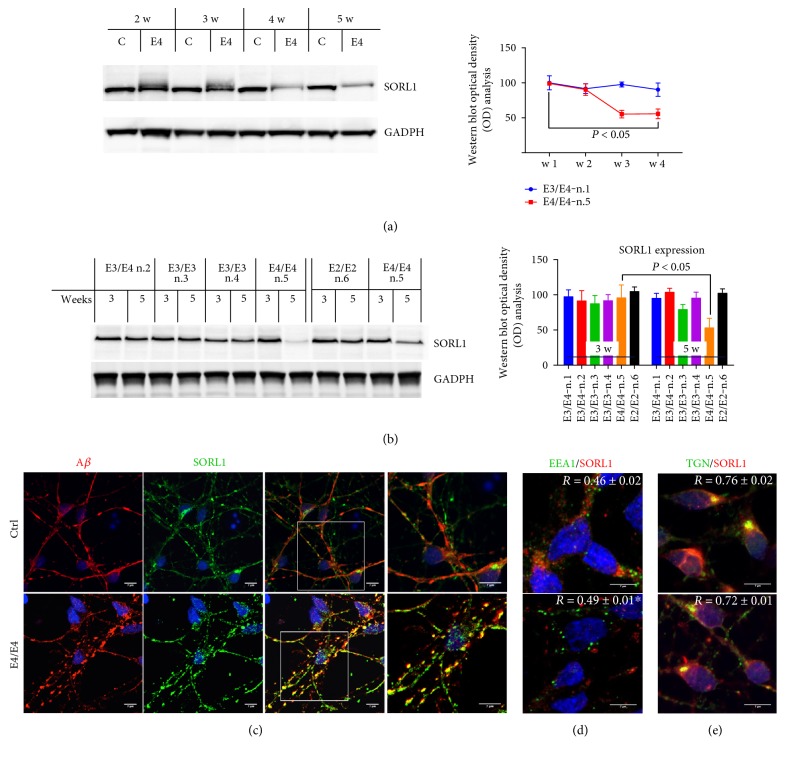
Alzheimer's disease (AD) is the most common form of dementia in the elderly; important risk factors are old age and inheritance of the apolipoprotein E4 (APOE4) allele. Changes in amyloid precursor protein (APP) binding, trafficking, and sorting may be important AD causative factors. Secretase-mediated APP cleavage produces neurotoxic amyloid-beta (A) peptides, which form lethal deposits in the brain. In vivo and in vitro studies have implicated sortilin-related receptor (SORL1) as an important factor in APP trafficking and processing. Recent in vitro evidence has associated the APOE4 allele and alterations in the SORL1 pathway with AD development and progression. Here, we analyzed SORL1 expression in neural stem cells (NSCs) from AD patients carrying null, one, or two copies of the APOE4 allele. We show reduced SORL1 expression only in NSCs of a patient carrying two copies of APOE4 allele with increased A/SORL1 localization along the degenerated neurites. Interestingly, SORL1 binding to APP was largely compromised; this could be almost completely reversed by -secretase (but not -secretase) inhibitor treatment. These findings may yield new insights into the complex interplay of SORL1 and AD pathology and point to NSCs as a valuable tool to address unsolved AD-related questions in vitro.
阿尔茨海默病(AD)是老年人中最常见的痴呆形式;重要的风险因素是老年和载脂蛋白E4(APOE4)等位基因的遗传。淀粉样前体蛋白(APP)的结合、运输和分选变化可能是AD的重要致病因素。分泌酶介导的APP切割产生神经毒性淀粉样β(A)肽,其在大脑中形成致命沉积物。体内和体外研究表明sortilin相关受体(SORL1)是APP运输和加工中的重要因素。最近的体外证据将APOE4等位基因和SORL1途径的改变与AD的发生和发展联系起来。在这里,我们分析了携带零个、一个或两个APOE4等位基因拷贝的AD患者神经干细胞(NSC)中SORL1的表达。我们发现,只有携带两个APOE4等位基因拷贝的患者的NSC中SORL1表达降低,且沿退化神经突的A/SORL1定位增加。有趣的是,SORL1与APP的结合在很大程度上受到损害;这种情况几乎可以通过γ-分泌酶(但不是β-分泌酶)抑制剂治疗完全逆转。这些发现可能为SORL1与AD病理学的复杂相互作用提供新的见解,并指出NSC是体外解决未解决的AD相关问题的有价值工具。