Yoo Bryan B, Mazmanian Sarkis K
Division of Biology & Biological Engineering, California Institute of Technology, Pasadena, CA 91125, USA.
Immunity. 2017 Jun 20;46(6):910-926. doi: 10.1016/j.immuni.2017.05.011.
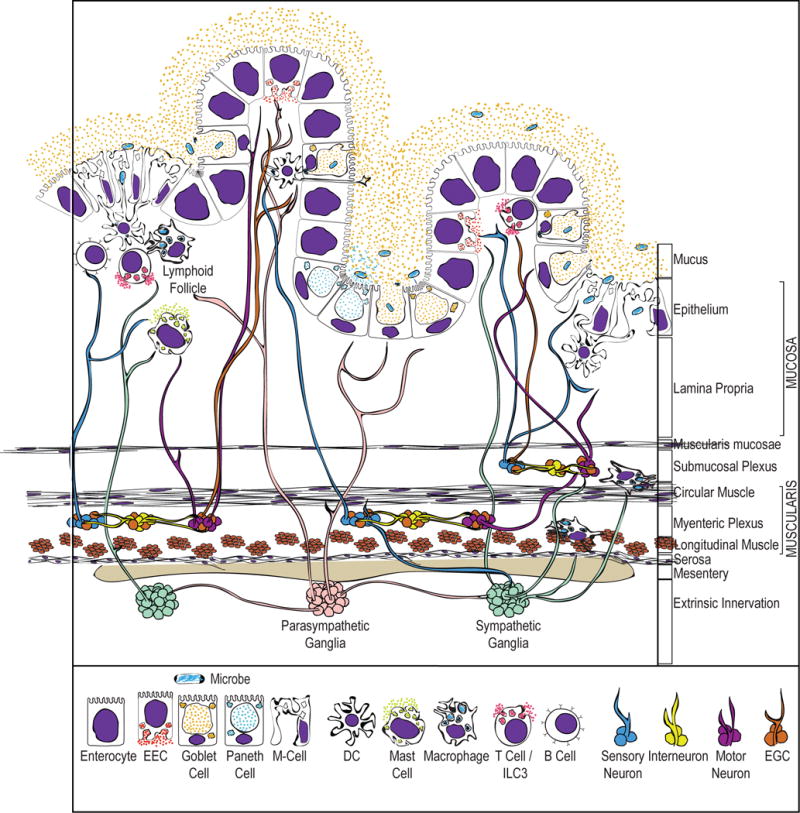
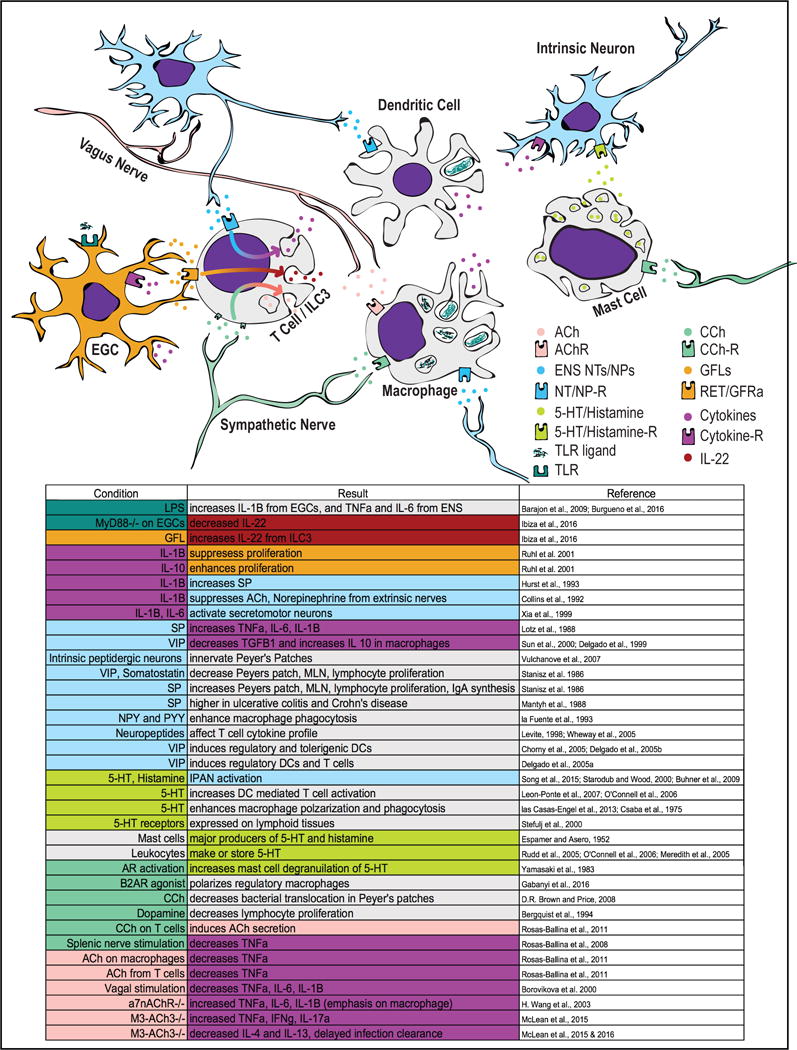
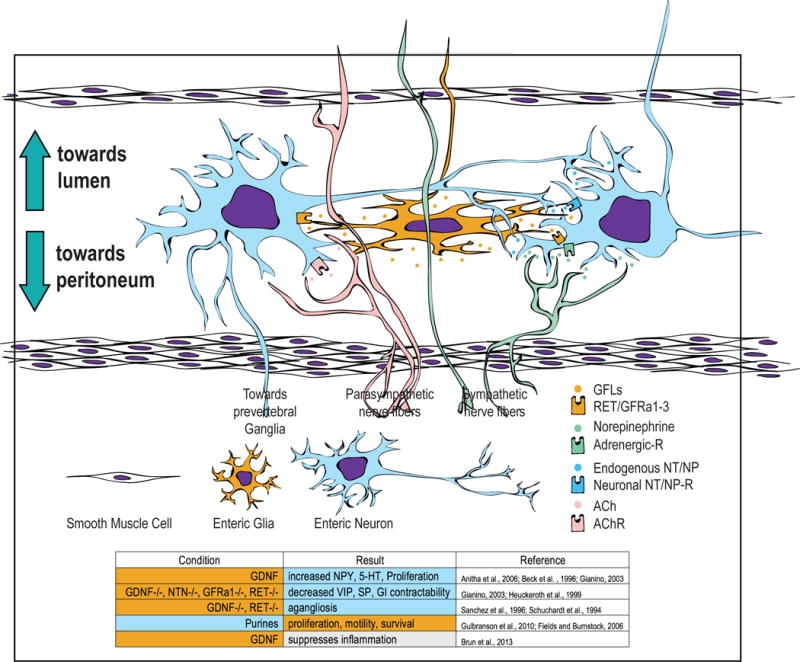
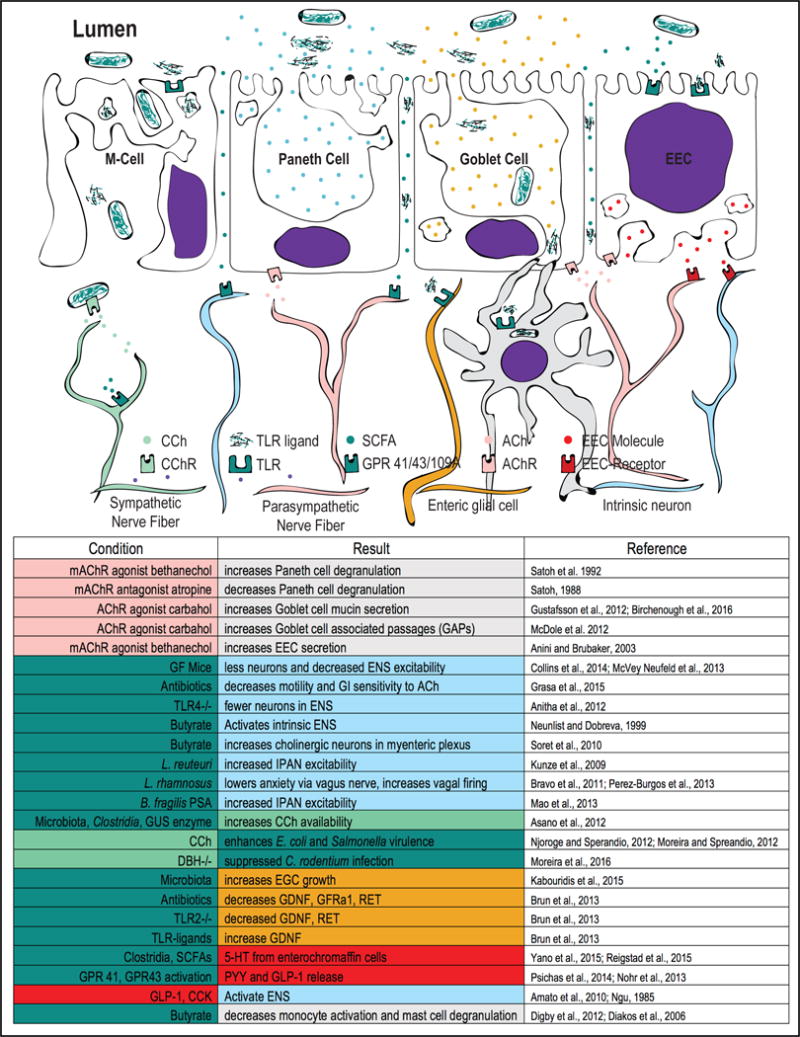
Interactions between the nervous and immune systems enable the gut to respond to the variety of dietary products that it absorbs, the broad spectrum of pathogens that it encounters, and the diverse microbiome that it harbors. The enteric nervous system (ENS) senses and reacts to the dynamic ecosystem of the gastrointestinal (GI) tract by translating chemical cues from the environment into neuronal impulses that propagate throughout the gut and into other organs in the body, including the central nervous system (CNS). This review will describe the current understanding of the anatomy and physiology of the GI tract by focusing on the ENS and the mucosal immune system. We highlight emerging literature that the ENS is essential for important aspects of microbe-induced immune responses in the gut. Although most basic and applied research in neuroscience has focused on the brain, the proximity of the ENS to the immune system and its interface with the external environment suggest that novel paradigms for nervous system function await discovery.
神经系统与免疫系统之间的相互作用,使肠道能够对其吸收的各类饮食产物、所遇到的广泛病原体以及所容纳的多样微生物群作出反应。肠道神经系统(ENS)通过将来自环境的化学信号转化为神经元冲动,从而感知胃肠道(GI)动态生态系统并作出反应,这些冲动会在整个肠道中传播,并进入身体的其他器官,包括中枢神经系统(CNS)。本综述将通过聚焦肠道神经系统和黏膜免疫系统,阐述目前对胃肠道解剖学和生理学的理解。我们强调新兴文献表明,肠道神经系统对于肠道中微生物诱导的免疫反应的重要方面至关重要。尽管神经科学中的大多数基础和应用研究都集中在大脑上,但肠道神经系统与免疫系统的接近程度及其与外部环境的界面表明,神经系统功能的新范式有待发现。