Kucki Melanie, Diener Liliane, Bohmer Nils, Hirsch Cordula, Krug Harald F, Palermo Vincenzo, Wick Peter
Laboratory for Particles-Biology Interactions, Empa-Swiss Federal Laboratories for Materials Science and Technology, Lerchenfeldstrasse 5, 9014, St. Gallen, Switzerland.
International Research Cooperations Manager, Empa-Swiss Federal Laboratories for Materials Science and Technology, Lerchenfeldstrasse 5, 9014, St. Gallen, Switzerland.
J Nanobiotechnology. 2017 Jun 21;15(1):46. doi: 10.1186/s12951-017-0280-7.
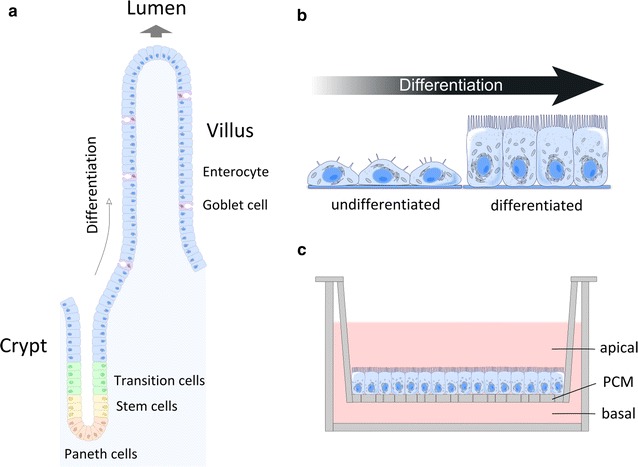
Understanding the interaction of graphene-related materials (GRM) with human cells is a key to the assessment of their potential risks for human health. There is a knowledge gap regarding the potential uptake of GRM by human intestinal cells after unintended ingestion. Therefore the aim of our study was to investigate the interaction of label-free graphene oxide (GO) with the intestinal cell line Caco-2 in vitro and to shed light on the influence of the cell phenotype given by the differentiation status on cellular uptake behaviour.
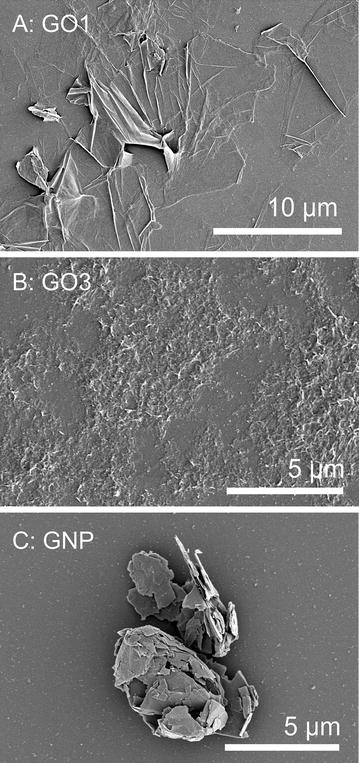
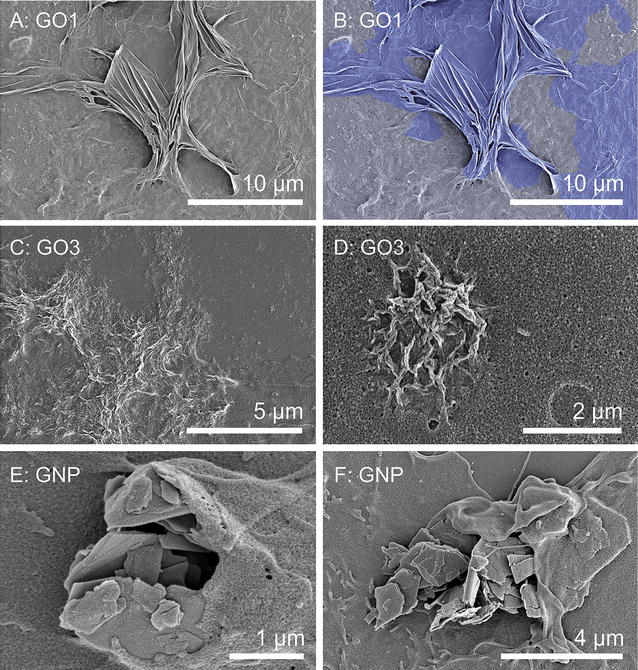
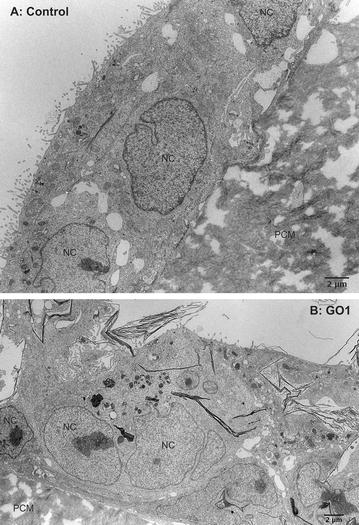
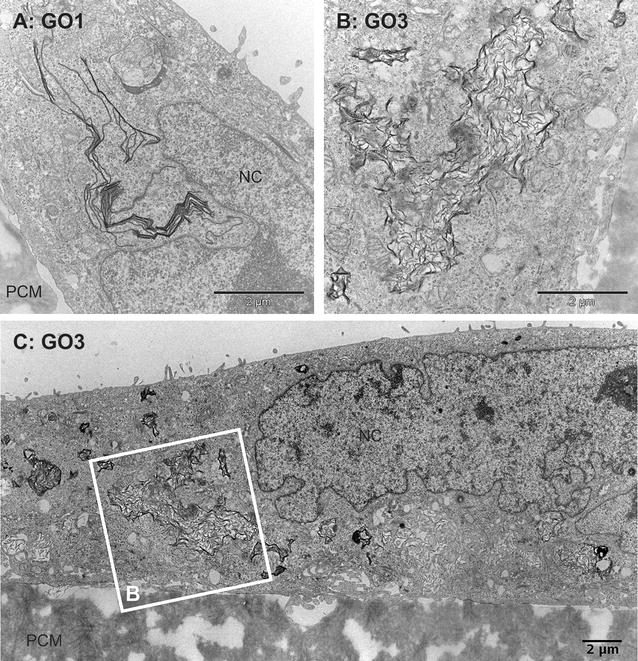
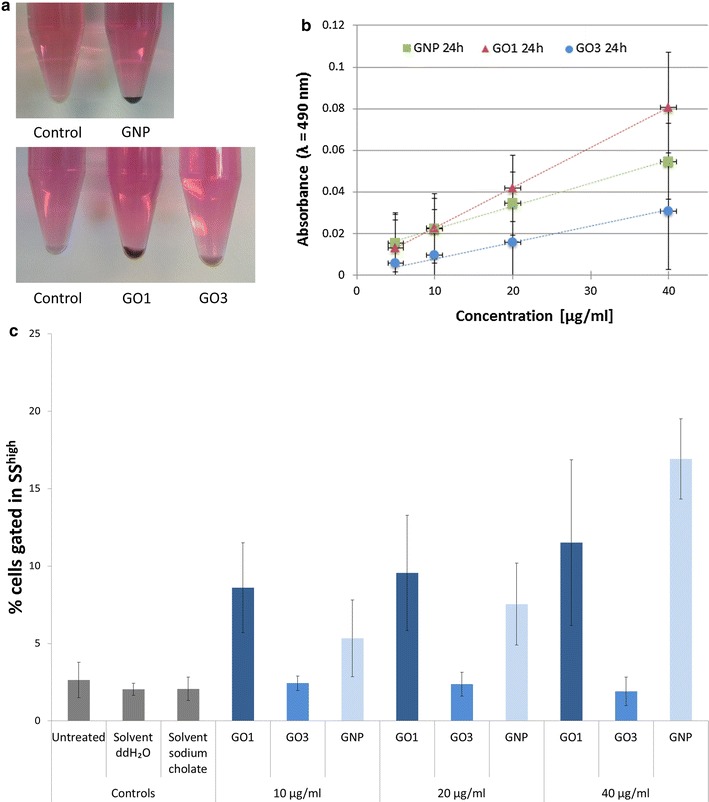
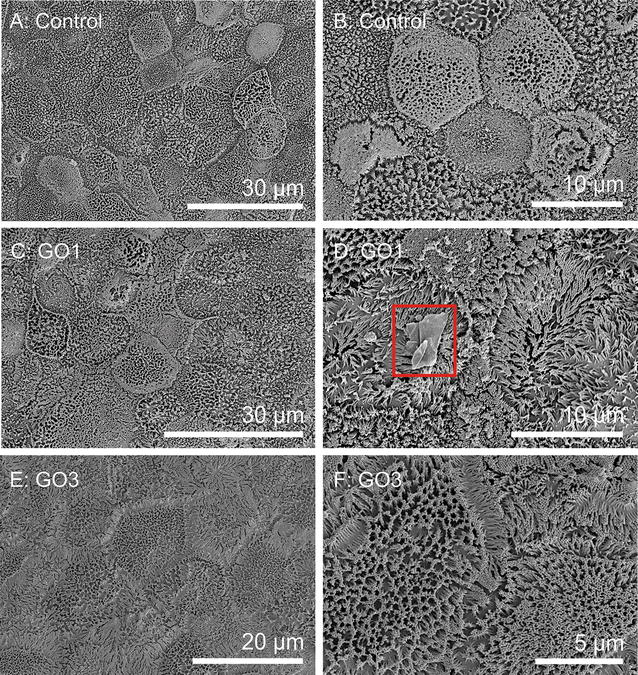
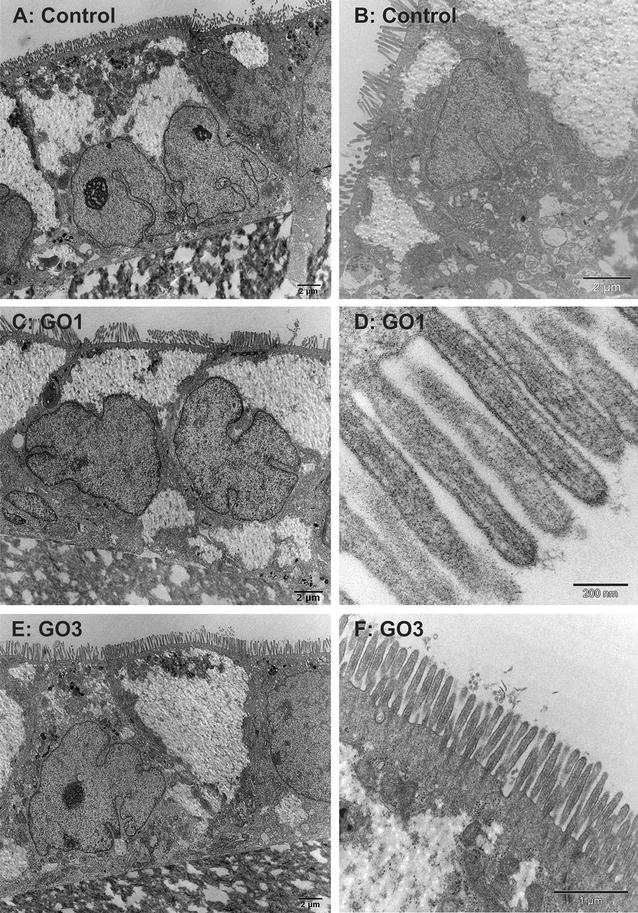
Internalisation of two label-free GOs with different lateral size and thickness by undifferentiated and differentiated Caco-2 cells was analysed by scanning electron microscopy and transmission electron microscopy. Semi-quantification of cells associated with GRM was performed by flow cytometry. Undifferentiated Caco-2 cells showed significant amounts of cell-associated GRM, whereas differentiated Caco-2 cells exhibited low adhesion of GO sheets. Transmission electron microscopy analysis revealed internalisation of both applied GO (small and large) by undifferentiated Caco-2 cells. Even large GO sheets with lateral dimensions up to 10 µm, were found internalised by undifferentiated cells, presumably by macropinocytosis. In contrast, no GO uptake could be found for differentiated Caco-2 cells exhibiting an enterocyte-like morphology with apical brush border.
Our results show that the internalisation of GO is highly dependent on the cell differentiation status of human intestinal cells. During differentiation Caco-2 cells undergo intense phenotypic changes which lead to a dramatic decrease in GRM internalisation. The results support the hypothesis that the cell surface topography of differentiated Caco-2 cells given by the brush border leads to low adhesion of GO sheets and sterical hindrance for material uptake. In addition, the mechanical properties of GRM, especially flexibility of the sheets, seem to be an important factor for internalisation of large GO sheets by epithelial cells. Our results highlight the importance of the choice of the in vitro model to enable better in vitro-in vivo translation.
了解石墨烯相关材料(GRM)与人类细胞的相互作用是评估其对人类健康潜在风险的关键。关于意外摄入后GRM被人类肠道细胞潜在摄取的情况,目前存在知识空白。因此,我们研究的目的是在体外研究无标记氧化石墨烯(GO)与肠道细胞系Caco-2的相互作用,并阐明由分化状态给出的细胞表型对细胞摄取行为的影响。
通过扫描电子显微镜和透射电子显微镜分析了未分化和分化的Caco-2细胞对两种具有不同横向尺寸和厚度的无标记GO的内化情况。通过流式细胞术对与GRM相关的细胞进行半定量分析。未分化的Caco-2细胞显示出大量与细胞相关的GRM,而分化的Caco-2细胞对GO片的粘附性较低。透射电子显微镜分析显示未分化的Caco-2细胞内化了两种应用的GO(小尺寸和大尺寸)。即使是横向尺寸达10 µm的大尺寸GO片,也被未分化细胞内化,推测是通过巨胞饮作用。相比之下,具有肠上皮细胞样形态且顶端有刷状缘的分化Caco-2细胞未发现GO摄取。
我们的结果表明,GO的内化高度依赖于人类肠道细胞的细胞分化状态。在分化过程中,Caco-2细胞经历强烈的表型变化,这导致GRM内化显著减少。这些结果支持了这样的假设,即由刷状缘给出的分化Caco-2细胞的细胞表面形貌导致GO片的低粘附性和物质摄取的空间位阻。此外,GRM的机械性能,特别是片材的柔韧性,似乎是上皮细胞内化大尺寸GO片的一个重要因素。我们的结果突出了选择体外模型以实现更好的体外-体内转化的重要性。