Salvador Ane M, Moss M Elizabeth, Aronovitz Mark, Mueller Kathleen B, Blanton Robert M, Jaffe Iris Z, Alcaide Pilar
Department of Integrative Physiology and Pathobiology, Tufts University School of Medicine, Boston, Massachusetts.
Centro de Investigaciόn Biomédica, Universidad de Granada, Spain.
Physiol Rep. 2017 Jun;5(12). doi: 10.14814/phy2.13313.
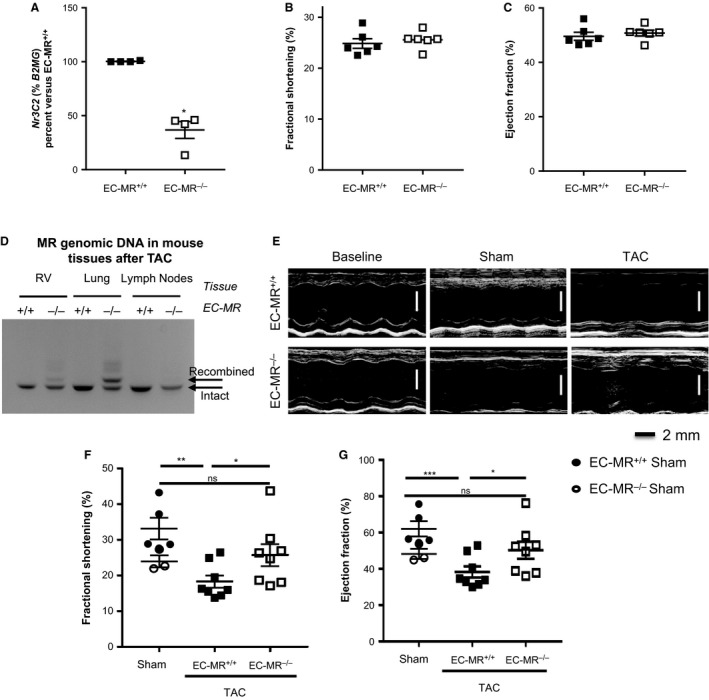
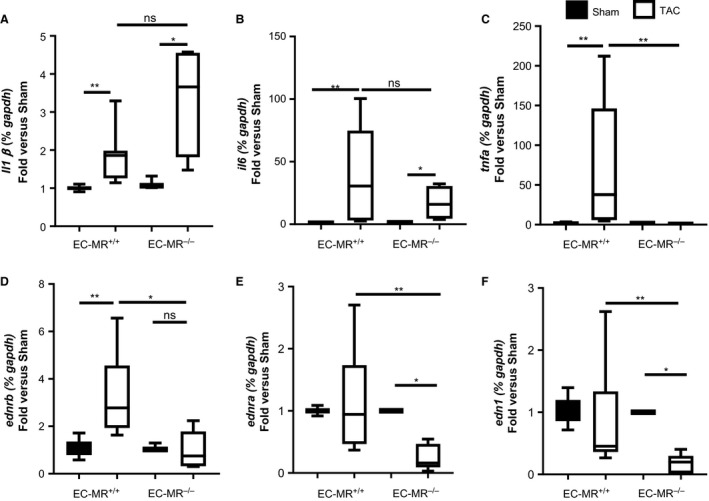
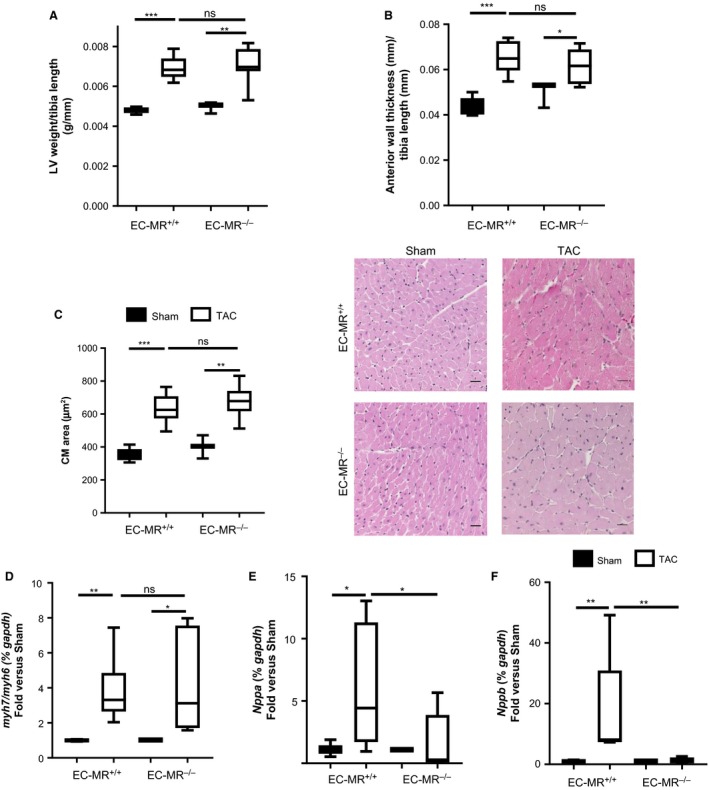
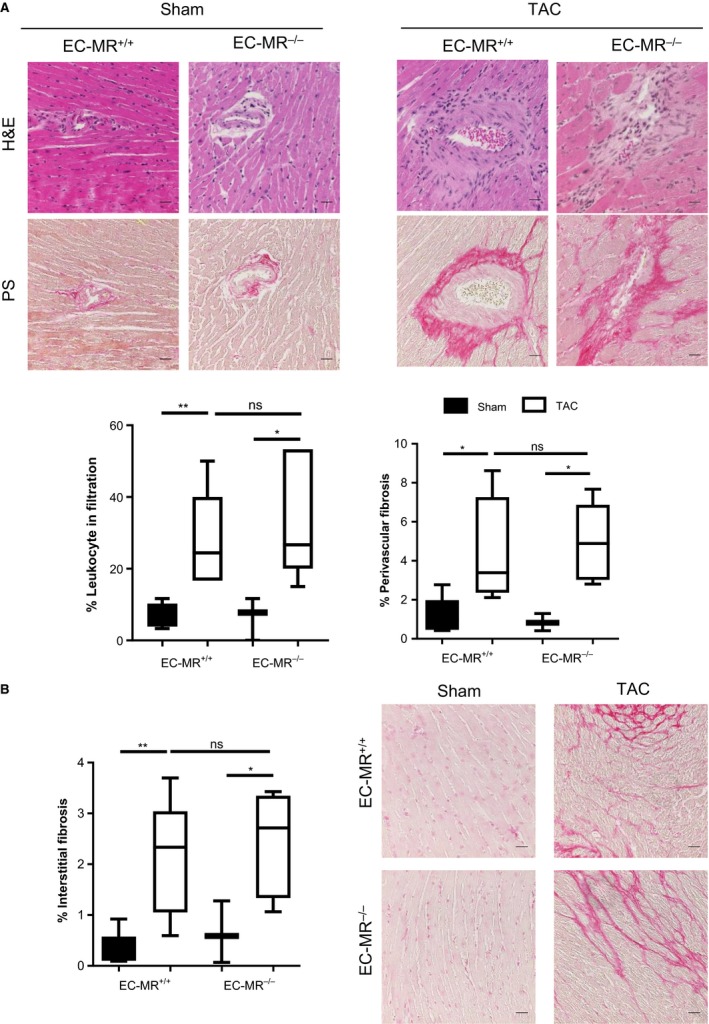
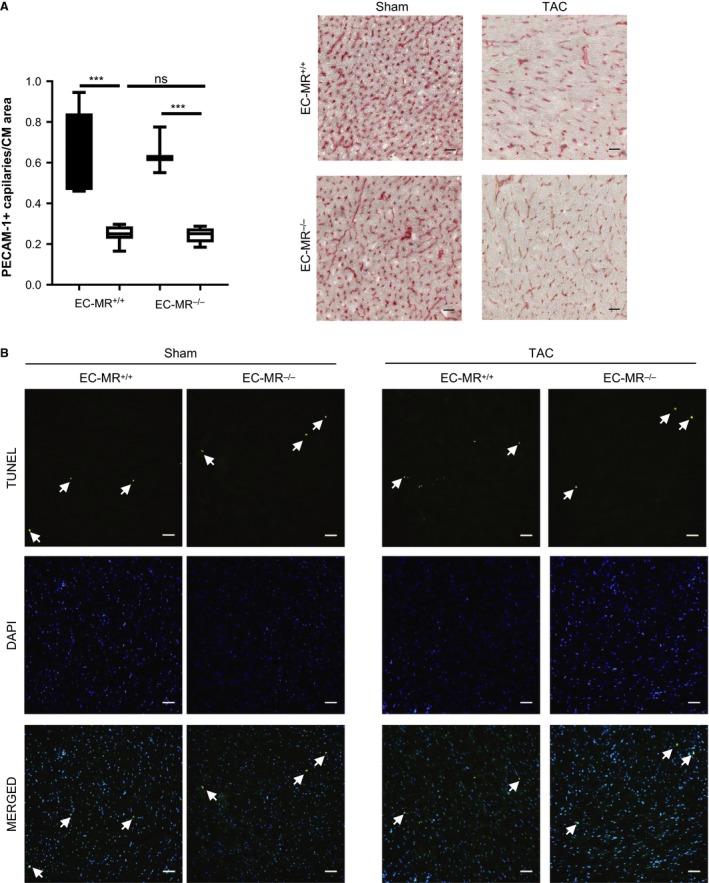
Heart Failure (HF) is associated with increased circulating levels of aldosterone and systemic inflammation. Mineralocorticoid receptor (MR) antagonists block aldosterone action and decrease mortality in patients with congestive HF However, the molecular mechanisms underlying the therapeutic benefits of MR antagonists remain unclear. MR is expressed in all cell types in the heart, including the endothelial cells (EC), in which aldosterone induces the expression of intercellular adhesion molecule 1 (ICAM-1). Recently, we reported that ICAM-1 regulates cardiac inflammation and cardiac function in mice subjected to transverse aortic constriction (TAC). Whether MR specifically in endothelial cells (EC) contributes to the several mechanisms of pathological cardiac remodeling and cardiac dysfunction remains unclear. Basal cardiac function and LV dimensions were comparable in mice with MR selectively deleted from ECs (EC-MR) and wild-type littermate controls (EC-MR). MR was specifically deleted in heart EC, and in EC-containing tissues, but not in leukocytes of TAC EC-MR mice. While EC-MR TAC mice showed preserved systolic function and some alterations in the expression of fetal genes, the proinflammatory cytokine TNF and the endothelin receptors in the LV as compared to EC-MR TAC mice, no difference was observed between both TAC groups in overall cardiac hypertrophy, ICAM-1 LV expression and leukocyte infiltration, cardiac fibrosis or capillary rarefaction, all hallmarks of pathological cardiac remodeling. Our data indicate that EC-MR contributes to the transition of cardiac hypertrophy to systolic dysfunction independently of other maladaptive changes induced by LV pressure overload.
心力衰竭(HF)与醛固酮循环水平升高和全身炎症相关。盐皮质激素受体(MR)拮抗剂可阻断醛固酮作用并降低充血性HF患者的死亡率。然而,MR拮抗剂治疗益处的分子机制仍不清楚。MR在心脏的所有细胞类型中均有表达,包括内皮细胞(EC),醛固酮可在内皮细胞中诱导细胞间黏附分子1(ICAM-1)的表达。最近,我们报道ICAM-1在接受横向主动脉缩窄(TAC)的小鼠中调节心脏炎症和心脏功能。内皮细胞(EC)中的MR是否特别促成病理性心脏重塑和心脏功能障碍的多种机制仍不清楚。从EC中选择性缺失MR的小鼠(EC-MR)和野生型同窝对照(EC-MR)的基础心脏功能和左心室尺寸相当。MR在心脏EC以及含EC的组织中被特异性缺失,但在TAC EC-MR小鼠的白细胞中未缺失。与EC-MR TAC小鼠相比,EC-MR TAC小鼠表现出保留的收缩功能以及左心室中胎儿基因、促炎细胞因子TNF和内皮素受体表达的一些改变,但在总体心脏肥大、ICAM-1左心室表达和白细胞浸润、心脏纤维化或毛细血管稀疏方面,两个TAC组之间未观察到差异,这些都是病理性心脏重塑的标志。我们的数据表明,EC-MR独立于左心室压力超负荷诱导的其他适应不良变化,促成心脏肥大向收缩功能障碍的转变。