Jacob Saya, Nodzenski Michael, Reisetter Anna C, Bain James R, Muehlbauer Michael J, Stevens Robert D, Ilkayeva Olga R, Lowe Lynn P, Metzger Boyd E, Newgard Christopher B, Scholtens Denise M, Lowe William L
Feinberg School of Medicine, Northwestern University, Chicago, IL.
Sarah W. Stedman Nutrition and Metabolism Center, Duke University Medical Center, Durham, NC.
Diabetes Care. 2017 Jul;40(7):911-919. doi: 10.2337/dc16-2453.
We used targeted metabolomics in pregnant mothers to compare maternal metabolite associations with maternal BMI, glycemia, and insulin sensitivity.
Targeted metabolomic assays of clinical metabolites, amino acids, and acylcarnitines were performed on fasting and 1-h postglucose serum samples from European ancestry, Afro-Caribbean, Thai, and Mexican American mothers (400 from each ancestry group) who participated in the Hyperglycemia and Adverse Pregnancy Outcome (HAPO) Study and underwent an oral glucose tolerance test at ∼28 weeks gestation.
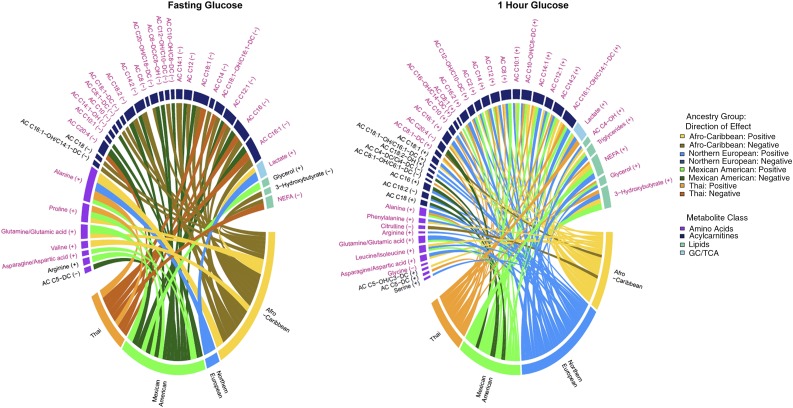
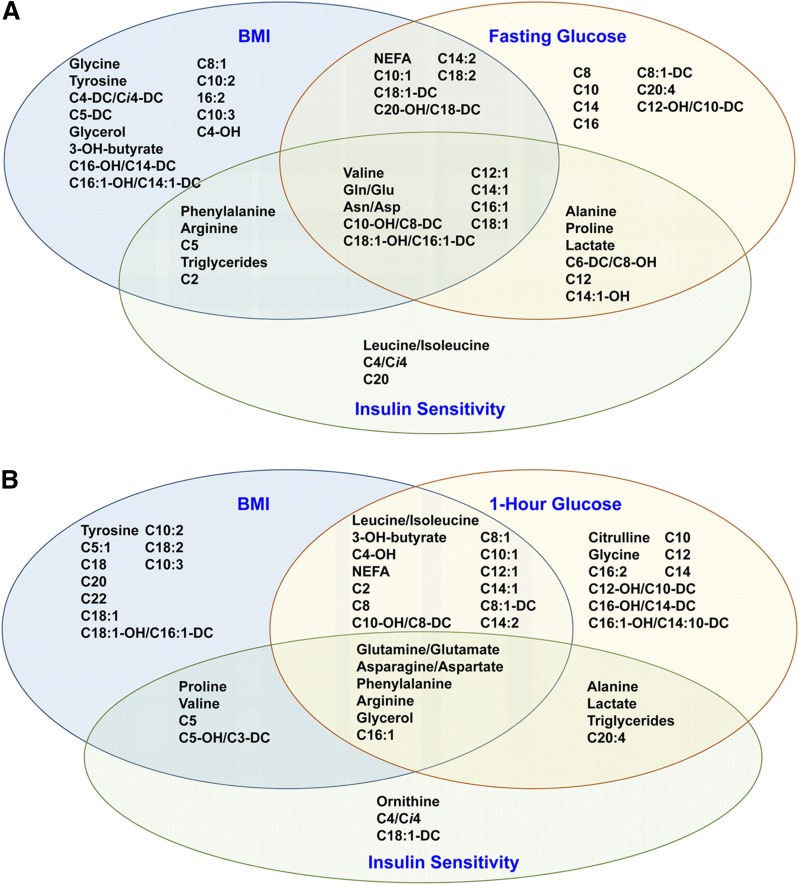
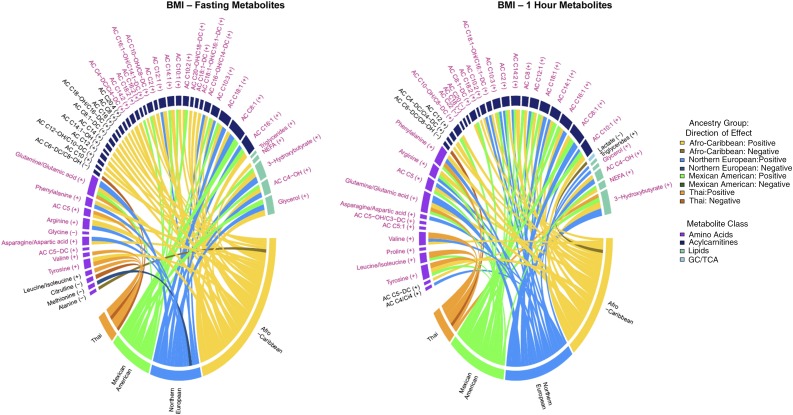
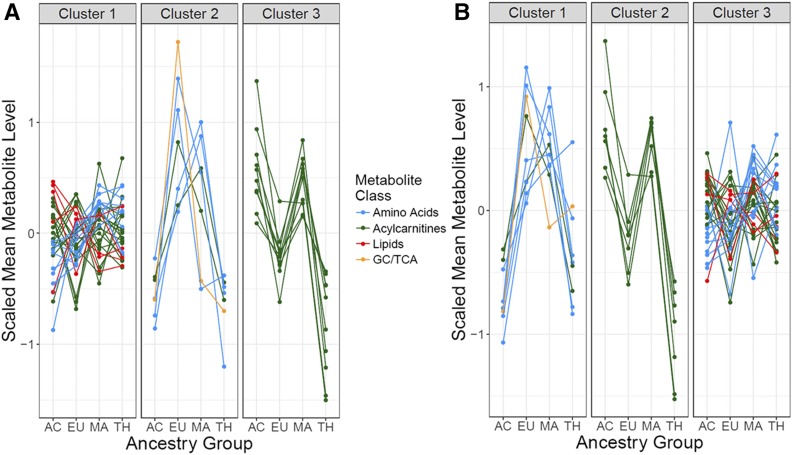
K-means clustering, which identified patterns of metabolite levels across ancestry groups, demonstrated that, at both fasting and 1-h, levels of the majority of metabolites were similar across ancestry groups. Meta-analyses demonstrated association of a broad array of fasting and 1-h metabolites, including lipids and amino acids and their metabolites, with maternal BMI, glucose levels, and insulin sensitivity before and after adjustment for the different phenotypes. At fasting and 1 h, a mix of metabolites was identified that were common across phenotypes or associated with only one or two phenotypes. Partial correlation estimates, which allowed comparison of the strength of association of different metabolites with maternal phenotypes, demonstrated that metabolites most strongly associated with different phenotypes included some that were common across as well as unique to each phenotype.
Maternal BMI and glycemia have metabolic signatures that are both shared and unique to each phenotype. These signatures largely remain consistent across different ancestry groups and may contribute to the common and independent effects of these two phenotypes on adverse pregnancy outcomes.
我们对孕妇进行靶向代谢组学研究,以比较母体代谢物与母体体重指数(BMI)、血糖和胰岛素敏感性之间的关联。
对参与高血糖与不良妊娠结局(HAPO)研究且在妊娠约28周时接受口服葡萄糖耐量试验的欧洲裔、非裔加勒比人、泰国人和墨西哥裔美国母亲(每个种族组400人)的空腹及葡萄糖负荷后1小时血清样本进行临床代谢物、氨基酸和酰基肉碱的靶向代谢组学分析。
通过K均值聚类确定各祖先群体间代谢物水平模式,结果表明,在空腹和1小时时,大多数代谢物水平在各祖先群体间相似。荟萃分析表明,在对不同表型进行调整前后,包括脂质、氨基酸及其代谢物在内的多种空腹和1小时代谢物与母体BMI、血糖水平及胰岛素敏感性相关。在空腹和1小时时,鉴定出了一系列在不同表型中常见或仅与一两种表型相关的代谢物。偏相关估计用于比较不同代谢物与母体表型的关联强度,结果表明,与不同表型关联最强的代谢物中,有些是各表型共有的,有些是各表型特有的。
母体BMI和血糖具有各表型共有的和独特的代谢特征。这些特征在不同祖先群体中基本保持一致,可能导致这两种表型对不良妊娠结局产生共同且独立的影响。