Zhang Jun-Xiu, Feng Yu, Zhang Yin, Liu Yi, Li Shao-Dan, Yang Ming-Hui
TCM Department, PLA General Hospital, Beijing 100853, China.
Afr J Tradit Complement Altern Med. 2017 Jun 5;14(4):96-107. doi: 10.21010/ajtcam.v14i4.12. eCollection 2017.
Blood stasis has received increasing attention in research related to traditional Chinese medicine (TCM) and integrative Chinese and Western medicine. More than 90% of research studies use hemorheology indexes to evaluate the establishment of animal blood stasis models rather than pathological methods, as hemorheology index evaluations of blood stasis were short of the consolidated standard. The aim of this study was to evaluate the accuracy of hemorheology indexes in rat models of acute blood stasis (ABS) based on studies in which the ABS model had been confirmed by pathological methods.
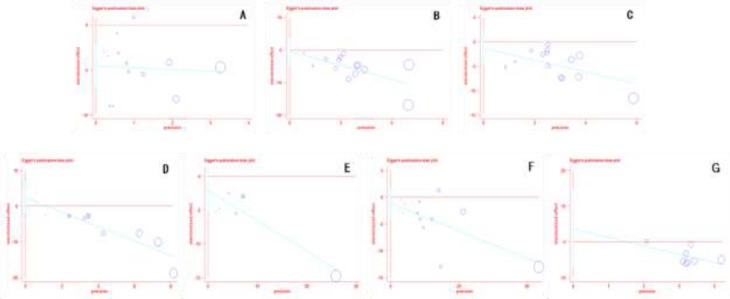
We searched the Chinese National Knowledge Infrastructure database (CNKI), Chinese Medical Journal Database (CMJD), Chinese Biology Medicine disc (CBM), Wanfang database, and PubMed for studies of rat blood stasis models; the search identified 18 studies of rat ABS models induced by subcutaneous injection of epinephrine combined with an ice bath. Each included study received a modified Collaborative Approach to Meta-Analysis and Review of Animal Data from Experimental Studies (CAMARADES) score list and methodological quality assessment, then data related to whole blood viscosity, plasma viscosity, platelet aggregation rate, erythrocyte aggregation index, and fibrinogen concentration were extracted. Extracted data were analyzed using Revman 5.3; heterogeneity was tested using Egger's test.
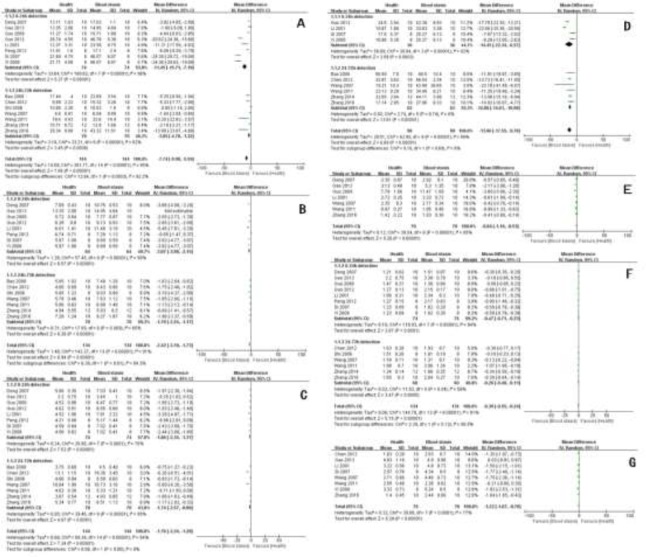
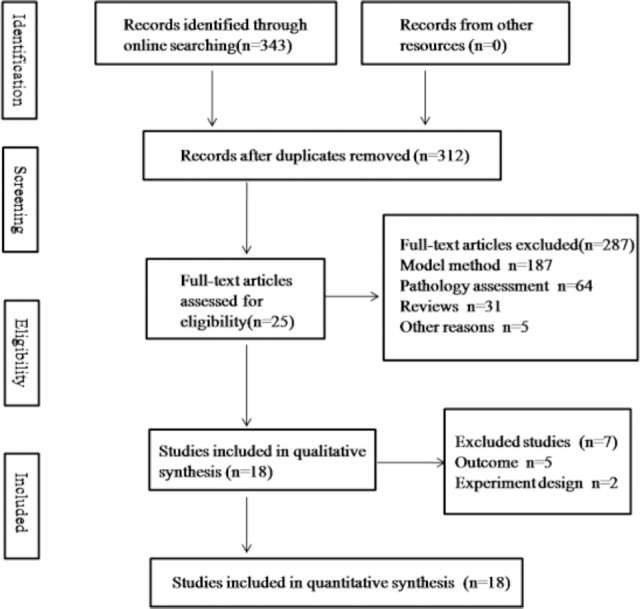
A total of 343 studies of rat blood stasis were reviewed. Eighteen studies were included in this meta-analysis; the mean CAMARADES score was 3.5. The rat ABS model revealed a significant increase in whole blood viscosity (medium shear rate), whole blood viscosity (high shear rate), plasma viscosity, platelet aggregation rate, erythrocyte aggregation index, and fibrinogen concentration compared to controls, with weighted mean differences (WMD) of 2.42 mPa/s (95% confidence interval (CI) = 1.73 - 3.10); 1.76 mPa/s (95% CI = 1.28 - 2.24); 0.39 mPa/s (95% CI = 0.24 - 0.55); 13.66% (95% CI = 9.78 - 17.55); 0.84 (95% CI = 0.53 - 1.16); and 1.22 g/L (95% CI = 0.76 - 1.67), respectively. Subgroup analysis showed that whole blood viscosity, plasma viscosity, and the platelet aggregation rate test methods were more sensitive when measured at 0-24 h than at 24-72 h after induction of blood stasis.
Rat blood stasis studies have incomplete experimental design and quality controls, and thus need an integrated improvement. Meta-analysis of included studies indicated that the unified hemorheology index of whole blood viscosity (medium and high shear rate), platelet aggregation rate, erythrocyte aggregation rate, and fibrinogen concentration might be used for assessment of rat ABS models independent of pathology methods.
血瘀在中医药及中西医结合研究中受到越来越多的关注。超过90%的研究使用血液流变学指标来评估动物血瘀模型的建立,而非病理方法,因为血瘀的血液流变学指标评估缺乏统一标准。本研究的目的是基于病理方法已证实的急性血瘀(ABS)大鼠模型研究,评估血液流变学指标在该模型中的准确性。
我们在中国知网数据库(CNKI)、中国医学期刊数据库(CMJD)、中国生物医学光盘数据库(CBM)、万方数据库及PubMed中检索大鼠血瘀模型的研究;检索确定了18项关于皮下注射肾上腺素联合冰浴诱导大鼠ABS模型的研究。每项纳入研究均接受改良的动物实验数据荟萃分析与综述协作方法(CAMARADES)评分列表及方法学质量评估,然后提取与全血粘度、血浆粘度、血小板聚集率、红细胞聚集指数及纤维蛋白原浓度相关的数据。使用Revman 5.3对提取的数据进行分析;使用Egger检验检测异质性。
共检索了343项大鼠血瘀研究。本荟萃分析纳入18项研究;平均CAMARADES评分为3.5。与对照组相比,大鼠ABS模型的全血粘度(中切变率)、全血粘度(高切变率)、血浆粘度、血小板聚集率、红细胞聚集指数及纤维蛋白原浓度显著升高,加权平均差(WMD)分别为2.42 mPa/s(95%置信区间(CI)=1.73 - 3.10);1.76 mPa/s(95% CI = 1.28 - 2.24);0.39 mPa/s(95% CI = 0.24 - 0.55);13.66%(95% CI = 9.78 - 17.55);0.84(95% CI = 0.53 - 1.16);及1.22 g/L(95% CI = 0.76 - 1.67)。亚组分析表明,血瘀诱导后0 - 24小时测量全血粘度、血浆粘度及血小板聚集率的检测方法比24 - 72小时更敏感。
大鼠血瘀研究的实验设计和质量控制不完整,因此需要综合改进。纳入研究的荟萃分析表明,全血粘度(中、高切变率)、血小板聚集率、红细胞聚集率及纤维蛋白原浓度的统一血液流变学指标可用于独立于病理方法评估大鼠ABS模型。