Chang Cara, Hu Yichun, Hogan Susan L, Mercke Nickie, Gomez Madeleine, O'Bryant Cindy, Bowles Daniel W, George Blessy, Wen Xia, Aleksunes Lauren M, Joy Melanie S
Department of Pharmaceutical Sciences, Skaggs School of Pharmacy and Pharmaceutical Sciences, University of Colorado, Aurora, CO 80045, USA.
Kidney Center, University of North Carolina School of Medicine, Division of Nephrology and Hypertension, Chapel Hill, NC 27599, USA.
Int J Mol Sci. 2017 Jun 22;18(7):1333. doi: 10.3390/ijms18071333.
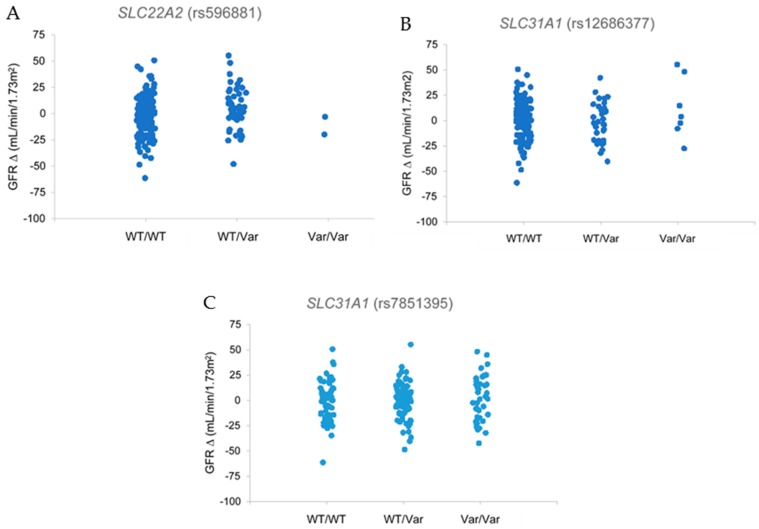
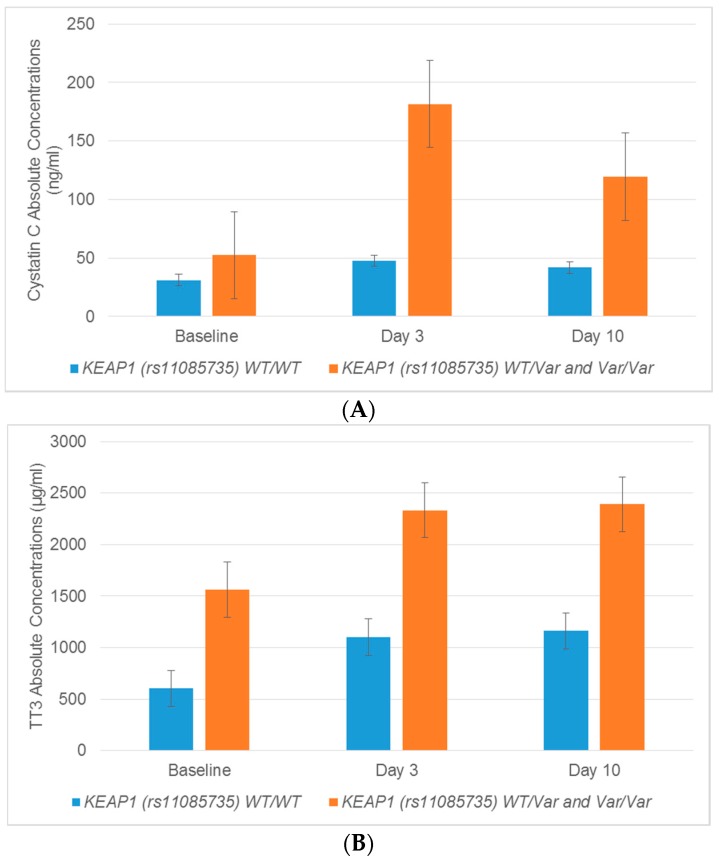
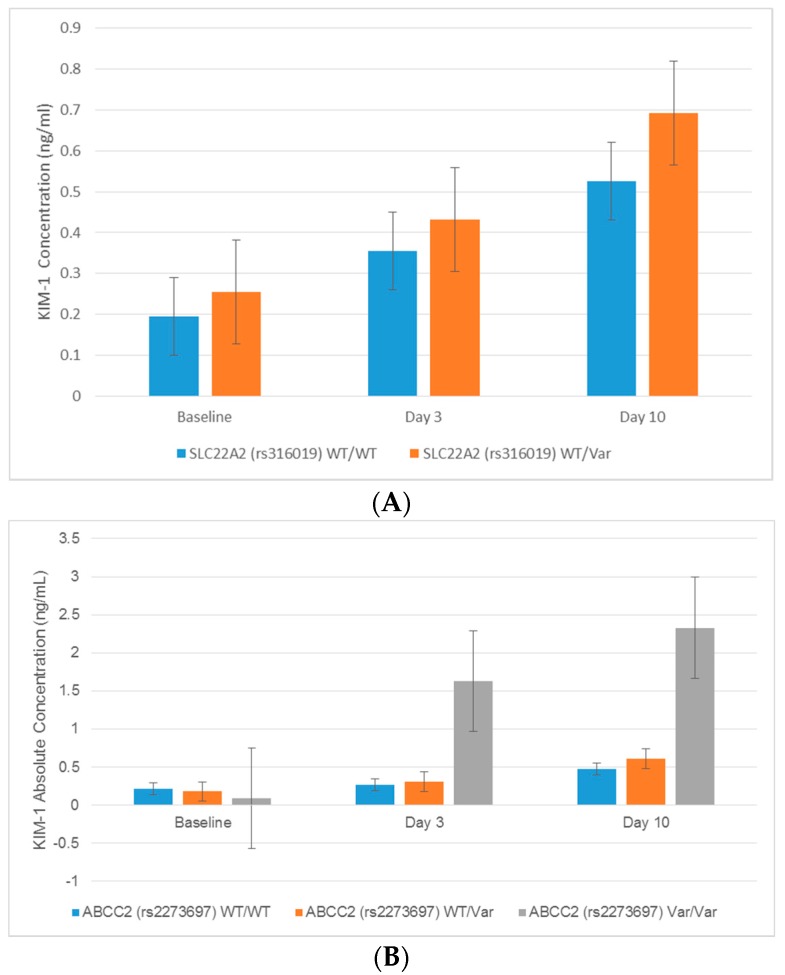
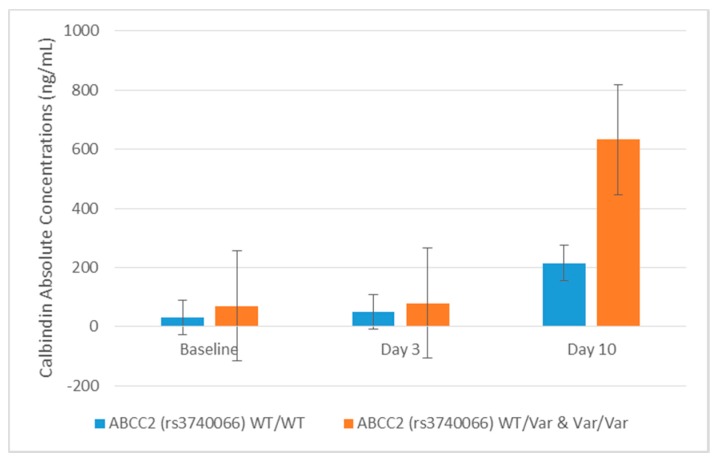
Nephrotoxicity is a dose limiting side effect associated with the use of cisplatin in the treatment of solid tumors. The degree of nephrotoxicity is dictated by the selective accumulation of cisplatin in renal tubule cells due to: (1) uptake by organic cation transporter 2 (OCT2) and copper transporter 1 (CTR1); (2) metabolism by glutathione S-transferases (GSTs) and γ-glutamyltransferase 1 (GGT1); and (3) efflux by multidrug resistance-associated protein 2 (MRP2) and multidrug and toxin extrusion protein 1 (MATE1). The purpose of this study was to determine the significance of single nucleotide polymorphisms that regulate the expression and function of transporters and metabolism genes implicated in development of acute kidney injury (AKI) in cisplatin treated patients. Changes in the kidney function were assessed using novel urinary protein biomarkers and traditional markers. Genotyping was conducted by the QuantStudio 12K Flex Real-Time PCR System using a custom open array chip with metabolism, transport, and transcription factor polymorphisms of interest to cisplatin disposition and toxicity. Traditional and novel biomarker assays for kidney toxicity were assessed for differences according to genotype by ANOVA. Allele and genotype frequencies were determined based on Caucasian population frequencies. The polymorphisms rs596881 (/OCT2), and rs12686377 and rs7851395 (/CTR1) were associated with renoprotection and maintenance of estimated glomerular filtration rate (eGFR). Polymorphisms in /OCT2, /CTRI, /MATE1, /MRP2, and were significantly associated with increases in the urinary excretion of novel AKI biomarkers: KIM-1, TFF3, MCP1, NGAL, clusterin, cystatin C, and calbindin. Knowledge concerning which genotypes in drug transporters are associated with cisplatin-induced nephrotoxicity may help to identify at-risk patients and initiate strategies, such as using lower or fractionated cisplatin doses or avoiding cisplatin altogether, in order to prevent AKI.
肾毒性是顺铂用于实体瘤治疗时的一种剂量限制性副作用。肾毒性程度取决于顺铂在肾小管细胞中的选择性蓄积,其原因如下:(1) 通过有机阳离子转运体2(OCT2)和铜转运体1(CTR1)摄取;(2) 由谷胱甘肽S-转移酶(GSTs)和γ-谷氨酰转移酶1(GGT1)代谢;(3) 通过多药耐药相关蛋白2(MRP2)和多药及毒素外排蛋白1(MATE1)外排。本研究的目的是确定单核苷酸多态性的意义,这些多态性调节与顺铂治疗患者急性肾损伤(AKI)发生相关的转运体和代谢基因的表达及功能。使用新型尿蛋白生物标志物和传统标志物评估肾功能变化。通过QuantStudio 12K Flex实时PCR系统,使用定制的开放式阵列芯片进行基因分型,该芯片包含与顺铂处置和毒性相关的代谢、转运和转录因子多态性。通过方差分析评估传统和新型肾毒性生物标志物检测在不同基因型之间的差异。根据白种人群频率确定等位基因和基因型频率。多态性rs596881(/OCT2)、rs12686377和rs7851395(/CTR1)与肾脏保护及估算肾小球滤过率(eGFR)的维持相关。/OCT2、/CTRI、/MATE1、/MRP2和 中的多态性与新型AKI生物标志物(KIM-1、TFF3、MCP1、NGAL、簇蛋白、胱抑素C和钙结合蛋白)尿排泄增加显著相关。了解药物转运体中的哪些基因型与顺铂诱导的肾毒性相关,可能有助于识别高危患者并启动相应策略,如使用较低剂量或分次给予顺铂剂量,或完全避免使用顺铂,以预防AKI。