Huang Xianhe, Bai Qingsong, Zhou Qi, Hu Jianguo
School of Automation Engineering, University of Electronic Science and Technology of China, Chengdu 611731, China.
Sensors (Basel). 2017 Jun 22;17(7):1476. doi: 10.3390/s17071476.
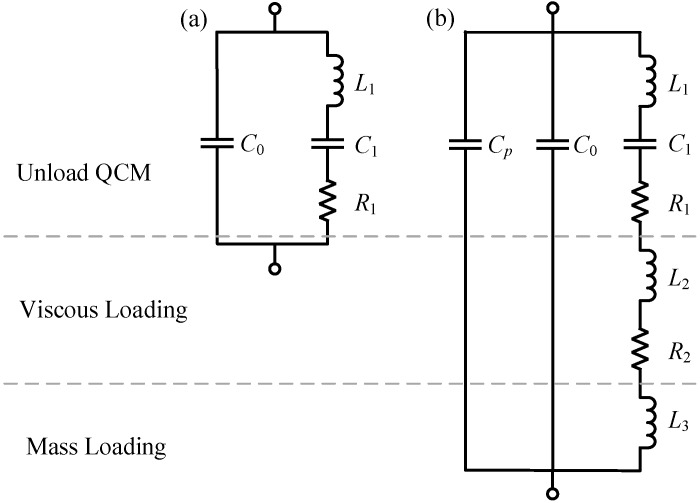
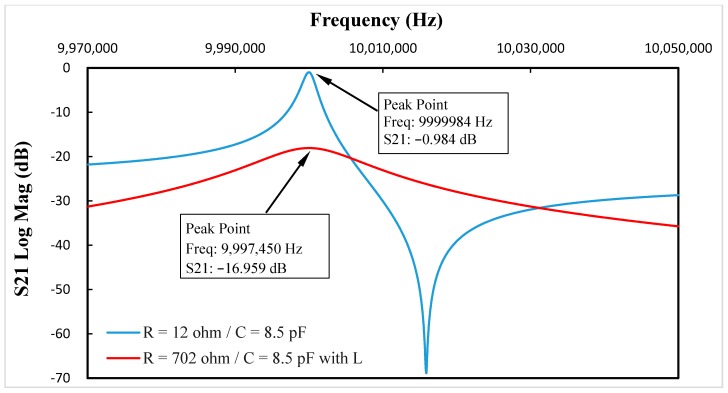
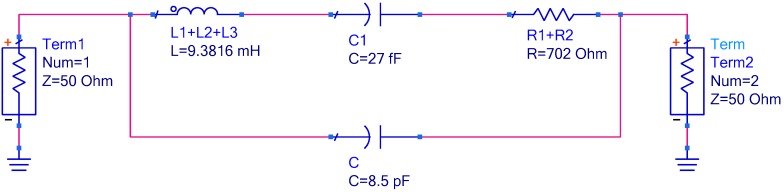
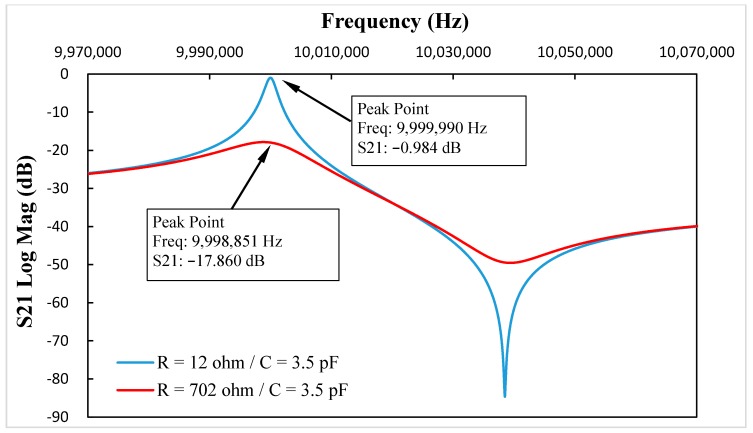
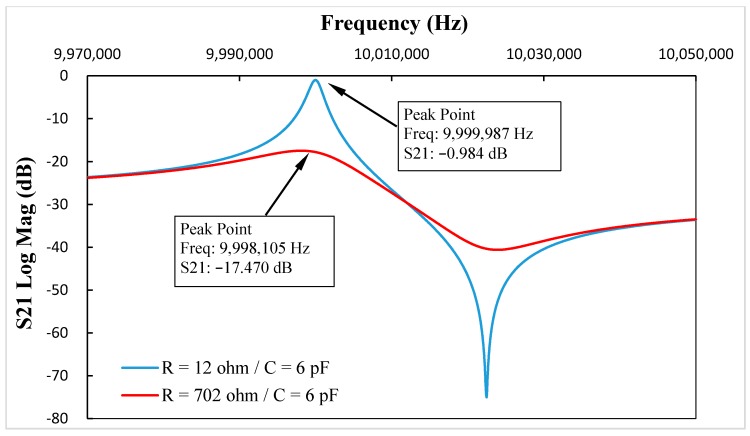
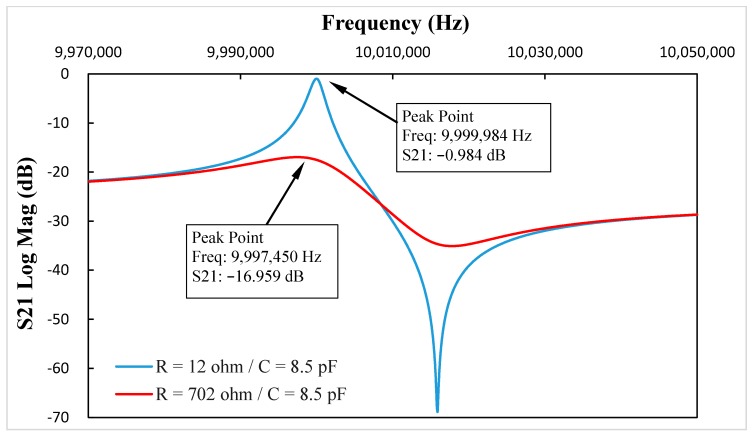
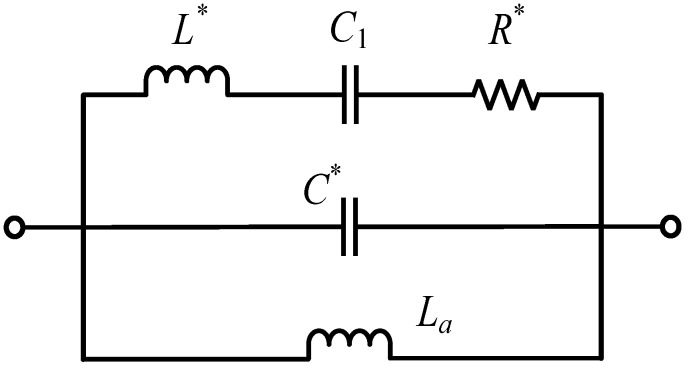
Due to the influence of liquid load, the equivalent resistance of in-liquid quartz crystal microbalance (QCM) increases sharply, and the quality factor and resonant frequency decreases. We found that the change in the resonant frequency of in-liquid QCM consisted of two parts: besides the frequency changes due to the mass and viscous load (which could be equivalent to motional inductance), the second part of frequency change was caused by the increase of motional resistance. The theoretical calculation and simulation proved that the increases of QCM motional resistance may indeed cause the decreases of resonant frequency, and revealed that the existence of static capacitance was the root cause of this frequency change. The second part of frequency change (due to the increases of motional resistance) was difficult to measure accurately, and may cause great error for in-liquid QCM applications. A technical method to reduce the interference caused by this effect is presented. The study contributes to the accurate determination of the frequency and amplitude change of in-liquid QCM caused by liquid load, which is significant for the QCM applications in the liquid phase.
由于液体负载的影响,液中石英晶体微天平(QCM)的等效电阻急剧增加,品质因数和谐振频率降低。我们发现,液中QCM谐振频率的变化由两部分组成:除了由于质量和粘性负载引起的频率变化(这可等效为运动电感)外,频率变化的第二部分是由运动电阻的增加引起的。理论计算和仿真证明,QCM运动电阻的增加确实可能导致谐振频率降低,并揭示了静态电容的存在是这种频率变化的根本原因。频率变化的第二部分(由于运动电阻的增加)难以精确测量,并且可能给液中QCM的应用带来很大误差。提出了一种减少这种效应引起的干扰的技术方法。该研究有助于准确确定液体负载引起的液中QCM频率和振幅变化,这对QCM在液相中的应用具有重要意义。