Procek Marcin, Stolarczyk Agnieszka, Pustelny Tadeusz, Maciak Erwin
Department of Optoelectronics, Silesian University of Technology, 2 Akademicka St., 44-100 Gliwice, Poland.
Department of Physical Chemistry and Technology of Polymers, Silesian University of Technology, 9 Strzody St., 44-100 Gliwice, Poland.
Sensors (Basel). 2015 Apr 22;15(4):9563-81. doi: 10.3390/s150409563.
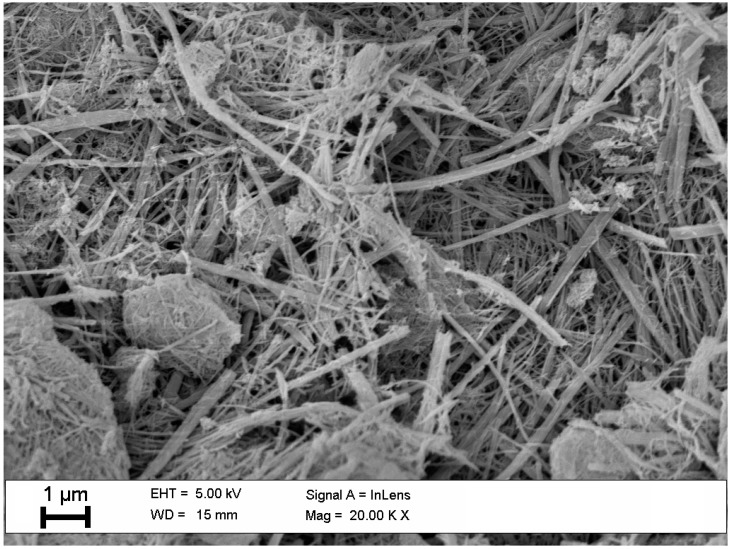
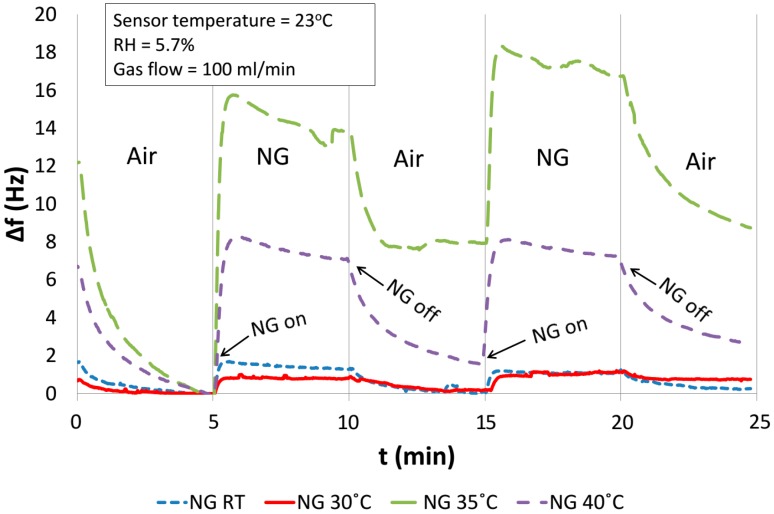
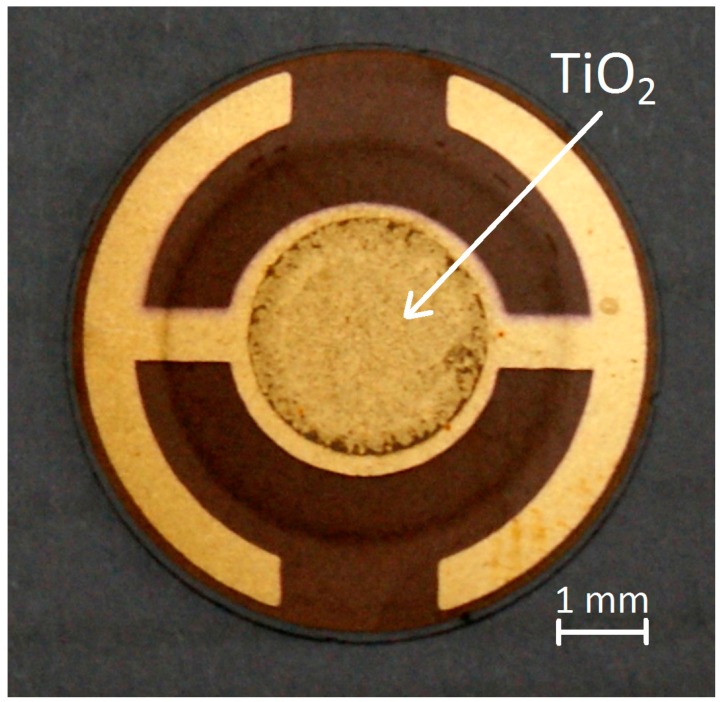
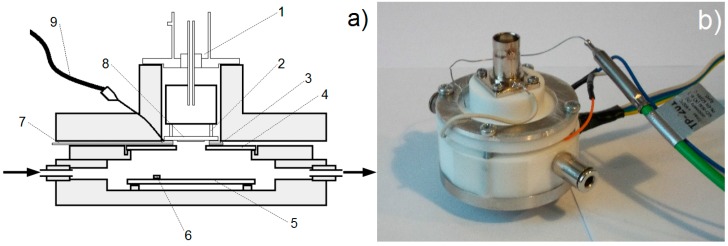
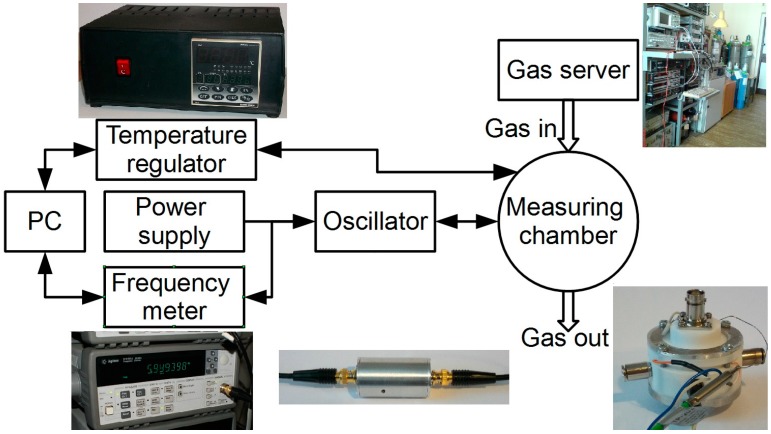
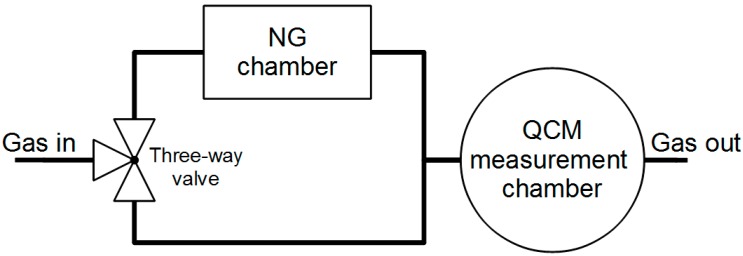
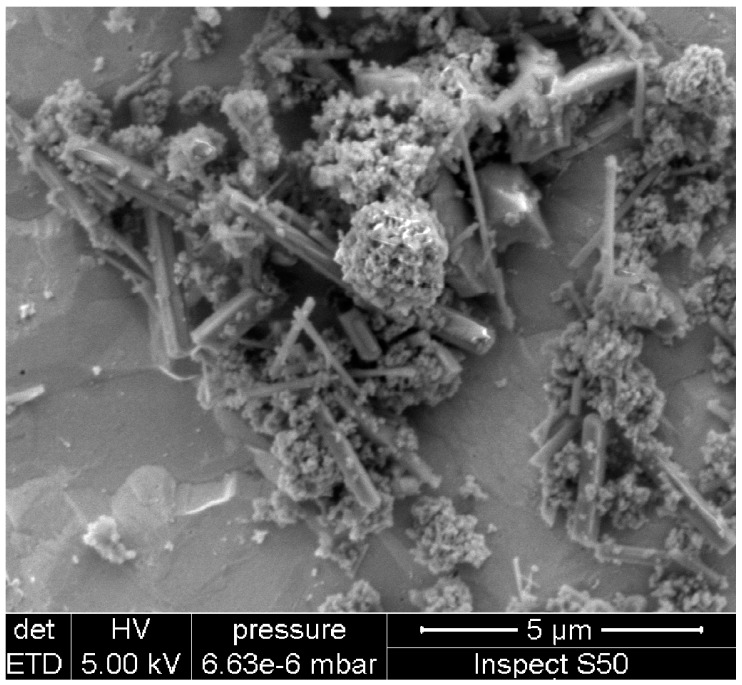
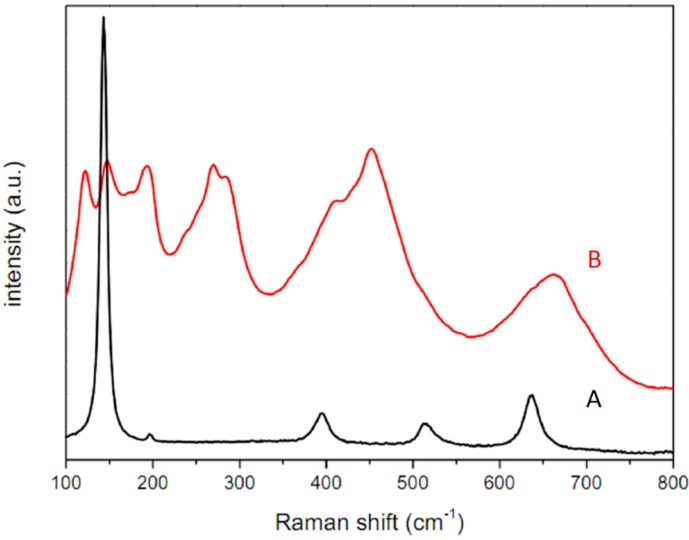
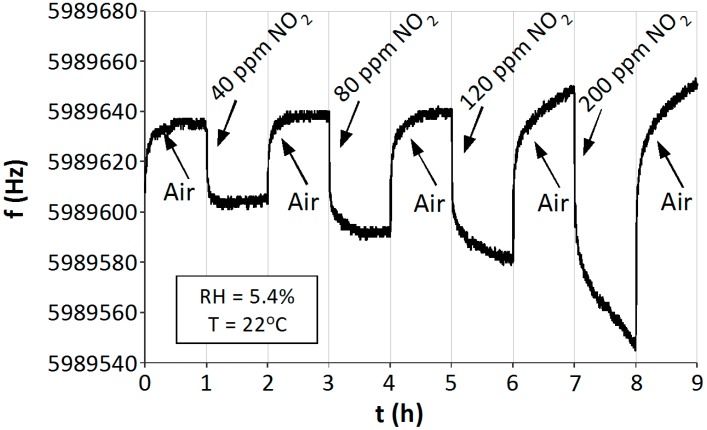
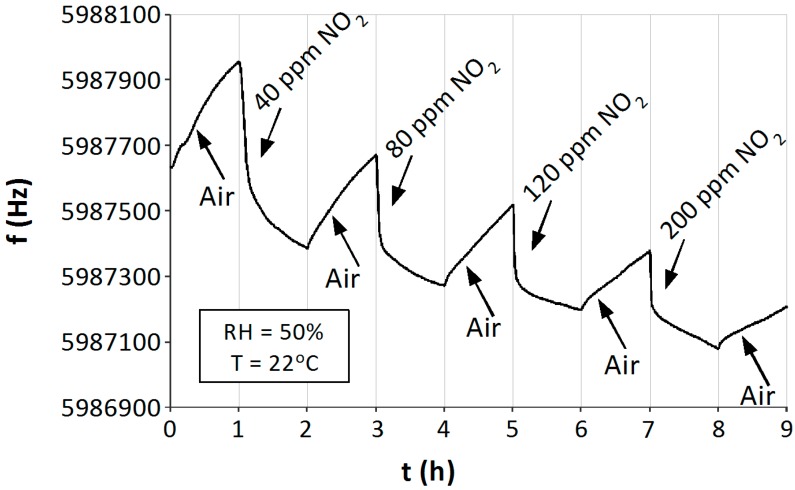
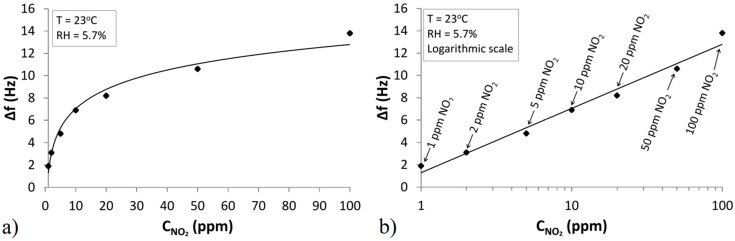
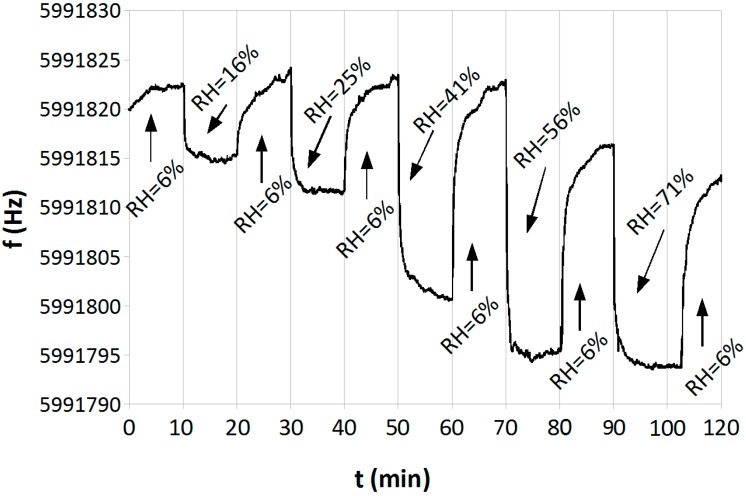
The paper deals with investigations concerning the construction of sensors based on a quartz crystal microbalance (QCM) containing a TiO2 nanostructures sensor layer. A chemical method of synthesizing these nanostructures is presented. The prepared prototype of the QCM sensing system, as well as the results of tests for detecting low NO2 concentrations in an atmosphere of synthetic air have been described. The constructed NO2 sensors operate at room temperature, which is a great advantage, because resistance sensors based on wide gap semiconductors often require much higher operation temperatures, sometimes as high as 500 °C. The sensors constructed by the authors can be used, among other applications, in medical and chemical diagnostics, and also for the purpose of detecting explosive vapours. Reactions of the sensor to nitroglycerine vapours are presented as an example of its application. The influence of humidity on the operation of the sensor was studied.
本文涉及基于包含TiO2纳米结构传感层的石英晶体微天平(QCM)构建传感器的研究。介绍了合成这些纳米结构的化学方法。描述了所制备的QCM传感系统原型以及在合成空气气氛中检测低浓度NO2的测试结果。所构建的NO2传感器在室温下工作,这是一个很大的优势,因为基于宽禁带半导体的电阻式传感器通常需要更高的工作温度,有时高达500°C。作者构建的传感器除其他应用外,可用于医学和化学诊断,也可用于检测爆炸性蒸气。作为其应用示例,展示了传感器对硝酸甘油蒸气的反应。研究了湿度对传感器运行的影响。