Goffredo Martina, Santoro Nicola, Tricò Domenico, Giannini Cosimo, D'Adamo Ebe, Zhao Hongyu, Peng Gang, Yu Xiaoqing, Lam Tukiet T, Pierpont Bridget, Caprio Sonia, Herzog Raimund I
Department of Pediatrics, Yale University School of Medicine, 330 Cedar Street, P.O. Box 208064, New Haven, CT 06520, USA.
Department of Internal Medicine, Yale University School of Medicine, 300 Cedar Street, P.O. Box 208020, New Haven, CT 06520, USA.
Nutrients. 2017 Jun 22;9(7):642. doi: 10.3390/nu9070642.
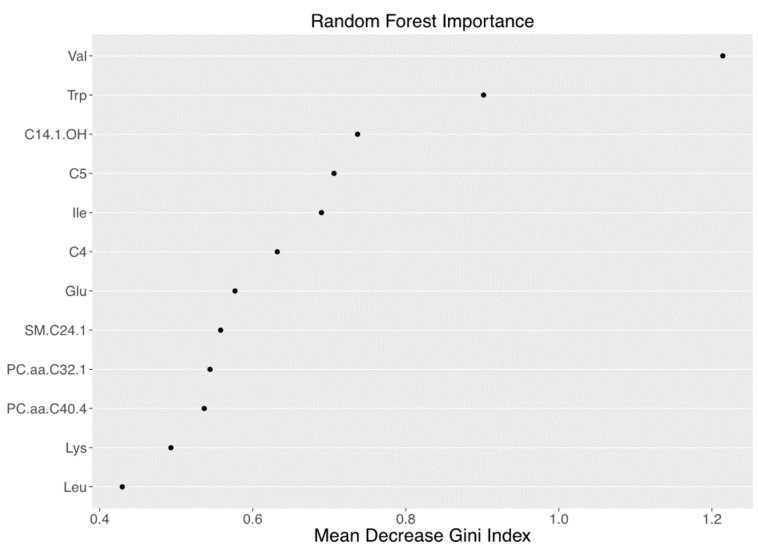
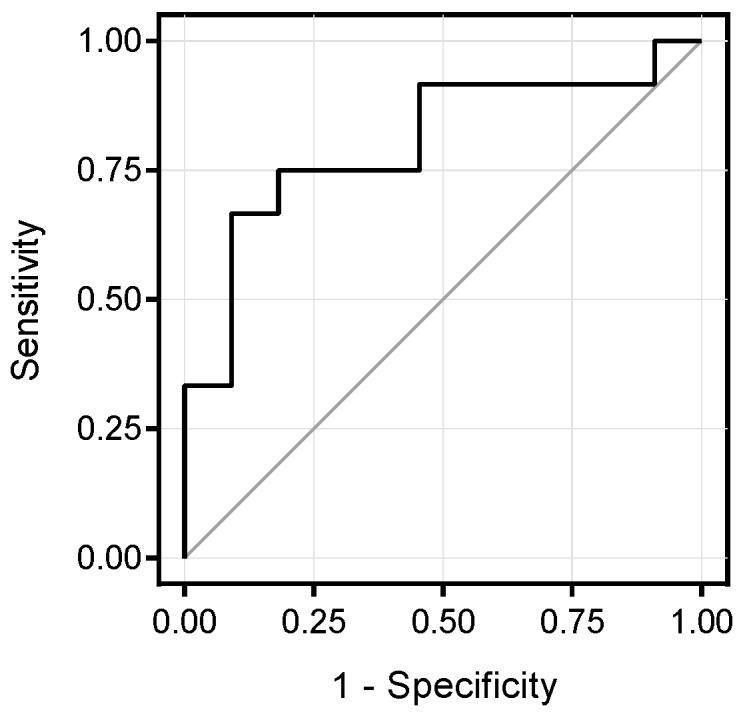
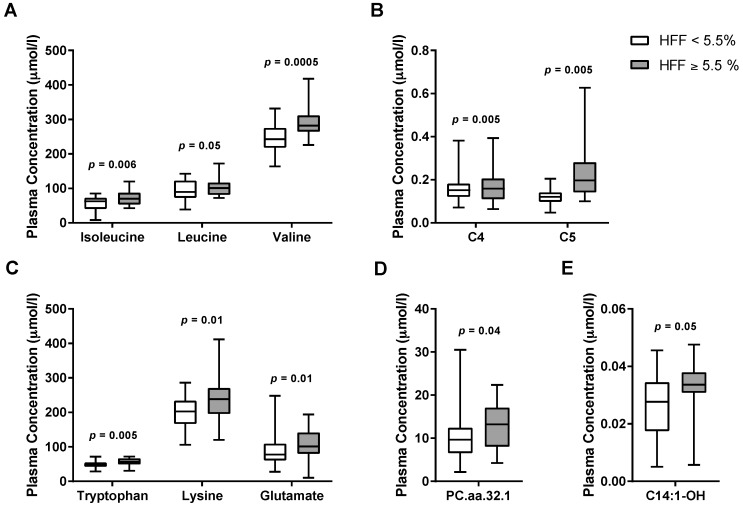
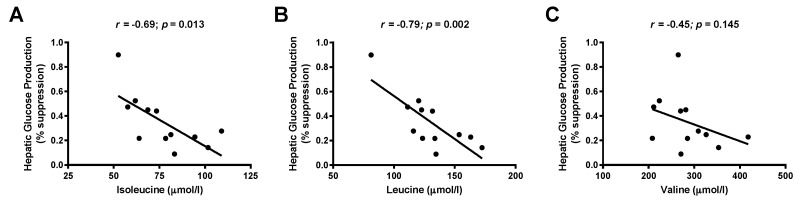
Dysregulation of several metabolite pathways, including branched-chain amino acids (BCAAs), are associated with Non-Alcoholic Fatty Liver Disease (NAFLD) and insulin resistance in adults, while studies in youth reported conflicting results. We explored whether, independently of obesity and insulin resistance, obese adolescents with NAFLD display a metabolomic signature consistent with disturbances in amino acid and lipid metabolism. A total of 180 plasma metabolites were measured by a targeted metabolomic approach in 78 obese adolescents with ( = 30) or without ( = 48) NAFLD assessed by magnetic resonance imaging (MRI). All subjects underwent an oral glucose tolerance test and subsets of patients underwent a two-step hyperinsulinemic-euglycemic clamp and/or a second MRI after a 2.2 ± 0.8-year follow-up. Adolescents with NAFLD had higher plasma levels of valine ( = 0.02), isoleucine ( = 0.03), tryptophan ( = 0.02), and lysine ( = 0.02) after adjustment for confounding factors. Circulating BCAAs were negatively correlated with peripheral and hepatic insulin sensitivity. Furthermore, higher baseline valine levels predicted an increase in hepatic fat content (HFF) at follow-up ( = 0.01). These results indicate that a dysregulation of BCAA metabolism characterizes obese adolescents with NAFLD independently of obesity and insulin resistance and predict an increase in hepatic fat content over time.
包括支链氨基酸(BCAAs)在内的几种代谢物途径失调与成人非酒精性脂肪性肝病(NAFLD)和胰岛素抵抗有关,而针对青少年的研究报告的结果相互矛盾。我们探讨了患有NAFLD的肥胖青少年是否独立于肥胖和胰岛素抵抗,表现出与氨基酸和脂质代谢紊乱一致的代谢组学特征。通过靶向代谢组学方法,对78名通过磁共振成像(MRI)评估患有(n = 30)或未患有(n = 48)NAFLD的肥胖青少年的180种血浆代谢物进行了测量。所有受试者均接受口服葡萄糖耐量试验,部分患者在2.2±0.8年的随访后接受了两步高胰岛素-正葡萄糖钳夹试验和/或第二次MRI检查。在对混杂因素进行调整后,患有NAFLD的青少年血浆缬氨酸(P = 0.02)、异亮氨酸(P = 0.03)、色氨酸(P = 0.02)和赖氨酸(P = 0.02)水平较高。循环中的支链氨基酸与外周和肝脏胰岛素敏感性呈负相关。此外,较高的基线缬氨酸水平预示着随访时肝脏脂肪含量(HFF)会增加(P = 0.01)。这些结果表明,支链氨基酸代谢失调是患有NAFLD的肥胖青少年的特征,独立于肥胖和胰岛素抵抗,并预示着肝脏脂肪含量会随时间增加。