Tiffany Amanda, Dalziel Benjamin D, Kagume Njenge Hilary, Johnson Ginger, Nugba Ballah Roselyn, James Daniel, Wone Abdoulaye, Bedford Juliet, McClelland Amanda
Epicentre, Geneva, Switzerland.
Department of Integrative Biology, Oregon State University, Corvallis, Oregon, United States of America.
PLoS Negl Trop Dis. 2017 Jun 22;11(6):e0005491. doi: 10.1371/journal.pntd.0005491. eCollection 2017 Jun.
Safely burying Ebola infected individuals is acknowledged to be important for controlling Ebola epidemics and was a major component of the 2013-2016 West Africa Ebola response. Yet, in order to understand the impact of safe burial programs it is necessary to elucidate the role of unsafe burials in sustaining chains of Ebola transmission and how the risk posed by activities surrounding unsafe burials, including care provided at home prior to death, vary with human behavior and geography.
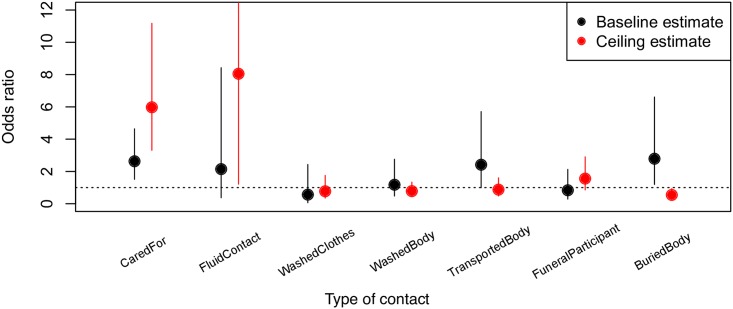
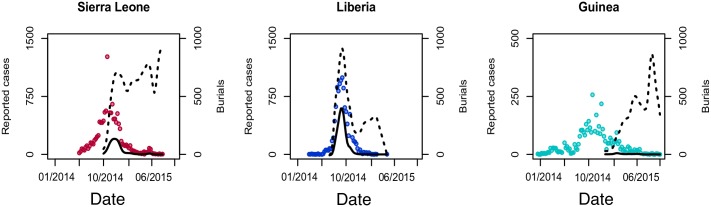
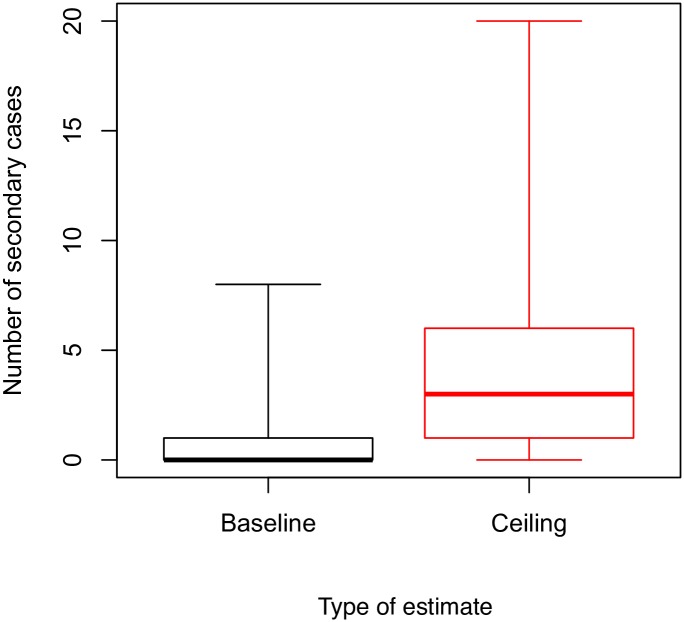
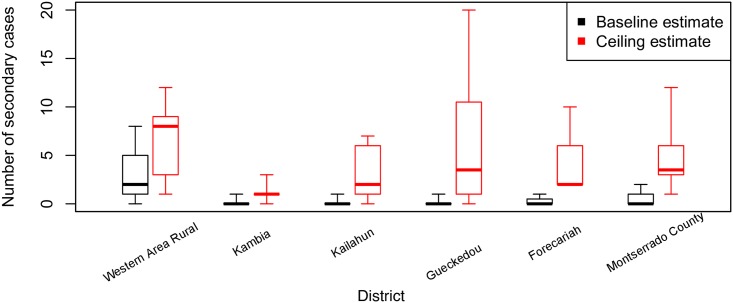
METHODOLOGY/PRINCIPAL FINDINGS: Interviews with next of kin and community members were carried out for unsafe burials in Sierra Leone, Liberia and Guinea, in six districts where the Red Cross was responsible for safe and dignified burials (SDB). Districts were randomly selected from a district-specific sampling frame comprised of villages and neighborhoods that had experienced cases of Ebola. An average of 2.58 secondary cases were potentially generated per unsafe burial and varied by district (range: 0-20). Contact before and after death was reported for 142 (46%) contacts. Caregivers of a primary case were 2.63 to 5.92 times more likely to become EVD infected compared to those with post-mortem contact only. Using these estimates, the Red Cross SDB program potentially averted between 1,411 and 10,452 secondary EVD cases, reducing the epidemic by 4.9% to 36.5%.
CONCLUSIONS/SIGNIFICANCE: SDB is a fundamental control measure that limits community transmission of Ebola; however, for those individuals having contact before and after death, it was impossible to ascertain the exposure that caused their infection. The number of infections prevented through SDB is significant, yet greater impact would be achieved by early hospitalization of the primary case during acute illness.
安全埋葬埃博拉病毒感染者被认为对控制埃博拉疫情至关重要,并且是2013 - 2016年西非埃博拉应对行动的一个主要组成部分。然而,为了了解安全埋葬计划的影响,有必要阐明不安全埋葬在维持埃博拉传播链中的作用,以及包括死亡前在家中提供的护理在内的不安全埋葬周边活动所带来的风险如何随人类行为和地理位置而变化。
方法/主要发现:在塞拉利昂、利比里亚和几内亚的六个地区,针对不安全埋葬情况对近亲及社区成员进行了访谈,在这些地区红十字会负责安全体面的埋葬(SDB)。这些地区是从一个特定地区的抽样框架中随机选取的,该框架由曾出现过埃博拉病例的村庄和社区组成。每次不安全埋葬平均可能产生2.58例二代病例,且因地区而异(范围:0 - 20)。报告了142次(46%)接触在死亡前后的情况。与仅在死后有接触的人相比,首例病例的护理人员感染埃博拉病毒病(EVD)的可能性高2.63至5.92倍。根据这些估计,红十字会的SDB计划可能避免了1411至10452例二代EVD病例,使疫情减少了4.9%至36.5%。
结论/意义:安全体面埋葬是限制埃博拉社区传播的一项基本控制措施;然而,对于那些在死亡前后有接触的人,无法确定导致他们感染的暴露情况。通过安全体面埋葬预防的感染数量是可观的,但通过在急性期对首例病例进行早期住院治疗会取得更大的效果。