Rivers Caitlin M, Lofgren Eric T, Marathe Madhav, Eubank Stephen, Lewis Bryan L
Network Dynamics and Simulation Science Laboratory, Virginia Bioinformatics Institute, Virginia Tech, Blacksburg, Virginia, USA.
PLoS Curr. 2014 Oct 16;6:ecurrents.outbreaks.fd38dd85078565450b0be3fcd78f5ccf. doi: 10.1371/currents.outbreaks.fd38dd85078565450b0be3fcd78f5ccf.
An Ebola outbreak of unparalleled size is currently affecting several countries in West Africa, and international efforts to control the outbreak are underway. However, the efficacy of these interventions, and their likely impact on an Ebola epidemic of this size, is unknown. Forecasting and simulation of these interventions may inform public health efforts.
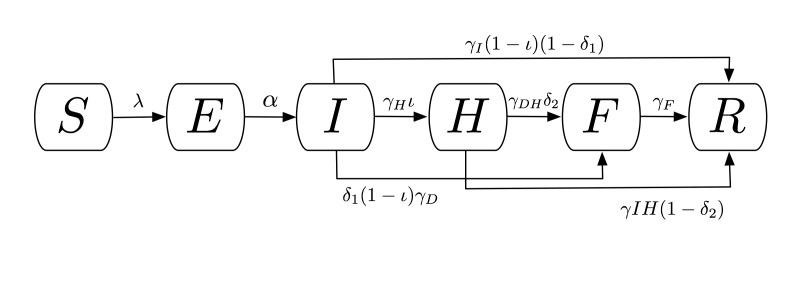
We use existing data from Liberia and Sierra Leone to parameterize a mathematical model of Ebola and use this model to forecast the progression of the epidemic, as well as the efficacy of several interventions, including increased contact tracing, improved infection control practices, the use of a hypothetical pharmaceutical intervention to improve survival in hospitalized patients.
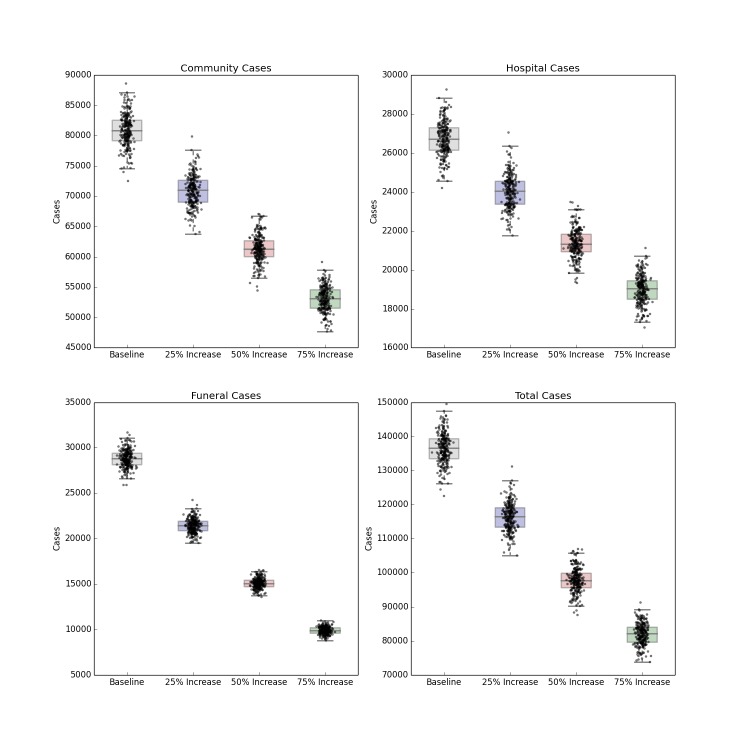
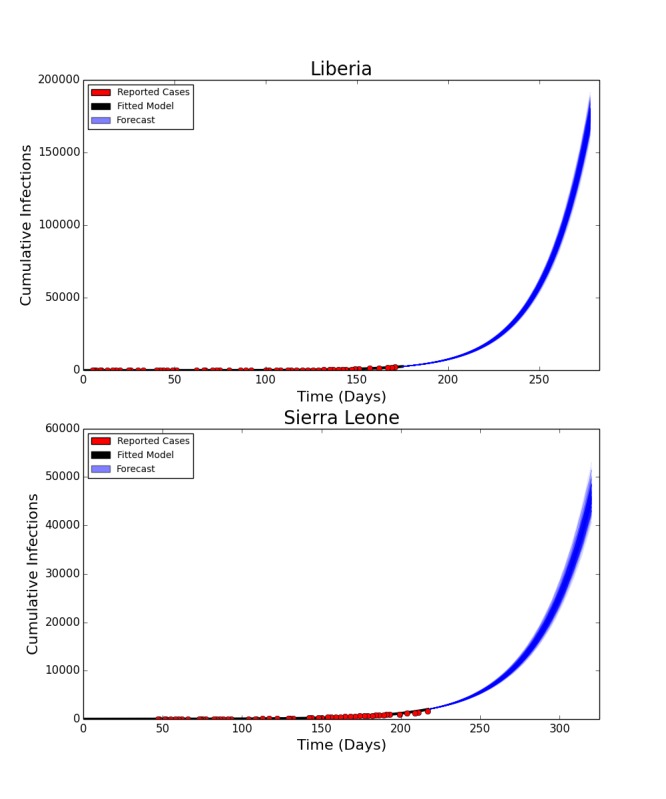
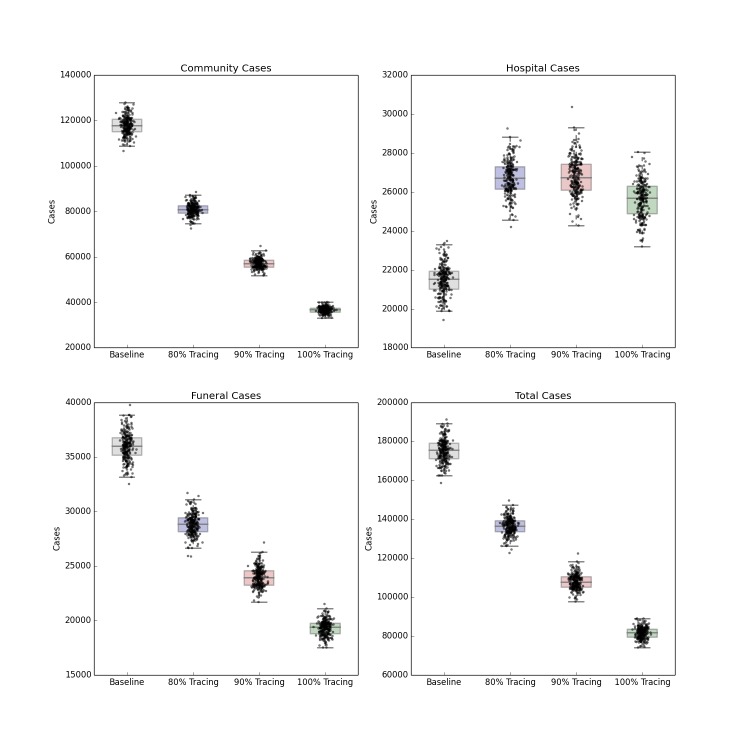
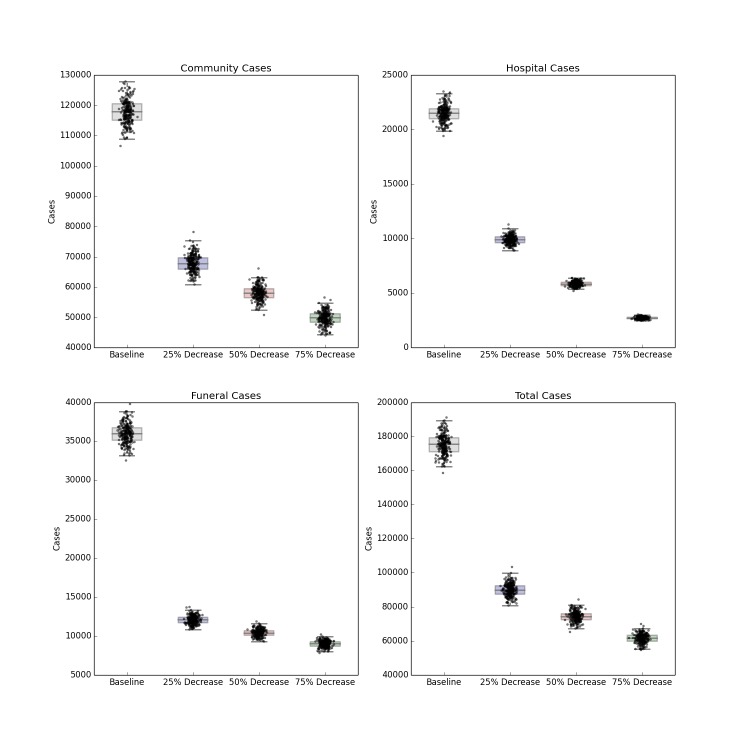
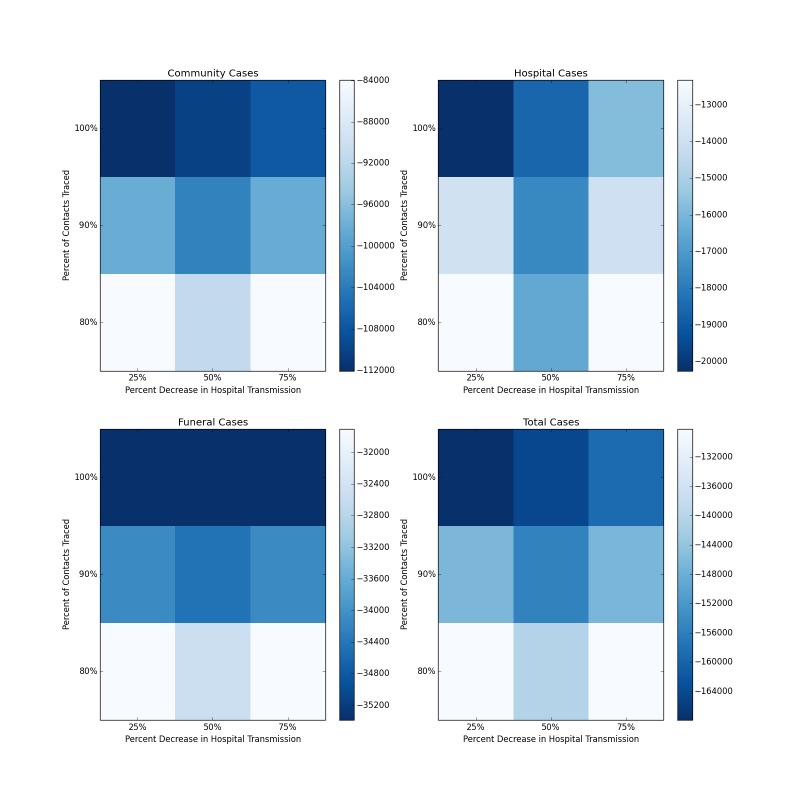
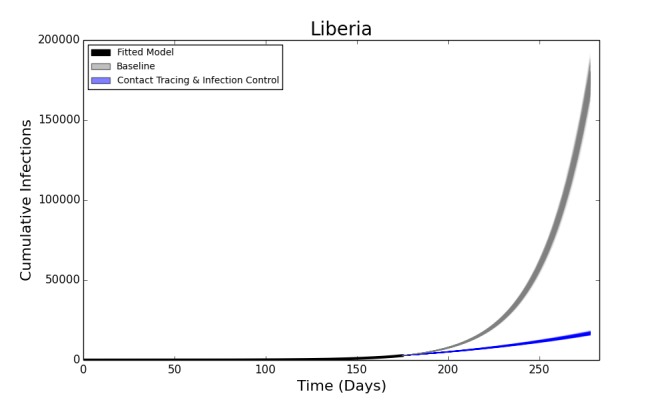
Model forecasts until Dec. 31, 2014 show an increasingly severe epidemic with no sign of having reached a peak. Modeling results suggest that increased contact tracing, improved infection control, or a combination of the two can have a substantial impact on the number of Ebola cases, but these interventions are not sufficient to halt the progress of the epidemic. The hypothetical pharmaceutical intervention, while impacting mortality, had a smaller effect on the forecasted trajectory of the epidemic.
Near-term, practical interventions to address the ongoing Ebola epidemic may have a beneficial impact on public health, but they will not result in the immediate halting, or even obvious slowing of the epidemic. A long-term commitment of resources and support will be necessary to address the outbreak.
一场规模空前的埃博拉疫情目前正在影响西非的几个国家,国际社会正在努力控制疫情。然而,这些干预措施的效果以及它们对如此规模的埃博拉疫情可能产生的影响尚不清楚。对这些干预措施进行预测和模拟可能有助于公共卫生工作。
我们利用来自利比里亚和塞拉利昂的现有数据对埃博拉数学模型进行参数化,并使用该模型预测疫情的发展以及几种干预措施的效果,包括加强接触者追踪、改善感染控制措施、使用一种假设的药物干预措施来提高住院患者的生存率。
到2014年12月31日的模型预测显示疫情日益严重,没有达到峰值的迹象。建模结果表明,加强接触者追踪、改善感染控制或两者结合对埃博拉病例数会有重大影响,但这些干预措施不足以阻止疫情的发展。假设的药物干预措施虽然影响死亡率,但对预测的疫情轨迹影响较小。
近期,应对当前埃博拉疫情的实际干预措施可能对公共卫生有有益影响,但它们不会立即阻止疫情,甚至不会明显减缓疫情。应对疫情需要长期投入资源和提供支持。