Nawaf Maher G, Ulvmar Maria H, Withers David R, McConnell Fiona M, Gaspal Fabrina M, Webb Gwilym J, Jones Nick D, Yagita Hideo, Allison James P, Lane Peter J L
Institute of Immunology and Immunotherapy, University of Birmingham, Birmingham B15 2TT, United Kingdom.
Institute for Biomedical Research, College of Medical and Dental Sciences, University of Birmingham, Birmingham B15 2TT, United Kingdom.
J Immunol. 2017 Aug 1;199(3):974-981. doi: 10.4049/jimmunol.1700088. Epub 2017 Jun 23.
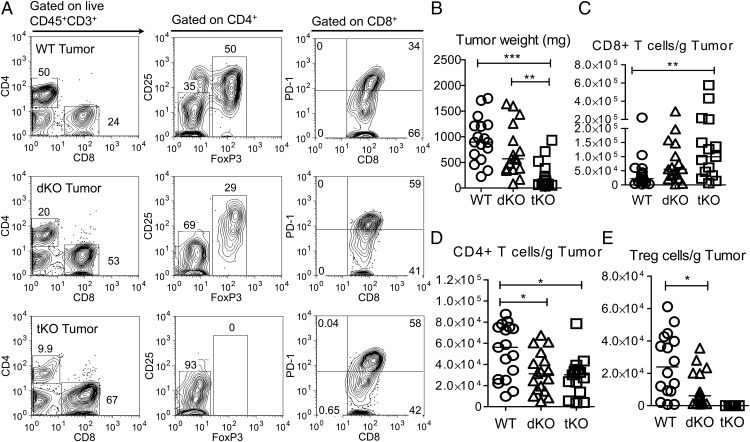
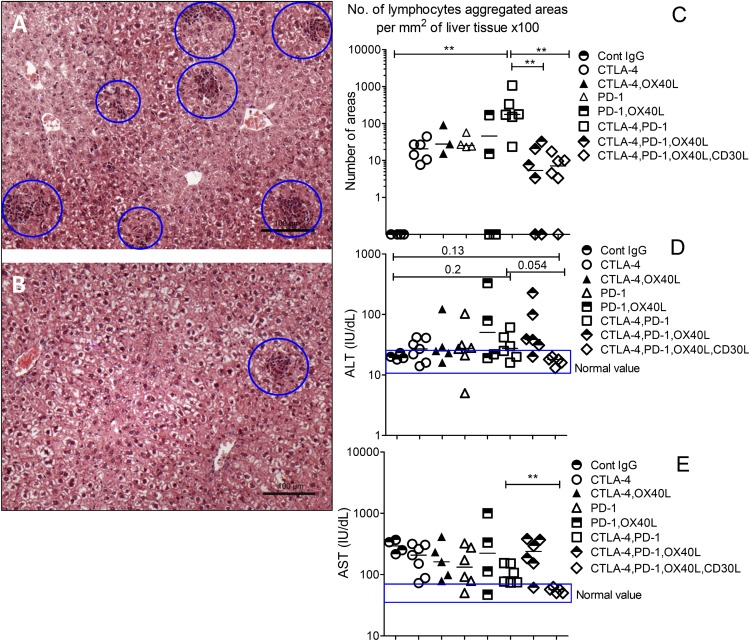
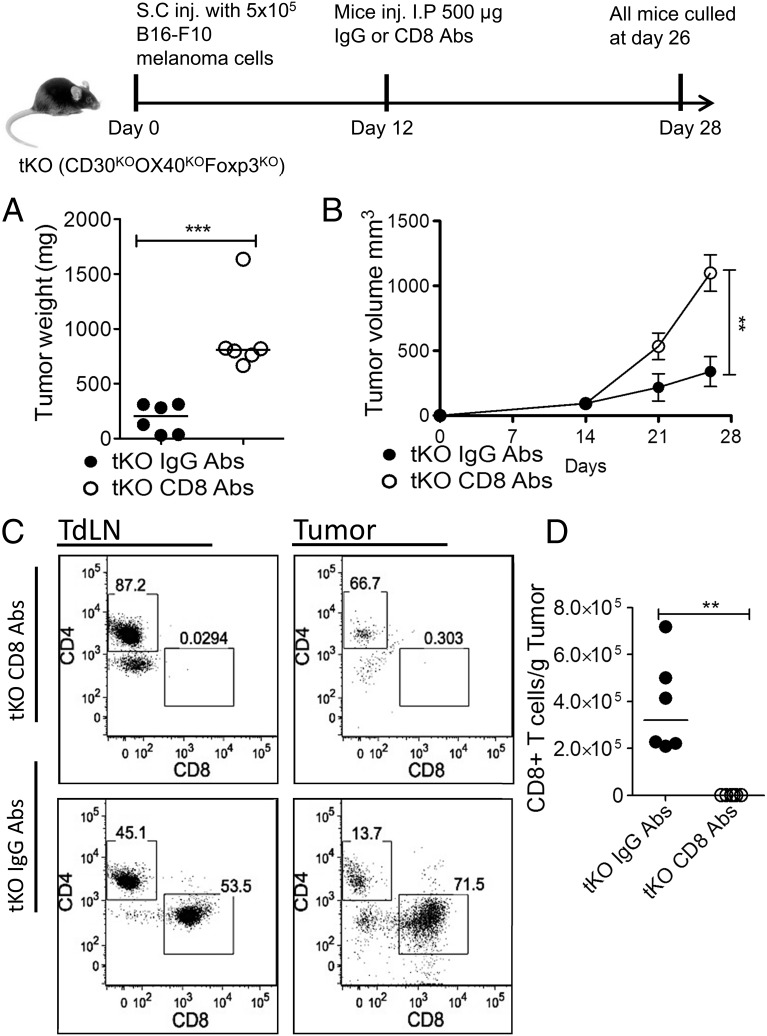
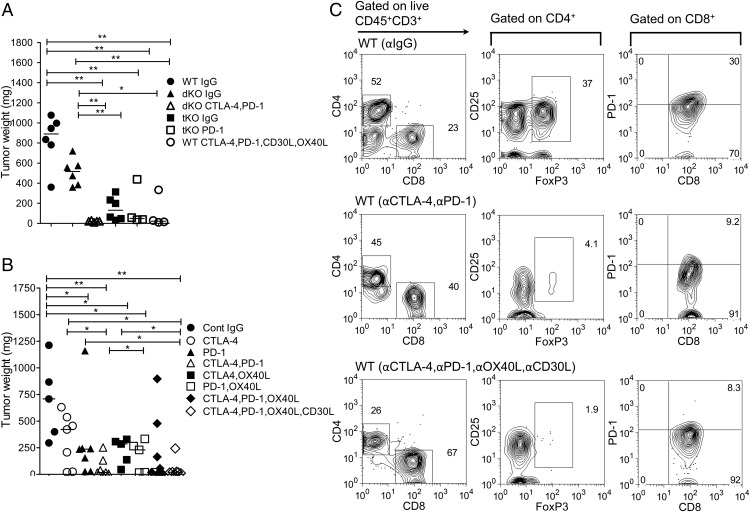
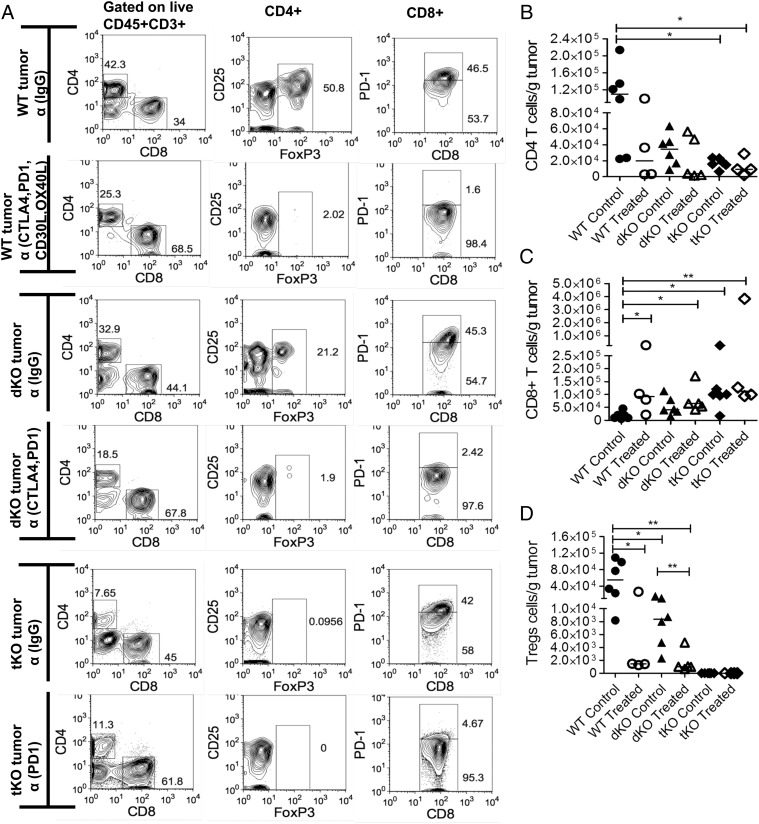
Although strategies that block FOXP3-dependent regulatory T cell function (CTLA4 blockade) and the inhibitory receptor PD1 have shown great promise in promoting antitumor immune responses in humans, their widespread implementation for cancer immunotherapy has been hampered by significant off-target autoimmune side effects that can be lethal. Our work has shown that absence of OX40 and CD30 costimulatory signals prevents CD4 T cell-driven autoimmunity in Foxp3-deficient mice, suggesting a novel way to block these side effects. In this study, we show that excellent antitumor CD8 T cell responses can be achieved in Foxp3 mice deficient in OX40 and CD30 signals, particularly in the presence of concurrent PD1 blockade. Furthermore, excellent antitumor immune responses can also be achieved using combinations of Abs that block CTLA4, PD1, OX40, and CD30 ligands, without CD4 T cell-driven autoimmunity. By dissociating autoimmune side effects from anticancer immune responses, this potentially shifts this antitumor approach to patients with far less advanced disease.
尽管阻断FOXP3依赖性调节性T细胞功能的策略(抗CTLA4)以及抑制性受体PD1在促进人类抗肿瘤免疫反应方面显示出巨大潜力,但它们在癌症免疫治疗中的广泛应用却因严重的脱靶自身免疫副作用(可能致命)而受到阻碍。我们的研究表明,缺乏OX40和CD30共刺激信号可防止Foxp3缺陷小鼠中CD4 T细胞驱动的自身免疫,这提示了一种阻断这些副作用的新方法。在本研究中,我们发现,在缺乏OX40和CD30信号的Foxp3小鼠中,尤其是在同时阻断PD1的情况下,可实现出色的抗肿瘤CD8 T细胞反应。此外,使用阻断CTLA4、PD1、OX40和CD30配体的抗体组合,也可实现出色的抗肿瘤免疫反应,且不会出现CD4 T细胞驱动的自身免疫。通过将自身免疫副作用与抗癌免疫反应分离,这可能会将这种抗肿瘤方法应用于病情远未发展到晚期的患者。