Sultana Sujala T, Call Douglas R, Beyenal Haluk
The Gene and Linda Voiland School of Chemical Engineering and Bioengineering, Washington State University, Pullman, WA 99163 USA.
Paul G Allen School for Global Animal Health, Washington State University, Pullman, WA 99163 USA.
NPJ Biofilms Microbiomes. 2016 Nov 23;2:2. doi: 10.1038/s41522-016-0003-0. eCollection 2016.
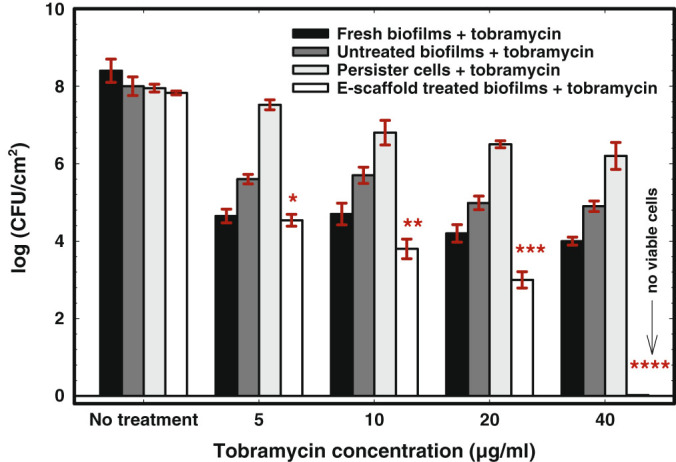
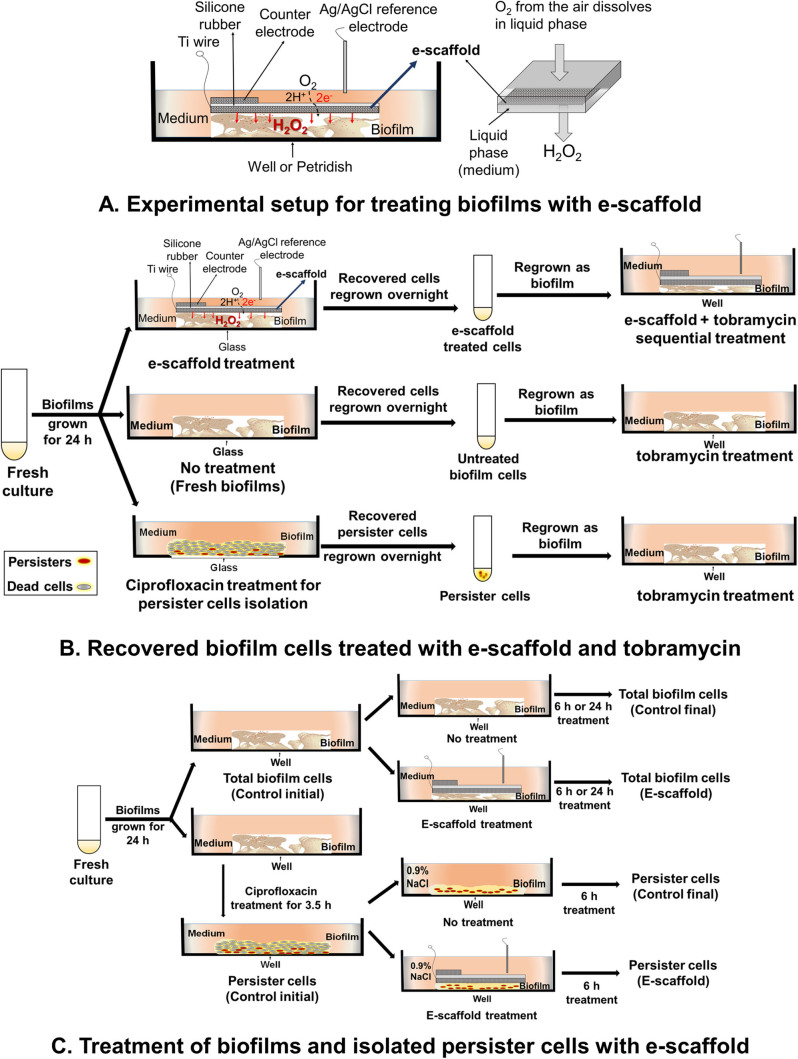
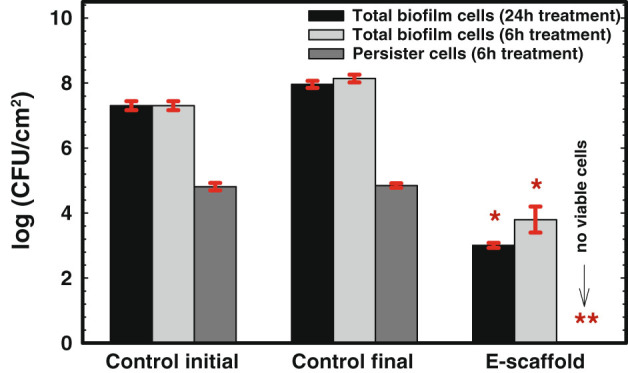
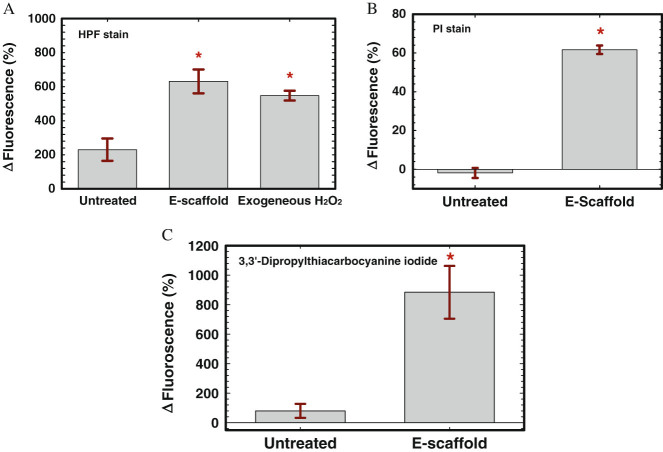
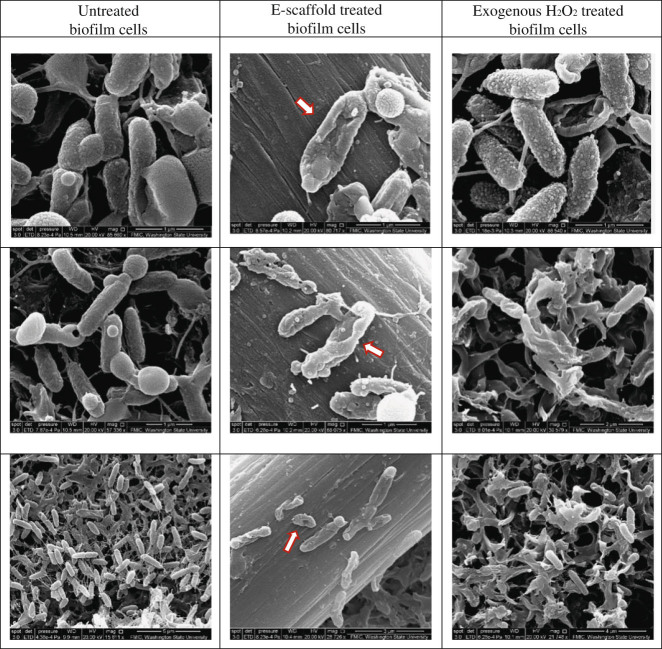
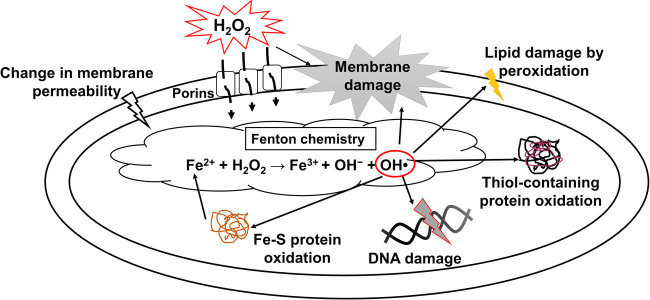
Biofilms in chronic wounds are known to contain a persister subpopulation that exhibits enhanced multidrug tolerance and can quickly rebound after therapeutic treatment. The presence of these "persister cells" is partly responsible for the failure of antibiotic therapies and incomplete elimination of biofilms. Electrochemical methods combined with antibiotics have been suggested as an effective alternative for biofilm and persister cell elimination, yet the mechanism of action for improved antibiotic efficacy remains unclear. In this work, an electrochemical scaffold (e-scaffold) that electrochemically generates a constant concentration of HO was investigated as a means of enhancing tobramycin susceptibility in pre-grown PAO1 biofilms and attacking persister cells. Results showed that the e-scaffold enhanced tobramycin susceptibility in PAO1 biofilms, which reached a maximum susceptibility at 40 µg/ml tobramycin, with complete elimination (7.8-log reduction vs control biofilm cells, ≤ 0.001). Moreover, the e-scaffold eradicated persister cells in biofilms, leaving no viable cells (5-log reduction vs control persister cells, ≤ 0.001). It was observed that the e-scaffold induced the intracellular formation of hydroxyl free radicals and improved membrane permeability in e-scaffold treated biofilm cells, which possibly enhanced antibiotic susceptibility and eradicated persister cells. These results demonstrate a promising advantage of the e-scaffold in the treatment of persistent biofilm infections.
已知慢性伤口中的生物膜含有一个持留菌亚群,该亚群表现出增强的多药耐受性,并且在治疗后能够迅速反弹。这些“持留菌细胞”的存在是抗生素治疗失败以及生物膜未被完全清除的部分原因。有人提出将电化学方法与抗生素相结合,作为清除生物膜和持留菌细胞的有效替代方法,但抗生素疗效提高的作用机制仍不清楚。在这项工作中,研究了一种能电化学产生恒定浓度HO的电化学支架(e-支架),作为增强预先形成的PAO1生物膜对妥布霉素敏感性并攻击持留菌细胞的一种手段。结果表明,e-支架增强了PAO1生物膜对妥布霉素的敏感性,在40μg/ml妥布霉素时达到最大敏感性,生物膜被完全清除(与对照生物膜细胞相比减少7.8个对数,≤0.001)。此外,e-支架根除了生物膜中的持留菌细胞,没有留下活细胞(与对照持留菌细胞相比减少5个对数,≤0.001)。观察到e-支架诱导了经e-支架处理的生物膜细胞内羟自由基的形成,并改善了膜通透性,这可能增强了抗生素敏感性并根除了持留菌细胞。这些结果证明了e-支架在治疗持续性生物膜感染方面具有广阔的前景。