Izuogu Adaeze O, McNally Kristin L, Harris Stephen E, Youseff Brian H, Presloid John B, Burlak Christopher, Munshi-South Jason, Best Sonja M, Taylor R Travis
Department of Medical Microbiology and Immunology, University of Toledo College of Medicine and Life Sciences, Toledo, Ohio, United States of America.
Innate Immunity and Pathogenesis Unit, Laboratory of Virology, Rocky Mountain Laboratories, DIR, NIAID, NIH, Hamilton, Montana, United States of America.
PLoS One. 2017 Jun 26;12(6):e0179781. doi: 10.1371/journal.pone.0179781. eCollection 2017.
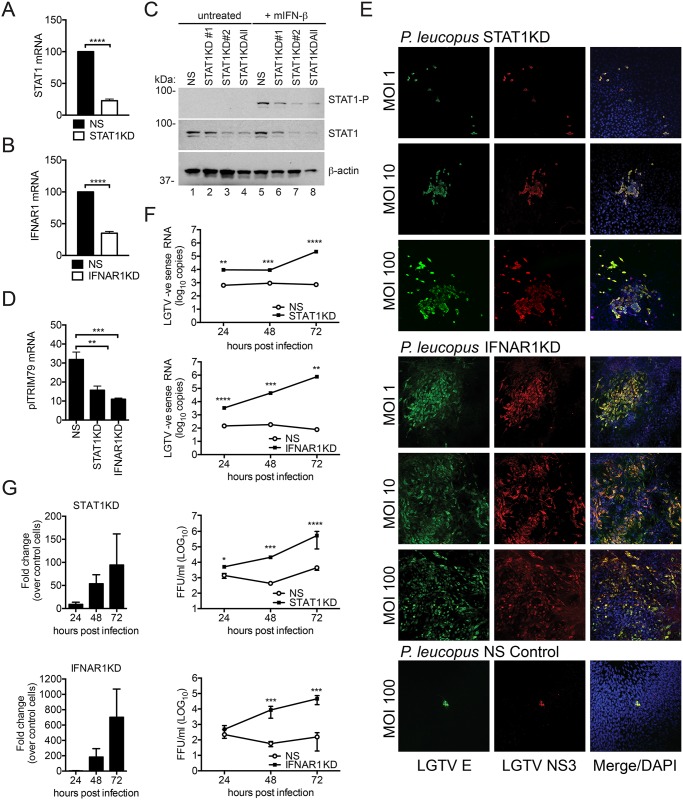
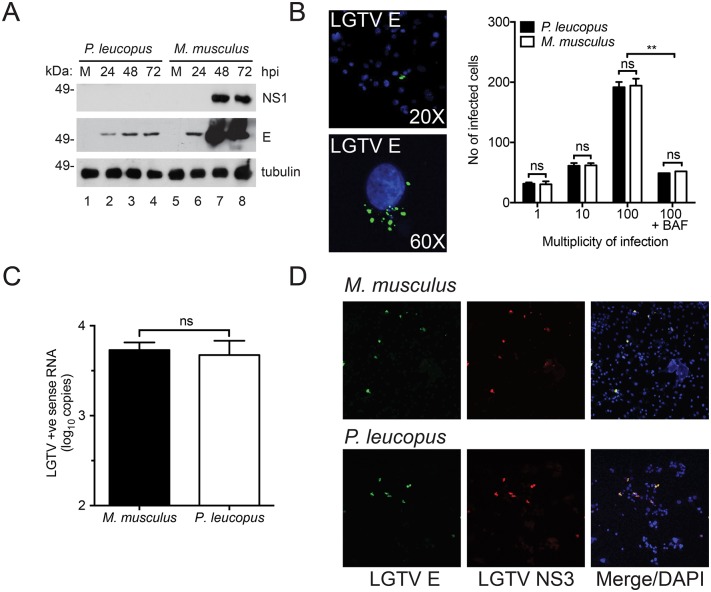
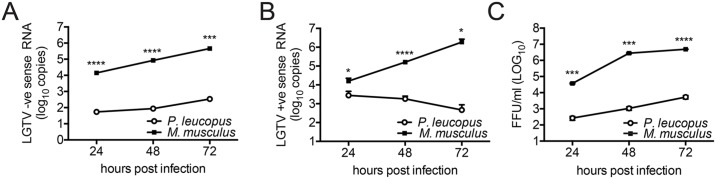
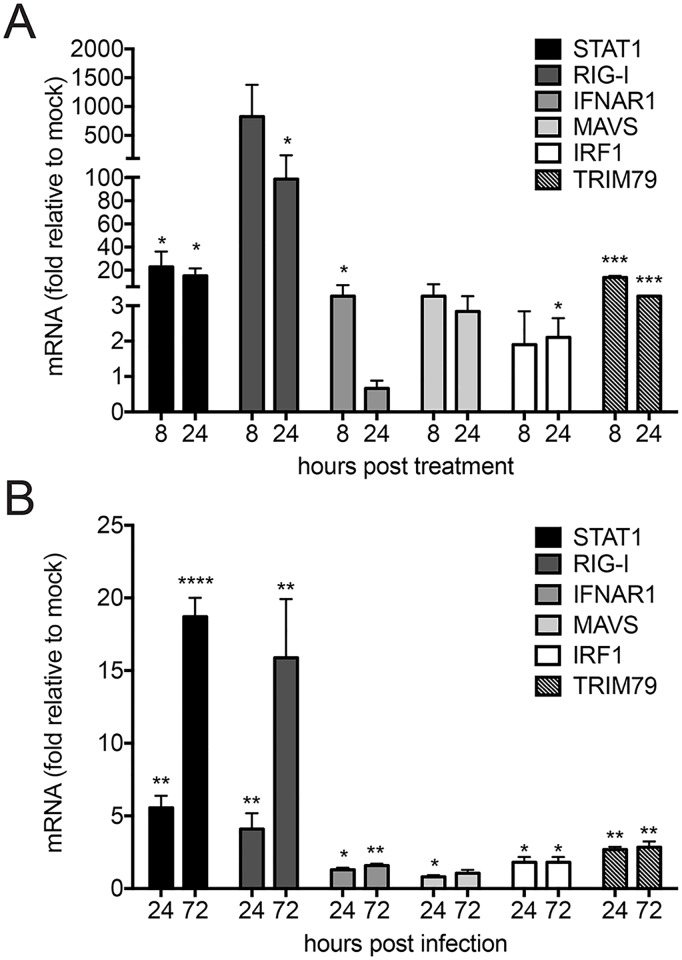
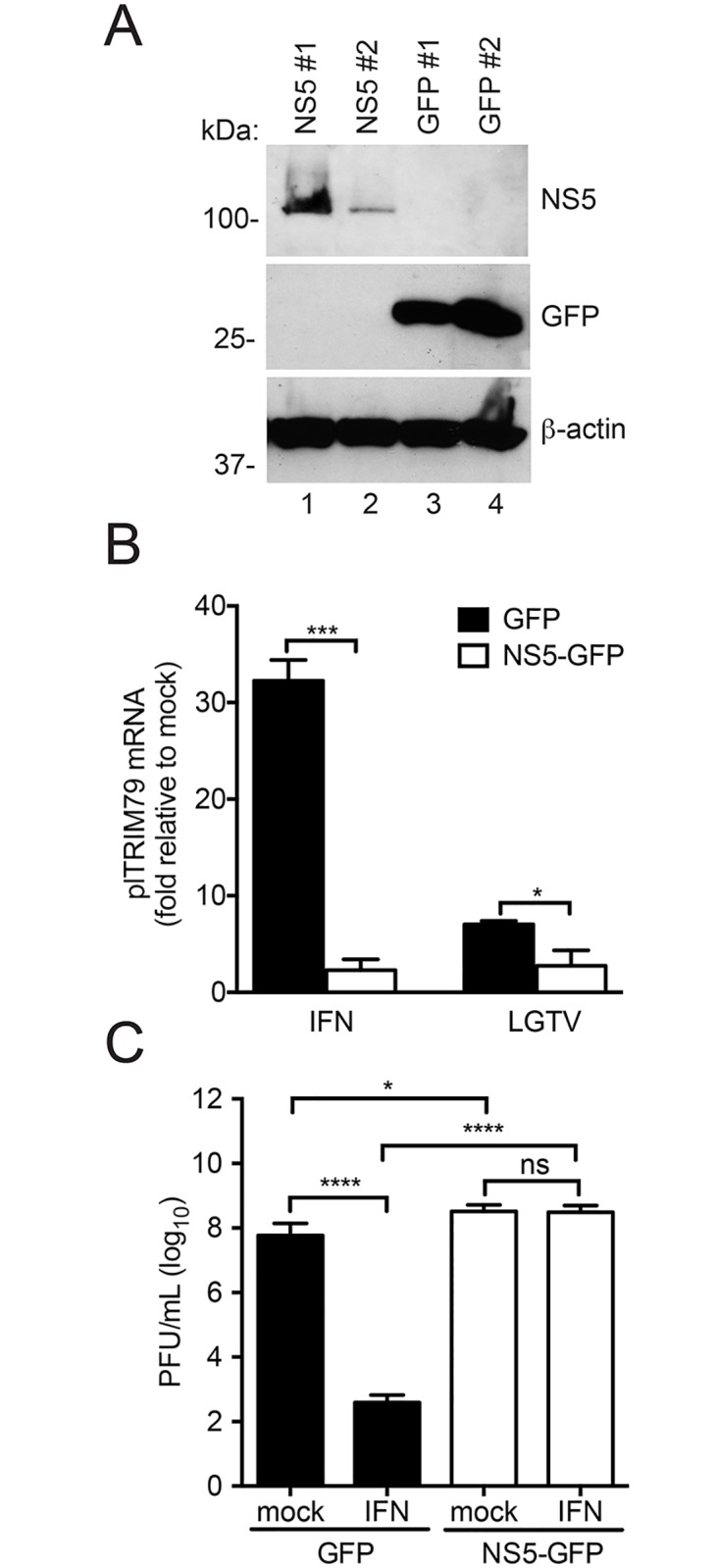
Tick-borne flaviviruses (TBFVs), including Powassan virus and tick-borne encephalitis virus cause encephalitis or hemorrhagic fevers in humans with case-fatality rates ranging from 1-30%. Despite severe disease in humans, TBFV infection of natural rodent hosts has little noticeable effect. Currently, the basis for resistance to disease is not known. We hypothesize that the coevolution of flaviviruses with their respective hosts has shaped the evolution of potent antiviral factors that suppress virus replication and protect the host from lethal infection. In the current study, we compared virus infection between reservoir host cells and related susceptible species. Infection of primary fibroblasts from the white-footed mouse (Peromyscus leucopus, a representative host) with a panel of vector-borne flaviviruses showed up to a 10,000-fold reduction in virus titer compared to control Mus musculus cells. Replication of vesicular stomatitis virus was equivalent in P. leucopus and M. musculus cells suggesting that restriction was flavivirus-specific. Step-wise comparison of the virus infection cycle revealed a significant block to viral RNA replication, but not virus entry, in P. leucopus cells. To understand the role of the type I interferon (IFN) response in virus restriction, we knocked down signal transducer and activator of transcription 1 (STAT1) or the type I IFN receptor (IFNAR1) by RNA interference. Loss of IFNAR1 or STAT1 significantly relieved the block in virus replication in P. leucopus cells. The major IFN antagonist encoded by TBFV, nonstructural protein 5, was functional in P. leucopus cells, thus ruling out ineffective viral antagonism of the host IFN response. Collectively, this work demonstrates that the IFN response of P. leucopus imparts a strong and virus-specific barrier to flavivirus replication. Future identification of the IFN-stimulated genes responsible for virus restriction specifically in P. leucopus will yield mechanistic insight into efficient control of virus replication and may inform the development of antiviral therapeutics.
蜱传黄病毒(TBFV),包括波瓦桑病毒和蜱传脑炎病毒,可导致人类患脑炎或出血热,病死率在1%至30%之间。尽管人类会患重病,但TBFV感染天然啮齿动物宿主却几乎没有明显影响。目前,对疾病具有抗性的基础尚不清楚。我们推测,黄病毒与其各自宿主的共同进化塑造了强效抗病毒因子的进化,这些因子可抑制病毒复制并保护宿主免受致命感染。在本研究中,我们比较了储存宿主细胞和相关易感物种之间的病毒感染情况。用一组媒介传播的黄病毒感染白足鼠(Peromyscus leucopus,一种代表性宿主)的原代成纤维细胞,与对照小家鼠细胞相比,病毒滴度降低了多达10000倍。水疱性口炎病毒在白足鼠和小家鼠细胞中的复制情况相当,这表明这种限制是黄病毒特异性的。对病毒感染周期的逐步比较显示,在白足鼠细胞中,病毒RNA复制存在显著障碍,但病毒进入不受影响。为了解I型干扰素(IFN)反应在病毒限制中的作用,我们通过RNA干扰敲低了信号转导和转录激活因子1(STAT1)或I型IFN受体(IFNAR1)。IFNAR1或STAT1的缺失显著缓解了白足鼠细胞中病毒复制的障碍。TBFV编码的主要IFN拮抗剂非结构蛋白5在白足鼠细胞中具有功能,因此排除了宿主IFN反应的病毒拮抗无效的可能性。总的来说,这项工作表明白足鼠的IFN反应对黄病毒复制形成了强大的、病毒特异性的屏障。未来鉴定在白足鼠中特异性负责病毒限制的IFN刺激基因,将为有效控制病毒复制提供机制性见解,并可能为抗病毒治疗的发展提供参考。