Biology of Vector-Borne Viruses Section, Laboratory of Virology, Rocky Mountain Laboratories, NIAID, NIH, Hamilton, Montana, USA.
Neurotropic Flaviviruses Section, Laboratory of Infectious Diseases, NIAID, NIH, Bethesda, Maryland, USA.
mBio. 2017 Aug 22;8(4):e01255-17. doi: 10.1128/mBio.01255-17.
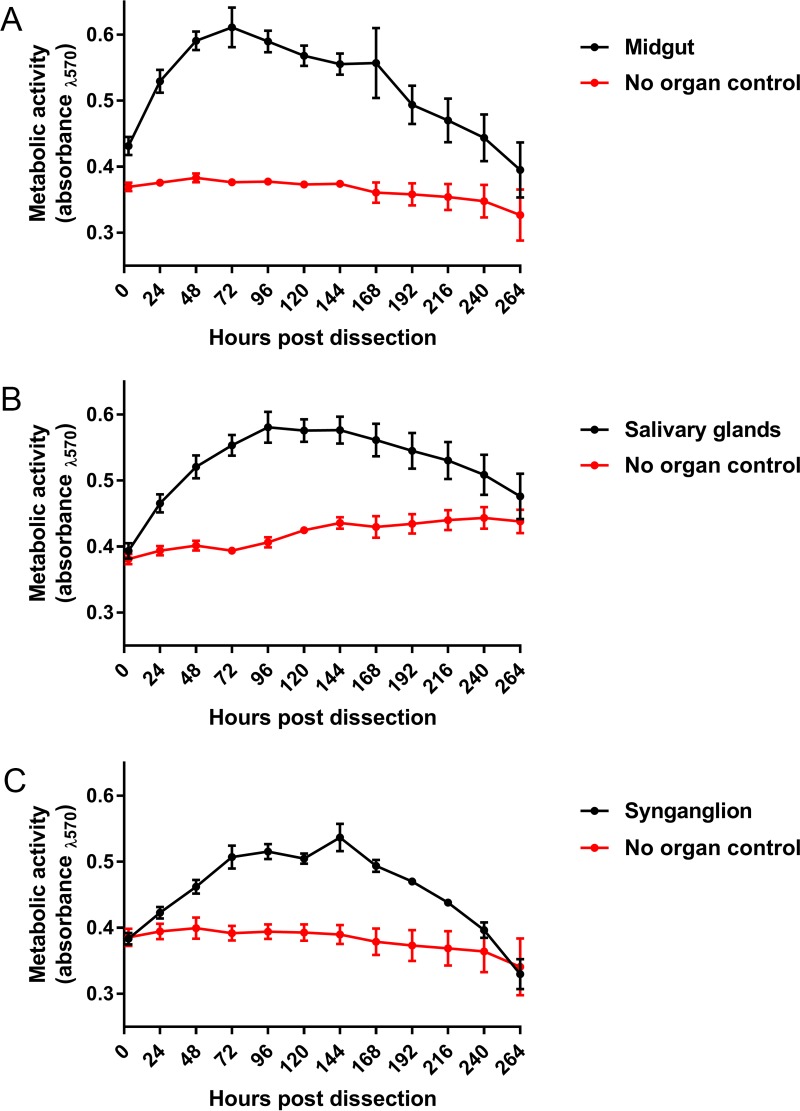
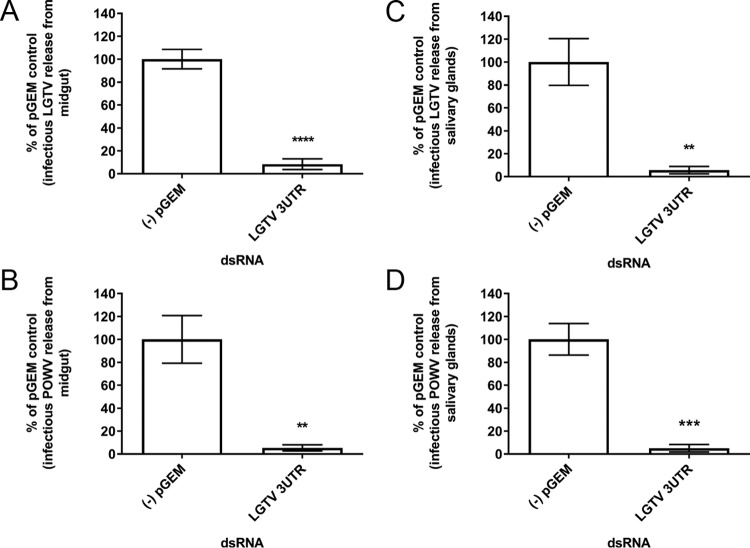
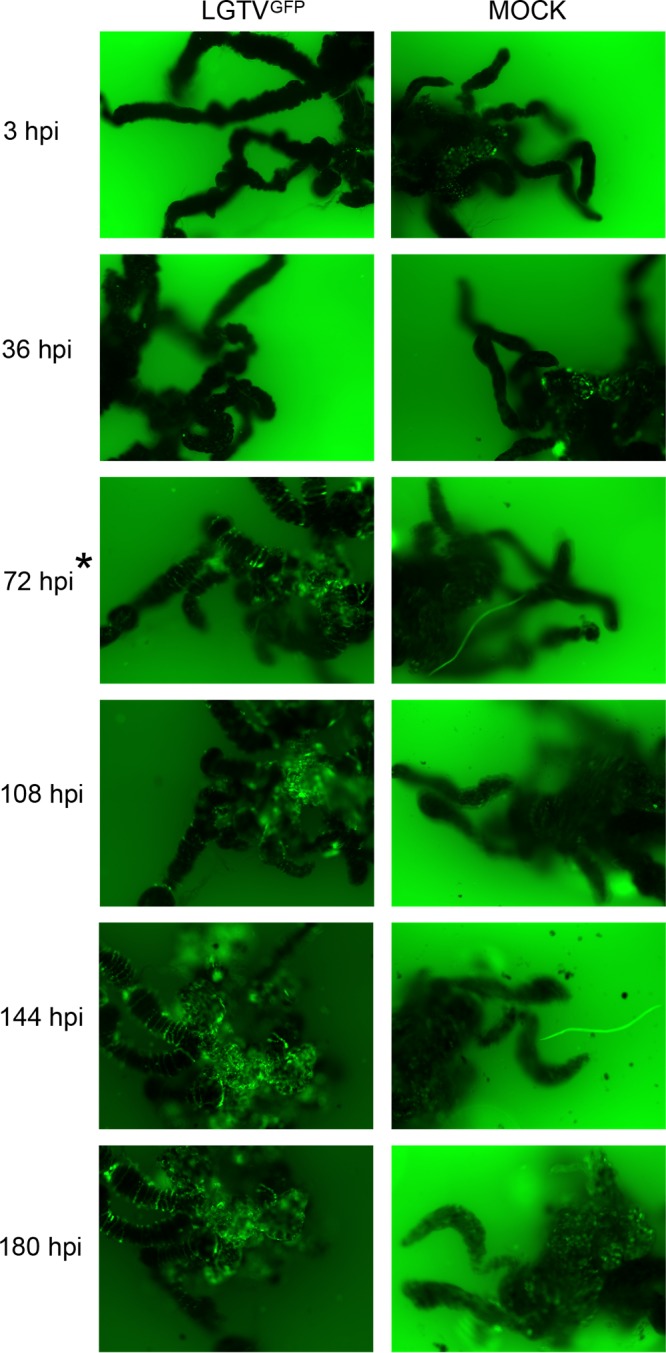
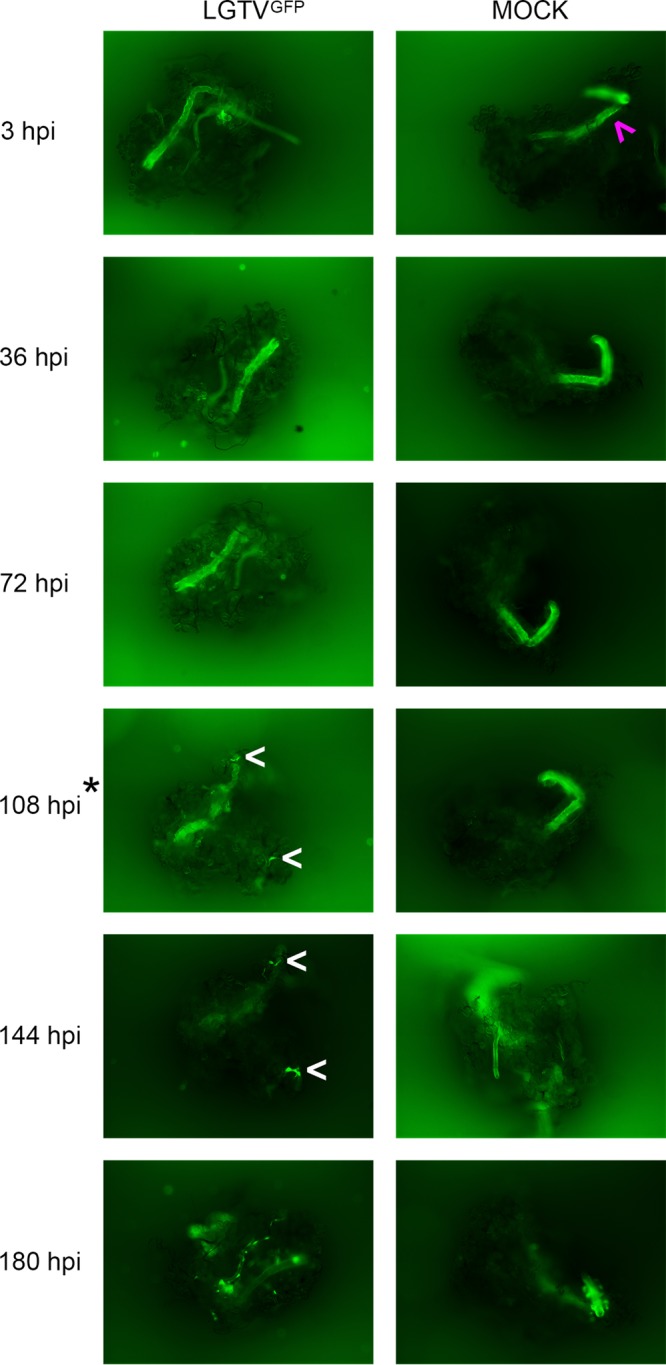
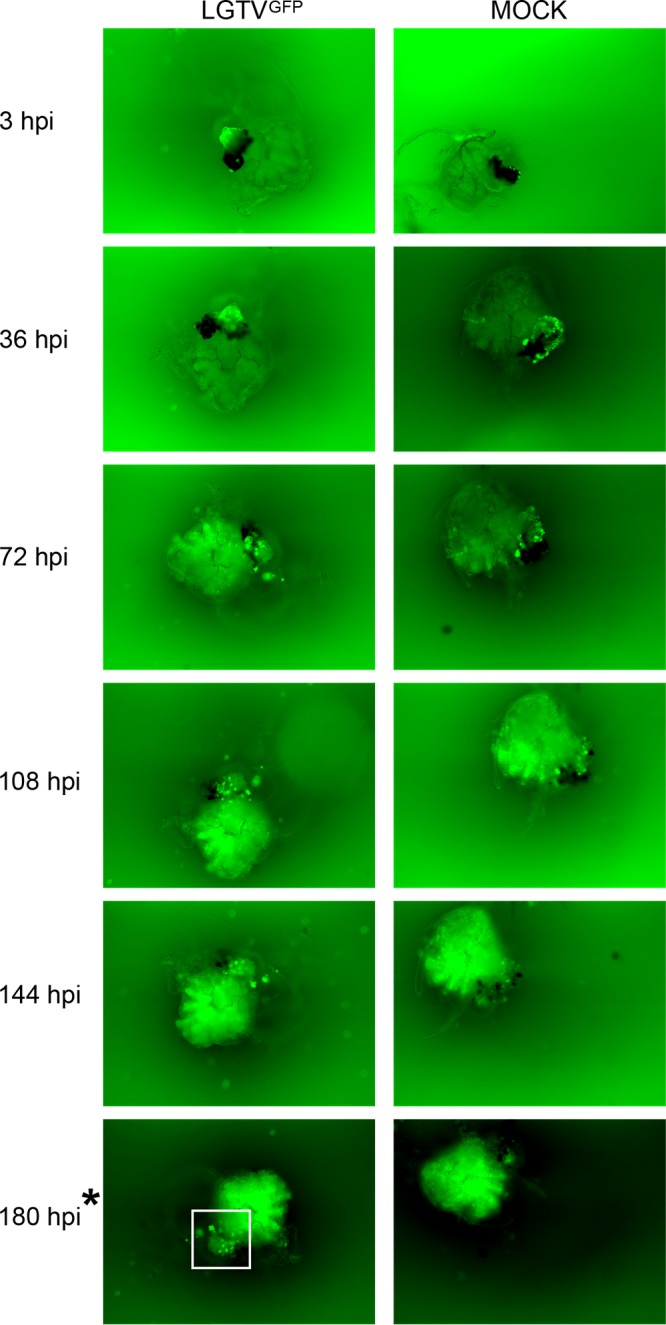
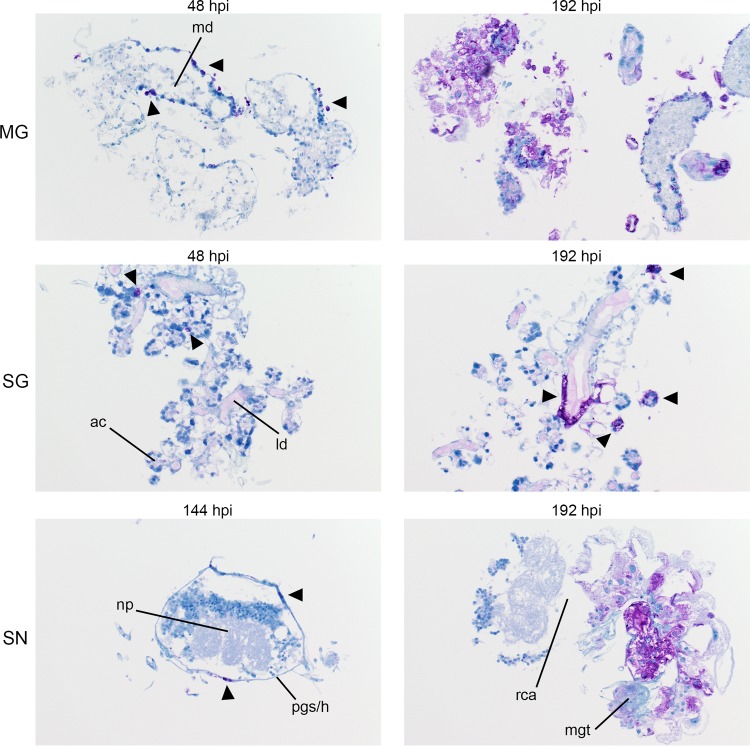
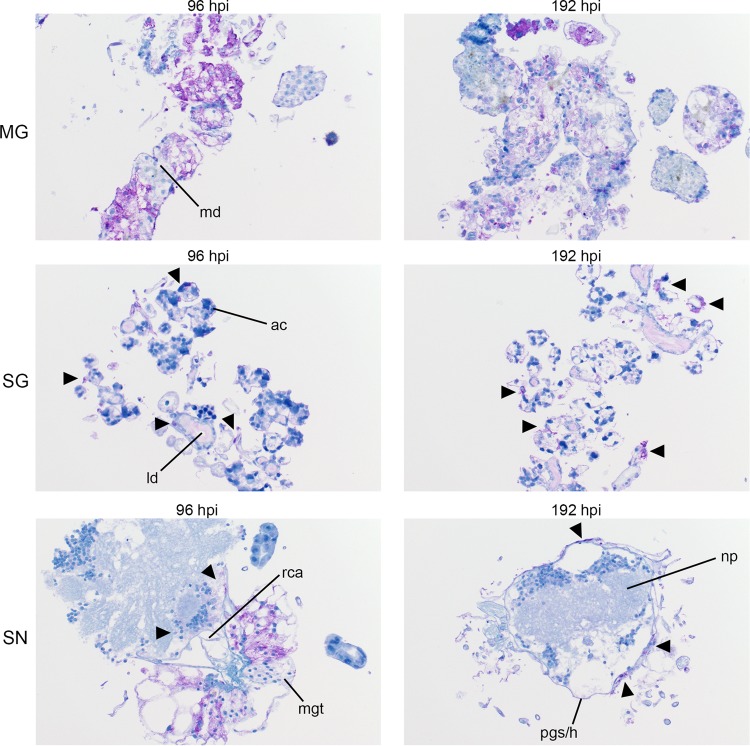
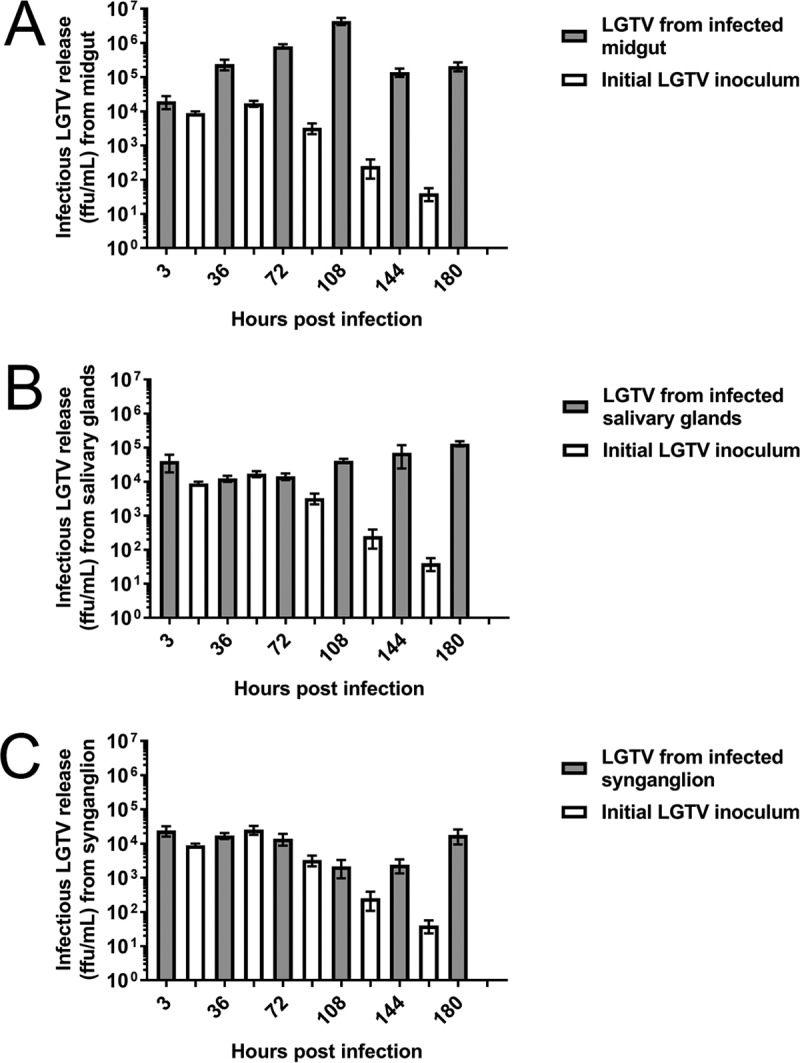
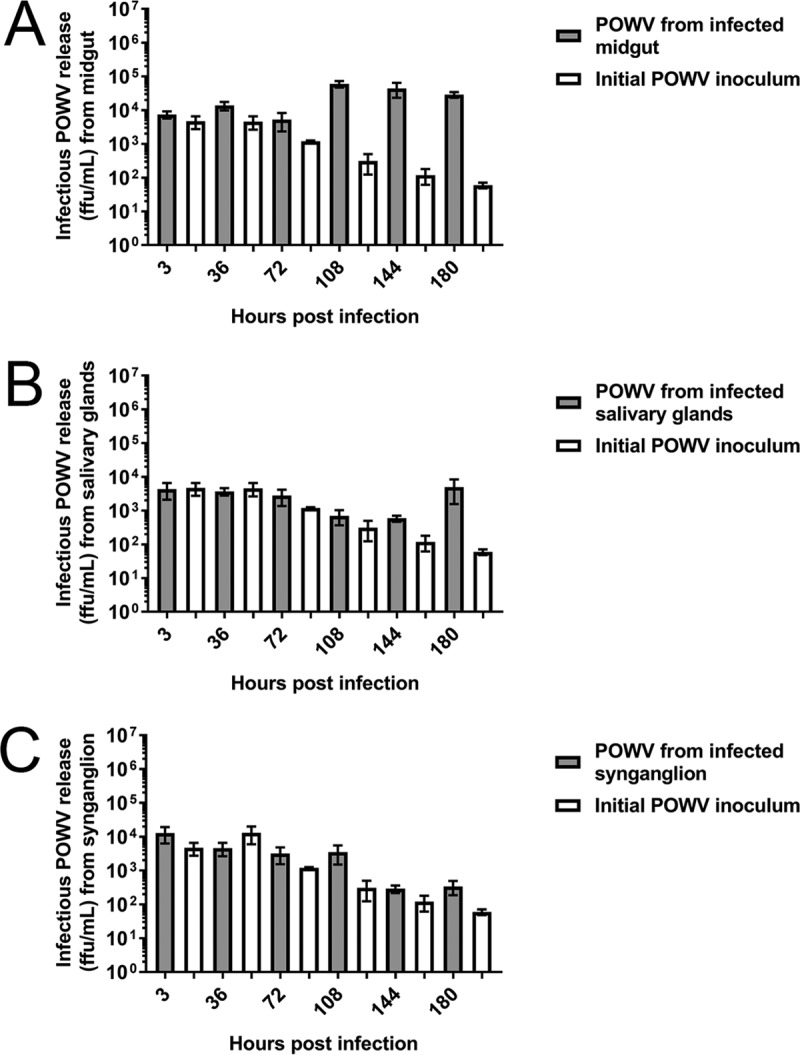
ticks transmit many infectious agents that cause disease, including tick-borne flaviviruses (TBFVs). TBFV infections cause thousands of human encephalitis cases worldwide annually. In the United States, human TBFV infections with Powassan virus (POWV) are increasing and have a fatality rate of 10 to 30%. Additionally, Langat virus (LGTV) is a TBFV of low neurovirulence and is used as a model TBFV. TBFV replication and dissemination within organs are poorly characterized, and a deeper understanding of virus biology in this vector may inform effective countermeasures to reduce TBFV transmission. Here, we describe short-term, organ culture models of TBFV infection. organs were metabolically active for 9 to 10 days and were permissive to LGTV and POWV replication. Imaging and videography demonstrated replication and spread of green fluorescent protein-expressing LGTV in the organs. Immunohistochemical staining confirmed LGTV envelope and POWV protein synthesis within the infected organs. LGTV- and POWV-infected organs produced infectious LGTV and POWV; thus, the cultures were suitable for study of virus replication in individual organs. LGTV- and POWV-infected midgut and salivary glands were subjected to double-stranded RNA (dsRNA) transfection with dsRNA to the LGTV 3' untranslated region (UTR), which reduced infectious LGTV and POWV replication, providing a proof-of-concept use of RNA interference in organ cultures to study the effects on TBFV replication. The results contribute important information on TBFV localization within organs and provide a significant translational tool for evaluating recombinant, live vaccine candidates and potential tick transcripts and proteins for possible therapeutic use and vaccine development to reduce TBFV transmission. Tick-borne flavivirus (TBFV) infections cause neurological and/or hemorrhagic disease in humans worldwide. There are currently no licensed therapeutics or vaccines against Powassan virus (POWV), the only TBFV known to circulate in North America. Evaluating tick vector targets for antitick vaccines directed at reducing TBFV infection within the arthropod vector is a critical step in identifying efficient approaches to controlling TBFV transmission. This study characterized infection of female tick organ cultures of midgut, salivary glands, and synganglion with the low-neurovirulence Langat virus (LGTV) and the more pathogenic POWV. Cell types of specific organs were susceptible to TBFV infection, and a difference in LGTV and POWV replication was noted in TBFV-infected organs. This tick organ culture model of TBFV infection will be useful for various applications, such as screening of tick endogenous dsRNA corresponding to potential control targets within midgut and salivary glands to confirm restriction of TBFV infection.
蜱传播多种引起疾病的传染性病原体,包括蜱传黄病毒(TBFV)。TBFV 感染每年在全球导致数千例人类脑炎病例。在美国,感染 Powassan 病毒(POWV)的人类 TBFV 感染正在增加,死亡率为 10%至 30%。此外,Langat 病毒(LGTV)是一种神经毒力较低的 TBFV,可用作 TBFV 模型。TBFV 在器官内的复制和传播特征描述不足,对该载体中病毒生物学的更深入了解可能为减少 TBFV 传播提供有效的对策。在这里,我们描述了 TBFV 感染的短期器官培养模型。器官在代谢上活跃了 9 到 10 天,并且允许 LGTV 和 POWV 复制。成像和录像显示,在器官中表达绿色荧光蛋白的 LGTV 复制和传播。免疫组织化学染色证实了感染器官内 LGTV 包膜和 POWV 蛋白的合成。LGTV 和 POWV 感染的器官产生了感染性 LGTV 和 POWV;因此,这些培养物适合用于研究单个器官中的病毒复制。用 LGTV 3'非翻译区(UTR)的双链 RNA(dsRNA)转染 LGTV 和 POWV 感染的中肠和唾液腺,降低了感染性 LGTV 和 POWV 的复制,为 RNA 干扰在器官培养中的应用提供了概念验证,以研究其对 TBFV 复制的影响。该结果为 TBFV 在器官内的定位提供了重要信息,并为评估重组活疫苗候选物以及潜在的蜱转录本和蛋白质用于减少 TBFV 传播的可能治疗用途和疫苗开发提供了重要的转化工具。蜱传黄病毒(TBFV)感染在全球范围内导致人类出现神经和/或出血性疾病。目前尚无针对 Powassan 病毒(POWV)的许可疗法或疫苗,POWV 是已知唯一在北美传播的 TBFV。评估针对减少节肢动物载体中 TBFV 感染的抗蜱疫苗的蜱载体靶标,是确定控制 TBFV 传播的有效方法的关键步骤。本研究对低神经毒力的 Langat 病毒(LGTV)和致病性更高的 Powassan 病毒(POWV)感染雌性 tick 器官培养的中肠、唾液腺和交感神经节进行了描述。特定器官的细胞类型易受 TBFV 感染,并且在 TBFV 感染的器官中观察到 LGTV 和 POWV 复制的差异。这种 TBFV 感染的 tick 器官培养模型将在多种应用中非常有用,例如筛选中肠和唾液腺中与潜在控制靶标相对应的 tick 内源性 dsRNA,以确认 TBFV 感染的限制。