He Xiao-Lan, Li Qian, Peng Wei-Hong, Zhou Jie, Cao Xue-Lian, Wang Di, Huang Zhong-Qian, Tan Wei, Li Yu, Gan Bing-Cheng
Soil and Fertilizer Institute, Sichuan Academy of Agricultural Sciences, Chengdu, 610066, China.
Jilin Agricultural University, Changchun, 130118, China.
BMC Microbiol. 2017 Jun 26;17(1):139. doi: 10.1186/s12866-017-1046-y.
The internal transcribed spacer (ITS), RNA polymerase II second largest subunit (RPB2), and elongation factor 1-alpha (EF1α) are often used in fungal taxonomy and phylogenetic analysis. As we know, an ideal molecular marker used in molecular identification and phylogenetic studies is homogeneous within species, and interspecific variation exceeds intraspecific variation. However, during our process of performing ITS, RPB2, and EF1α sequencing on the Pleurotus spp., we found that intra-isolate sequence polymorphism might be present in these genes because direct sequencing of PCR products failed in some isolates. Therefore, we detected intra- and inter-isolate variation of the three genes in Pleurotus by polymerase chain reaction amplification and cloning in this study.
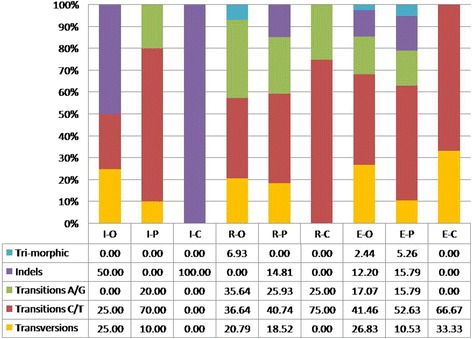
Results showed that intra-isolate variation of ITS was not uncommon but the polymorphic level in each isolate was relatively low in Pleurotus; intra-isolate variations of EF1α and RPB2 sequences were present in an unexpectedly high amount. The polymorphism level differed significantly between ITS, RPB2, and EF1α in the same individual, and the intra-isolate heterogeneity level of each gene varied between isolates within the same species. Intra-isolate and intraspecific variation of ITS in the tested isolates was less than interspecific variation, and intra-isolate and intraspecific variation of RPB2 was probably equal with interspecific divergence. Meanwhile, intra-isolate and intraspecific variation of EF1α could exceed interspecific divergence. These findings suggested that RPB2 and EF1α are not desirable barcoding candidates for Pleurotus. We also discussed the reason why rDNA and protein-coding genes showed variants within a single isolate in Pleurotus, but must be addressed in further research.
Our study demonstrated that intra-isolate variation of ribosomal and protein-coding genes are likely widespread in fungi. This has implications for studies on fungal evolution, taxonomy, phylogenetics, and population genetics. More extensive sampling of these genes and other candidates will be required to ensure reliability as phylogenetic markers and DNA barcodes.
内转录间隔区(ITS)、RNA聚合酶II第二大亚基(RPB2)和延伸因子1-α(EF1α)常用于真菌分类学和系统发育分析。众所周知,用于分子鉴定和系统发育研究的理想分子标记在种内是同质的,种间变异超过种内变异。然而,在我们对侧耳属物种进行ITS、RPB2和EF1α测序的过程中,我们发现这些基因可能存在分离株内序列多态性,因为在一些分离株中PCR产物的直接测序失败了。因此,在本研究中,我们通过聚合酶链反应扩增和克隆检测了侧耳属中这三个基因的分离株内和分离株间变异。
结果表明,ITS的分离株内变异并不罕见,但在侧耳属中每个分离株的多态性水平相对较低;EF1α和RPB2序列的分离株内变异出乎意料地大量存在。同一菌株内ITS、RPB2和EF1α之间的多态性水平差异显著,且每个基因的分离株内异质性水平在同一物种内的不同分离株之间有所不同。测试分离株中ITS的分离株内和种内变异小于种间变异,RPB2的分离株内和种内变异可能与种间差异相当。同时,EF1α的分离株内和种内变异可能超过种间差异。这些发现表明,RPB2和EF1α不是侧耳属理想的条形码候选基因。我们还讨论了rDNA和蛋白质编码基因在侧耳属单个分离株内出现变异的原因,但这必须在进一步研究中加以解决。
我们的研究表明,核糖体和蛋白质编码基因的分离株内变异可能在真菌中广泛存在。这对真菌进化、分类学、系统发育学和群体遗传学研究具有重要意义。需要对这些基因和其他候选基因进行更广泛的采样,以确保作为系统发育标记和DNA条形码的可靠性。