Hüsing-Kabar Anna, Heinzow Hauke Sebastian, Schmidt Hartmut Hans-Jürgen, Stenger Carina, Gerth Hans Ulrich, Pohlen Michele, Thölking Gerold, Wilms Christian, Kabar Iyad
Anna Hüsing-Kabar, Hauke Sebastian Heinzow, Hartmut Hans-Jürgen Schmidt, Carina Stenger, Christian Wilms, Iyad Kabar, Department of Transplant Medicine, University Hospital Muenster, 48149 Muenster, Germany.
World J Gastroenterol. 2017 Jun 14;23(22):4064-4071. doi: 10.3748/wjg.v23.i22.4064.
To evaluate cholangioscopy in addition to endoscopic retrograde cholangiopancreatography (ERCP) for management of biliary complications after liver transplantation (LT).
Twenty-six LT recipients with duct-to-duct biliary reconstruction who underwent ERCP for suspected biliary complications between April and December 2016 at the university hospital of Muenster were consecutively enrolled in this observational study. After evaluating bile ducts using fluoroscopy, cholangioscopy using a modern digital single-operator cholangioscopy system (SpyGlass DS™) was performed during the same procedure with patients under conscious sedation. All patients received peri-interventional antibiotic prophylaxis and bile was collected during the intervention for microbial analysis and for antibiotic susceptibility testing.
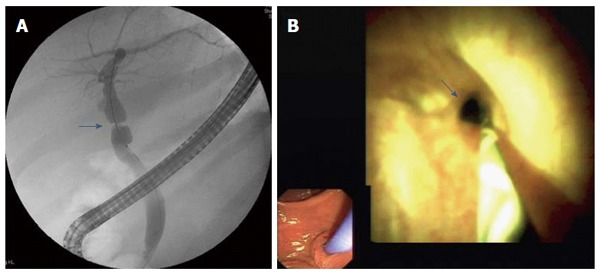
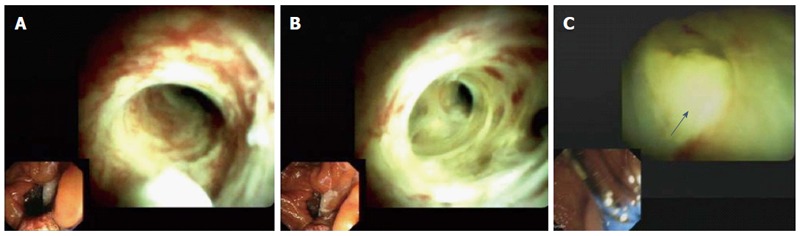
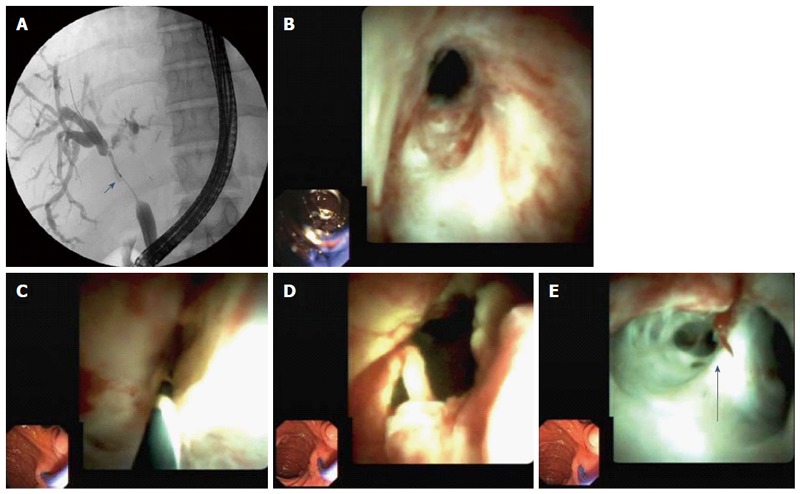
Thirty-three biliary complications were found in a total of 22 patients, whereas four patients showed normal bile ducts. Anastomotic strictures were evident in 14 (53.8%) patients, non-anastomotic strictures in seven (26.9%), biliary cast in three (11.5%), and stones in six (23.1%). A benefit of cholangioscopy was seen in 12 (46.2%) patients. In four of them, cholangioscopy was crucial for selective guidewire placement prior to planned intervention. In six patients, biliary cast and/or stones failed to be diagnosed by ERCP and were only detectable through cholangioscopy. In one case, a bile duct ulcer due to fungal infection was diagnosed by cholangioscopy. In another case, signs of bile duct inflammation caused by acute cholangitis were evident. One patient developed post-interventional cholangitis. No further procedure-related complications occurred. Thirty-seven isolates were found in bile. Sixteen of these were gram-positive (43.2%), 12 (32.4%) were gram-negative bacteria, and Candida species accounted for 24.3% of all isolated microorganisms. Interestingly, only 48.6% of specimens were sensitive to prophylactic antibiotics.
Single-operator cholangioscopy can provide important diagnostic information, helping endoscopists to plan and perform interventional procedures in LT-related biliary complications.
评估在肝移植(LT)后胆道并发症的管理中,除内镜逆行胰胆管造影(ERCP)外,胆道镜检查的作用。
2016年4月至12月期间,在明斯特大学医院,26例接受胆管对胆管胆道重建术且因疑似胆道并发症接受ERCP的LT受者连续纳入本观察性研究。在荧光透视评估胆管后,于同一操作过程中,在患者清醒镇静状态下,使用现代数字单操作者胆道镜系统(SpyGlass DS™)进行胆道镜检查。所有患者均接受围介入期抗生素预防,干预期间收集胆汁进行微生物分析和抗生素敏感性测试。
共22例患者发现33例胆道并发症,4例患者胆管正常。14例(53.8%)患者存在吻合口狭窄,7例(26.9%)为非吻合口狭窄,3例(11.5%)为胆泥,6例(23.1%)为结石。12例(46.2%)患者从胆道镜检查中获益。其中4例,胆道镜检查对计划干预前选择性放置导丝至关重要。6例患者,ERCP未能诊断出胆泥和/或结石,仅通过胆道镜检查可检测到。1例患者,通过胆道镜检查诊断出真菌感染导致的胆管溃疡。另1例患者,急性胆管炎引起的胆管炎症迹象明显。1例患者发生介入后胆管炎。未发生其他与操作相关的并发症。胆汁中发现37株分离菌。其中16株(43.2%)为革兰氏阳性菌,12株(32.4%)为革兰氏阴性菌,念珠菌属占所有分离微生物的24.3%。有趣的是,仅48.6%的标本对预防性抗生素敏感。
单操作者胆道镜检查可提供重要诊断信息,帮助内镜医师规划和实施与LT相关胆道并发症的介入操作。