Ducci Daniela, Albanese Stefano, Boccia Lorenzo, Celentano Egidio, Cervelli Elena, Corniello Alfonso, Crispo Anna, De Vivo Benedetto, Iodice Paolo, Langella Carmela, Lima Annamaria, Manno Maurizio, Palladino Mario, Pindozzi Stefania, Rigillo Marina, Romano Nunzio, Sellerino Mariangela, Senatore Adolfo, Speranza Giuseppe, Fiorentino Nunzio, Fagnano Massimo
Dipartimento di Ingegneria Civile Edile e Ambientale, University of Naples Federico II, 80125 Naples, Italy.
Dipartimento di Scienze della Terra, dell'Ambiente e delle Risorse, University of Naples Federico II, 80138 Naples, Italy.
Int J Environ Res Public Health. 2017 Jun 27;14(7):693. doi: 10.3390/ijerph14070693.
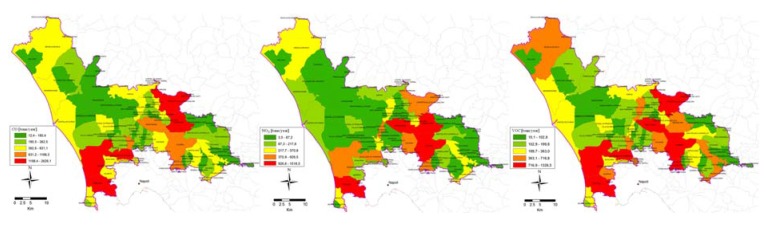
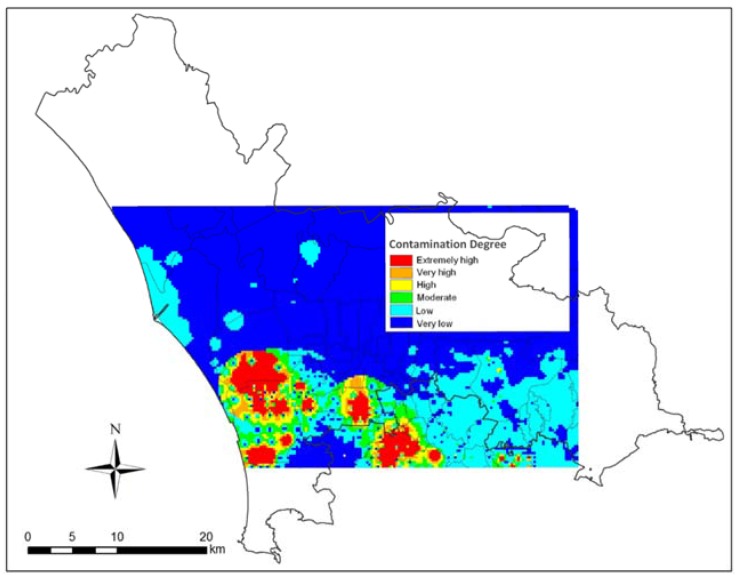
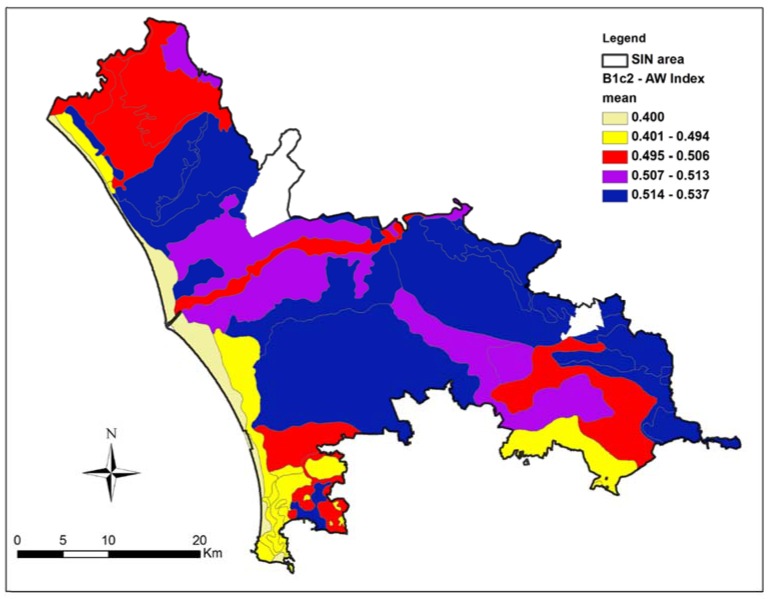
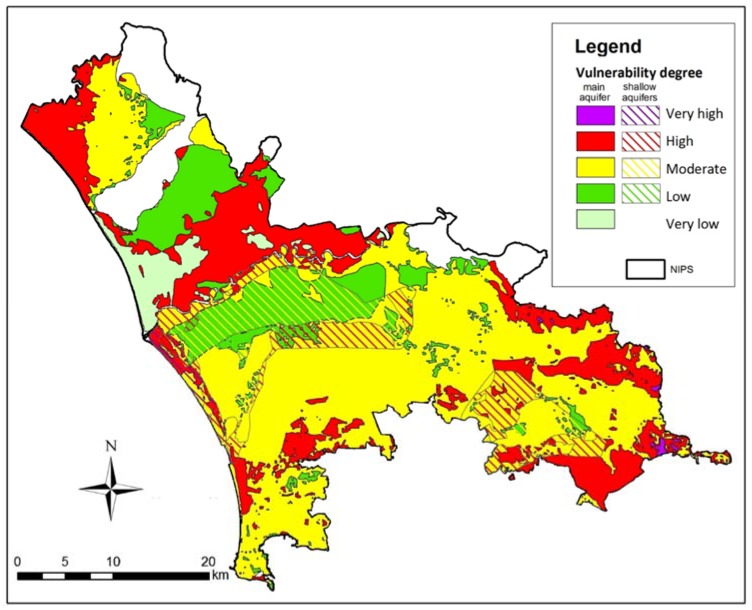
This paper deals with the environmental characterization of a large and densely populated area, with a poor reputation for contamination, considering the contribution of environmental features (air, soil, soil hydraulic and groundwater) and the potential effects on human health. The use of Geographic Information System (GIS) has made possible a georeferenced inventory and, by overlaying environmental information, an operational synthesis of comprehensive environmental conditions. The cumulative effects on environmental features were evaluated, taking into account superposition effects, by means of the Spatial MultiCriteria Decision Analysis (S-MCDA). The application of the S-MCDA for converging the combination of heterogeneous factors, related to soil, land and water, deeply studied by heterogeneous groups of experts, constitutes the novelty of the paper. The results confirmed an overall higher potential of exposure to contaminants in the environment and higher mortality rates in the study area for some tumours, but hospital admissions for tumours were generally similar to the regional trend. Besides, mortality data may be strictly dependent on the poor socioeconomic conditions, quality of therapy and a lack of welfare in the area relative to the rest of Italy. Finally, as regards the possible relationship between presence of contaminants in the environment and health conditions of the population no definite conclusions can be drawn, although the present study encourages the use of the new proposed methods, that increase the possibilities for studying the combined effect of more environmental factors.
本文探讨了一个面积大且人口密集、污染问题声名不佳地区的环境特征,考量了环境要素(空气、土壤、土壤水力学和地下水)的作用以及对人类健康的潜在影响。地理信息系统(GIS)的应用使得进行地理参考清单编制成为可能,并且通过叠加环境信息,实现了综合环境状况的操作性综合分析。借助空间多准则决策分析(S-MCDA),考虑叠加效应,评估了对环境要素的累积影响。S-MCDA应用于汇聚与土壤、土地和水相关的异质因素组合,这些因素由不同专家群体深入研究,这构成了本文的新颖之处。结果证实,研究区域内环境中污染物的总体暴露潜力较高,某些肿瘤的死亡率也较高,但肿瘤的住院率总体上与区域趋势相似。此外,死亡率数据可能严格取决于该地区相对于意大利其他地区较差的社会经济状况、治疗质量和福利水平。最后,关于环境中污染物的存在与人群健康状况之间的可能关系,虽然本研究鼓励使用新提出的方法,这些方法增加了研究更多环境因素综合影响的可能性,但无法得出明确结论。