Department of Cellular Regenerative Medicine, Graduate School of Medical Science, Kyoto Prefectural University of Medicine, 465 Kajii-cho, Kawaramachi-Hirokoji, Kamigyo-ku, Kyoto, 602-8566, Japan.
Department of Pathology and Cell Regulation, Graduate School of Medical Science, Kyoto Prefectural University of Medicine, 465 Kajii-cho, Kawaramachi-Hirokoji, Kamigyo-ku, Kyoto, 602-8566, Japan.
Sci Rep. 2017 Jun 27;7(1):4304. doi: 10.1038/s41598-017-04665-x.
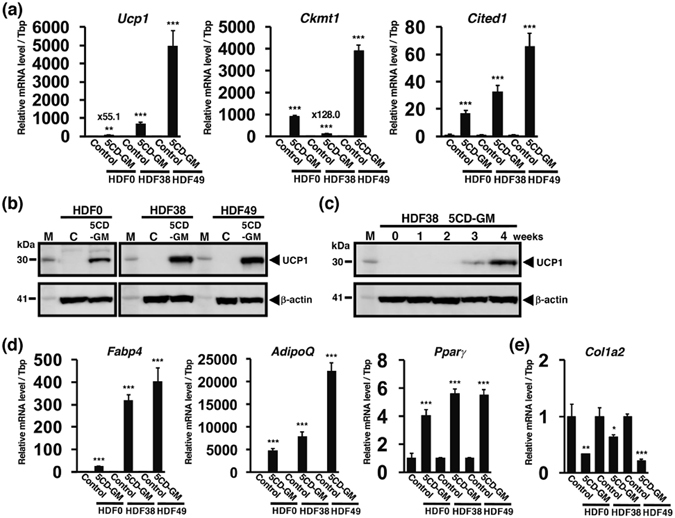
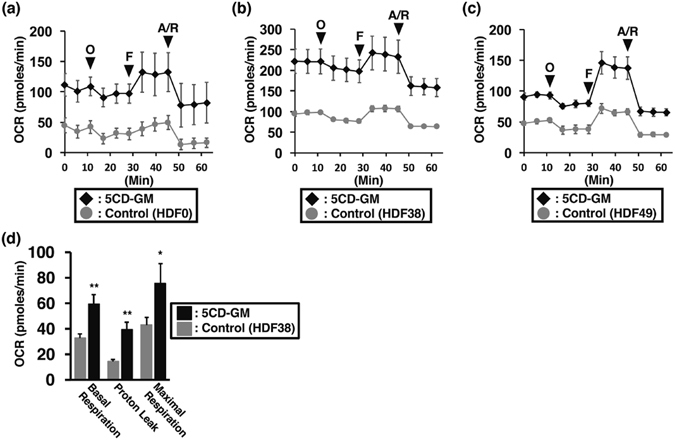
Brown adipocytes play an important role in human energy metabolism and prevention of obesity and diabetes. Induced pluripotent stem cells (iPSCs) represent a promising source for brown adipocytes; however, exogenous gene induction is generally required for iPSCs generation, which might cause undesired effects particularly in long-term treatment after transplantation. We have previously reported a cocktail of six small chemical compounds that enables a conversion of human fibroblasts into chemical compound-induced neuronal cells (CiNCs). Here, we report that modified combinations of the chemical compounds and rosiglitazone, a PPARγ agonist, afforded direct conversion of human fibroblasts into brown adipocytes. The chemical compound-induced brown adipocytes (ciBAs) exhibit induction of human brown adipocyte-specific genes such as Ucp1, Ckmt1, Cited1 and other adipocyte-specific genes such as Fabp4, AdipoQ, and Pparγ. Treatment with either isoproterenol or Forskolin further induced the expression of Ucp1, suggesting that β adrenergic receptor signalling in ciBAs could be functional for induction of thermogenic genes. Moreover, oxygen consumption rates were elevated in ciBAs along with increase of cellular mitochondria. Our findings might provide an easily accessible approach for generating human brown adipocytes from fibroblasts and offer therapeutic potential for the management of obesity, diabetes, and related metabolic disorders.
棕色脂肪细胞在人体能量代谢和预防肥胖症和糖尿病方面发挥着重要作用。诱导多能干细胞(iPSCs)是生成棕色脂肪细胞的有前途的来源;然而,iPSCs 的生成通常需要外源性基因诱导,这可能在移植后的长期治疗中产生不良影响。我们之前曾报道过一种由六种小分子化合物组成的鸡尾酒,可将人成纤维细胞转化为化学诱导的神经元细胞(CiNCs)。在这里,我们报告说,经过修饰的化合物组合和罗格列酮(一种 PPARγ 激动剂)可直接将人成纤维细胞转化为棕色脂肪细胞。化学诱导的棕色脂肪细胞(ciBAs)表现出人类棕色脂肪细胞特异性基因如 Ucp1、Ckmt1、Cited1 和其他脂肪细胞特异性基因如 Fabp4、AdipoQ 和 Pparγ 的诱导。用异丙肾上腺素或 Forskolin 处理进一步诱导了 Ucp1 的表达,这表明 ciBAs 中的β肾上腺素能受体信号可能对诱导产热基因具有功能。此外,ciBAs 中的耗氧量随着细胞线粒体的增加而升高。我们的发现可能为从成纤维细胞生成人类棕色脂肪细胞提供了一种易于获得的方法,并为肥胖症、糖尿病和相关代谢紊乱的治疗提供了潜在的治疗方法。