Jia Yingxian, Xie Xiaochuan, Shi Xiaohan, Li Shangwei
Division of Reproductive Medical Center, West China Second University Hospital, Sichuan University, Chengdu, Sichuan 610041, P.R. China.
Department of Cardiology, West China Hospital, Sichuan University, Chengdu, Sichuan 610041, P.R. China.
Mol Med Rep. 2017 Aug;16(2):1927-1945. doi: 10.3892/mmr.2017.6822. Epub 2017 Jun 20.
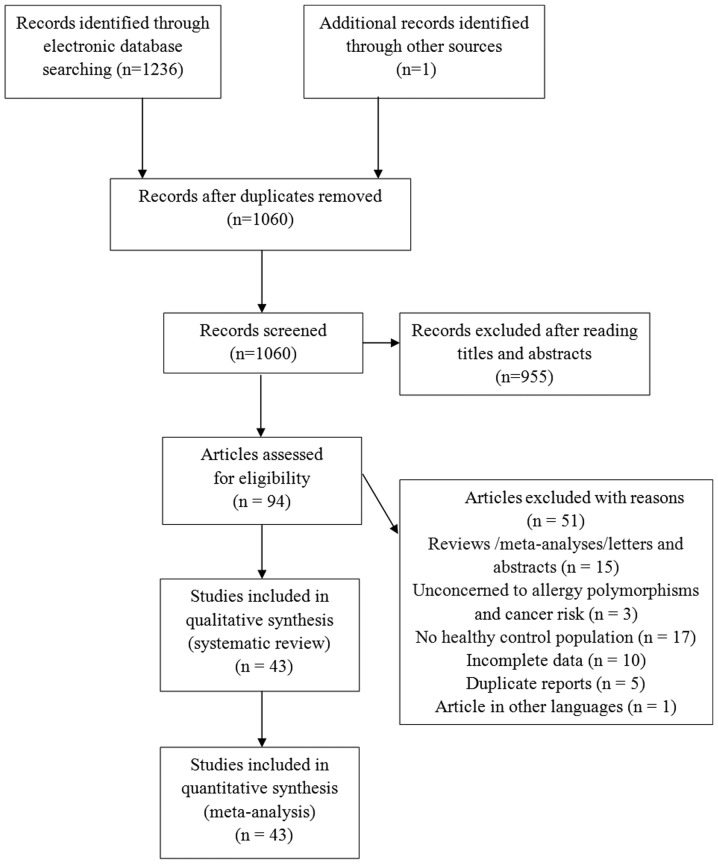
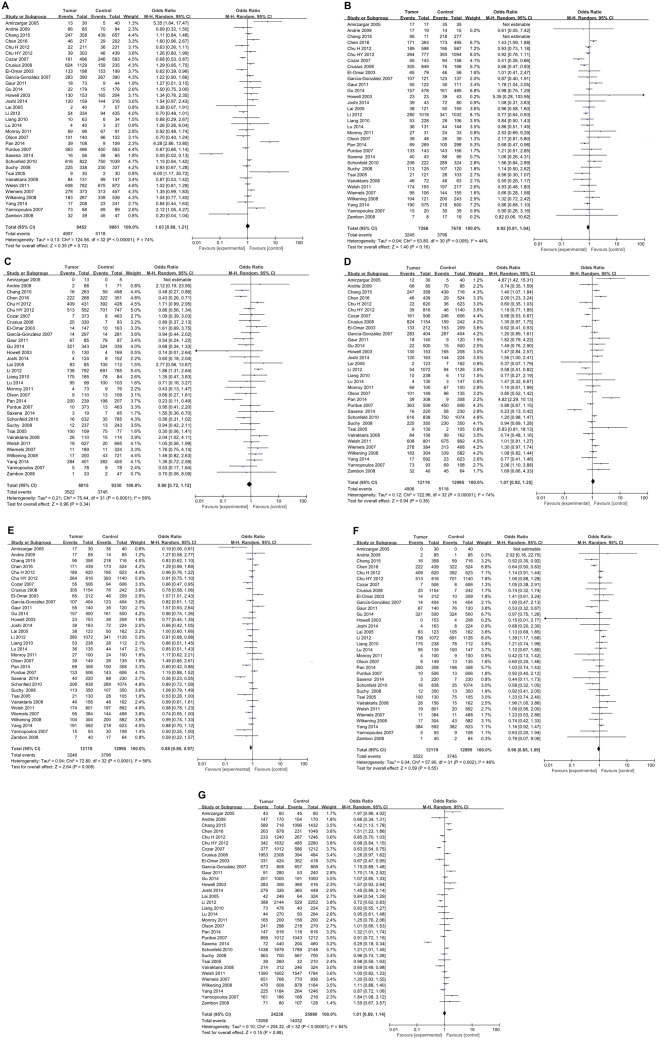
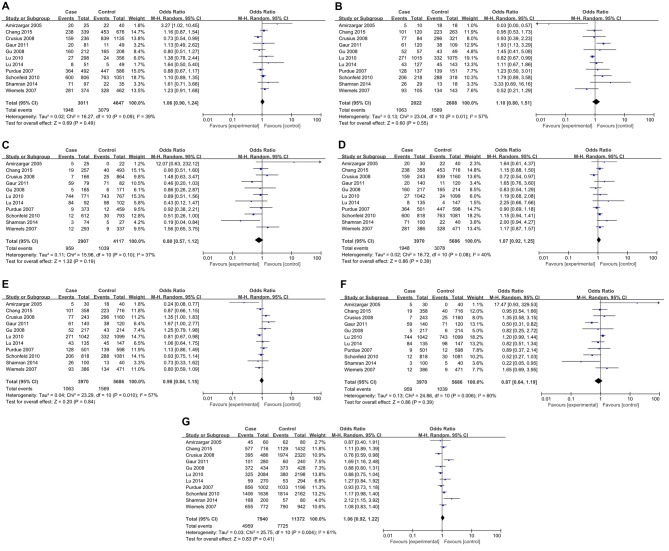
Cancer incidence is dramatically increasing worldwide, therefore improved prediction and therapeutic methods are needed. Single nucleotide polymorphisms in cytokine genes may contribute to carcinogenesis. Interleukin (IL)‑4 gene polymorphisms have been intensively studied with regard to their associations with cancer. However, the results of these previous studies remain inconclusive. The present study, therefore, aimed to conduct a meta‑analysis of previously published studies in order to clarify the association of IL‑4 with cancer risk. Eligible published articles were searched in Medline, PubMed, Embase and China National Knowledge Infrastructure databases up to March 2016. Odds ratios and 95% confidence intervals were used to identify potential associations between IL‑4 genetic polymorphisms and the risk of cancer. A meta‑analysis was then performed on 10,873 patients and 14,328 controls for IL‑4 rs2243250 polymorphism, 3,970 patients and 5,686 controls for IL‑4 rs2070874 polymorphism, and 1,896 patients and 2,526 controls for IL‑4 rs79071878 polymorphism. A significant association with cancer risk was observed for rs2243250 and rs79071878 polymorphisms. In the subgroup analysis by cancer type, rs2243250 polymorphism was demonstrated to be associated with an increased risk of gastric cancer and breast cancer, rs2070874 polymorphism was correlated with leukemia and oral carcinoma, and rs79071878 polymorphism was relevant to bladder carcinoma risk. In the subgroup analysis by ethnicity, IL‑4 rs2243250 polymorphism was demonstrated to be associated with cancer risk in both Caucasian and Asian populations, rs2070874 was associated with cancer risk in Asian populations, while rs79071878 polymorphism was associated with cancer risk in Caucasian populations. In conclusion, the present results suggested that the IL‑4 rs2243250 and rs79071878 polymorphisms were associated with cancer susceptibility. Further subgroup analyses revealed that the effects of IL‑4 gene polymorphisms on cancer risk may vary by cancer type and by ethnicity.
全球癌症发病率正在急剧上升,因此需要改进预测和治疗方法。细胞因子基因中的单核苷酸多态性可能与致癌作用有关。白细胞介素(IL)-4基因多态性与其与癌症的关联已得到深入研究。然而,这些先前研究的结果仍无定论。因此,本研究旨在对先前发表的研究进行荟萃分析,以阐明IL-4与癌症风险的关联。截至2016年3月,在Medline、PubMed、Embase和中国国家知识基础设施数据库中检索符合条件的已发表文章。比值比和95%置信区间用于确定IL-4基因多态性与癌症风险之间的潜在关联。然后对10873例患者和14328例对照进行IL-4 rs2243250多态性的荟萃分析,对3970例患者和5686例对照进行IL-4 rs2070874多态性的荟萃分析,对1896例患者和2526例对照进行IL-4 rs79071878多态性的荟萃分析。观察到rs2243250和rs79071878多态性与癌症风险存在显著关联。在按癌症类型进行的亚组分析中,rs2243250多态性被证明与胃癌和乳腺癌风险增加有关,rs2070874多态性与白血病和口腔癌相关,rs79071878多态性与膀胱癌风险相关。在按种族进行的亚组分析中,IL-4 rs2243250多态性在白种人和亚洲人群中均与癌症风险有关,rs2070874与亚洲人群的癌症风险有关,而rs79071878多态性与白种人群的癌症风险有关。总之,目前的结果表明IL-4 rs2243250和rs79071878多态性与癌症易感性有关。进一步的亚组分析表明,IL-4基因多态性对癌症风险的影响可能因癌症类型和种族而异。