• 文献检索
  • 文档翻译
  • 深度研究
  • 学术资讯
  • Suppr Zotero 插件Zotero 插件
  • 邀请有礼
  • 套餐&价格
  • 历史记录
应用&插件
Suppr Zotero 插件Zotero 插件浏览器插件Mac 客户端Windows 客户端微信小程序
定价
高级版会员购买积分包购买API积分包
服务
文献检索文档翻译深度研究API 文档MCP 服务
关于我们
关于 Suppr公司介绍联系我们用户协议隐私条款
关注我们

Suppr 超能文献

核心技术专利:CN118964589B侵权必究
粤ICP备2023148730 号-1Suppr @ 2026

文献检索

告别复杂PubMed语法,用中文像聊天一样搜索,搜遍4000万医学文献。AI智能推荐,让科研检索更轻松。

立即免费搜索

文件翻译

保留排版,准确专业,支持PDF/Word/PPT等文件格式,支持 12+语言互译。

免费翻译文档

深度研究

AI帮你快速写综述,25分钟生成高质量综述,智能提取关键信息,辅助科研写作。

立即免费体验

一种新型机器学习13基因特征:改善透明细胞肾细胞癌患者的风险分析和生存预测

A Novel Machine Learning 13-Gene Signature: Improving Risk Analysis and Survival Prediction for Clear Cell Renal Cell Carcinoma Patients.

作者信息

Terrematte Patrick, Andrade Dhiego Souto, Justino Josivan, Stransky Beatriz, de Araújo Daniel Sabino A, Dória Neto Adrião D

机构信息

Bioinformatics Multidisciplinary Environment (BioME), Metropole Digital Institute (IMD), Federal University of Rio Grande do Norte (UFRN), Natal 59078-400, Brazil.

Department of Engineering and Technology (DETEC), Pau dos Ferros Multidisciplinary Center, Federal Rural University of Semi-arid (UFERSA), Pau dos Ferros 59900-000, Brazil.

出版信息

Cancers (Basel). 2022 Apr 24;14(9):2111. doi: 10.3390/cancers14092111.

DOI:10.3390/cancers14092111
PMID:35565241
原文链接:https://pmc.ncbi.nlm.nih.gov/articles/PMC9103317/
Abstract

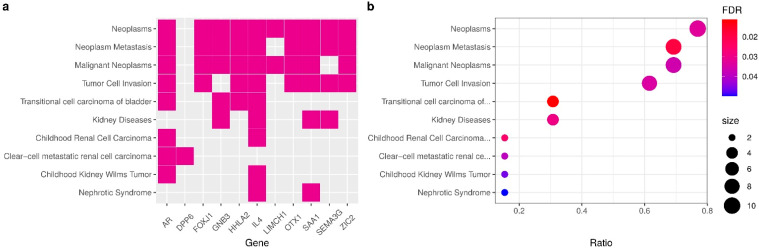
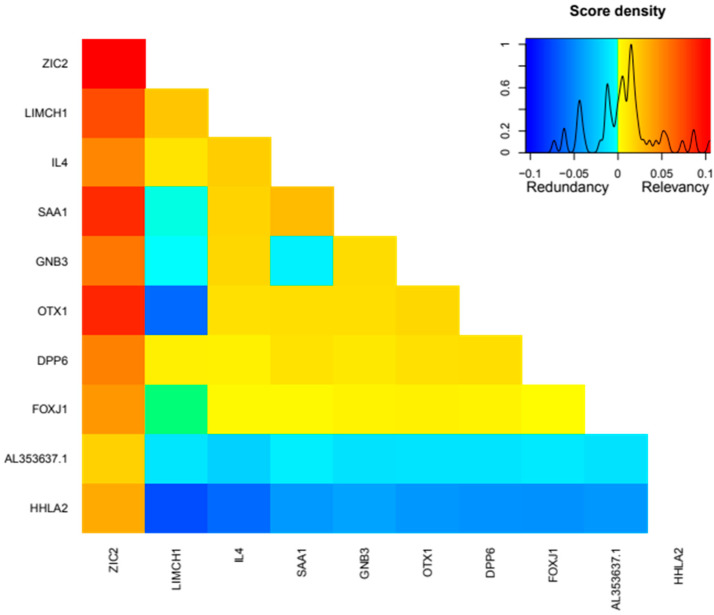
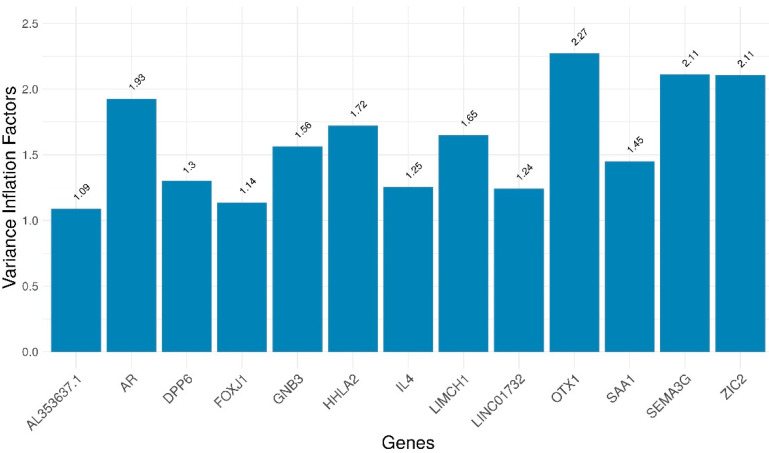
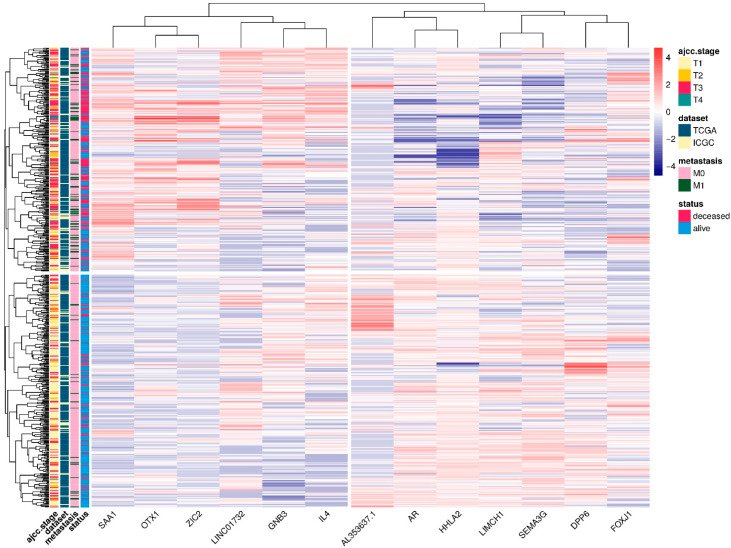
Patients with clear cell renal cell carcinoma (ccRCC) have poor survival outcomes, especially if it has metastasized. It is of paramount importance to identify biomarkers in genomic data that could help predict the aggressiveness of ccRCC and its resistance to drugs. Thus, we conducted a study with the aims of evaluating gene signatures and proposing a novel one with higher predictive power and generalization in comparison to the former signatures. Using ccRCC cohorts of the Cancer Genome Atlas (TCGA-KIRC) and International Cancer Genome Consortium (ICGC-RECA), we evaluated linear survival models of Cox regression with 14 signatures and six methods of feature selection, and performed functional analysis and differential gene expression approaches. In this study, we established a 13-gene signature (AR, AL353637.1, DPP6, FOXJ1, GNB3, HHLA2, IL4, LIMCH1, LINC01732, OTX1, SAA1, SEMA3G, ZIC2) whose expression levels are able to predict distinct outcomes of patients with ccRCC. Moreover, we performed a comparison between our signature and others from the literature. The best-performing gene signature was achieved using the ensemble method Min-Redundancy and Max-Relevance (mRMR). This signature comprises unique features in comparison to the others, such as generalization through different cohorts and being functionally enriched in significant pathways: Urothelial Carcinoma, Chronic Kidney disease, and Transitional cell carcinoma, Nephrolithiasis. From the 13 genes in our signature, eight are known to be correlated with ccRCC patient survival and four are immune-related. Our model showed a performance of 0.82 using the Receiver Operator Characteristic (ROC) Area Under Curve (AUC) metric and it generalized well between the cohorts. Our findings revealed two clusters of genes with high expression (SAA1, OTX1, ZIC2, LINC01732, GNB3 and IL4) and low expression (AL353637.1, AR, HHLA2, LIMCH1, SEMA3G, DPP6, and FOXJ1) which are both correlated with poor prognosis. This signature can potentially be used in clinical practice to support patient treatment care and follow-up.

摘要

透明细胞肾细胞癌(ccRCC)患者的生存结局较差,尤其是发生转移时。在基因组数据中识别能够帮助预测ccRCC侵袭性及其耐药性的生物标志物至关重要。因此,我们开展了一项研究,旨在评估基因特征,并提出一种与先前特征相比具有更高预测能力和泛化性的新特征。利用癌症基因组图谱(TCGA-KIRC)和国际癌症基因组联盟(ICGC-RECA)的ccRCC队列,我们评估了14种特征和六种特征选择方法的Cox回归线性生存模型,并进行了功能分析和差异基因表达分析。在本研究中,我们建立了一个由13个基因组成的特征(AR、AL353637.1、DPP6、FOXJ1、GNB3、HHLA2、IL4、LIMCH1、LINC01732、OTX1、SAA1、SEMA3G、ZIC2),其表达水平能够预测ccRCC患者的不同结局。此外,我们将我们的特征与文献中的其他特征进行了比较。使用最小冗余最大相关(mRMR)集成方法获得了性能最佳的基因特征。与其他特征相比,该特征具有独特之处,例如在不同队列中的泛化性以及在重要通路(尿路上皮癌、慢性肾病和移行细胞癌、肾结石病)中的功能富集。在我们的特征中的13个基因中,有8个已知与ccRCC患者生存相关,4个与免疫相关。我们的模型使用受试者工作特征(ROC)曲线下面积(AUC)指标的性能为0.82,并且在队列之间具有良好的泛化性。我们的研究结果揭示了两个高表达基因簇(SAA1、OTX1、ZIC2、LINC01732、GNB3和IL4)和低表达基因簇(AL353637.1、AR、HHLA2、LIMCH1、SEMA3G、DPP6和FOXJ1),它们均与不良预后相关。该特征有可能在临床实践中用于支持患者的治疗护理和随访。
https://cdn.ncbi.nlm.nih.gov/pmc/blobs/9eb4/9103317/f89e2f0fd9d6/cancers-14-02111-g006.jpg
https://cdn.ncbi.nlm.nih.gov/pmc/blobs/9eb4/9103317/9d7e383b4866/cancers-14-02111-g0A1.jpg
https://cdn.ncbi.nlm.nih.gov/pmc/blobs/9eb4/9103317/5af68f2bdd69/cancers-14-02111-g0A2.jpg
https://cdn.ncbi.nlm.nih.gov/pmc/blobs/9eb4/9103317/2d97e06b5dfc/cancers-14-02111-g0A3.jpg
https://cdn.ncbi.nlm.nih.gov/pmc/blobs/9eb4/9103317/70c00ff738a3/cancers-14-02111-g0A4.jpg
https://cdn.ncbi.nlm.nih.gov/pmc/blobs/9eb4/9103317/1acc81fac910/cancers-14-02111-g0A5.jpg
https://cdn.ncbi.nlm.nih.gov/pmc/blobs/9eb4/9103317/b171a1565a01/cancers-14-02111-g0A6.jpg
https://cdn.ncbi.nlm.nih.gov/pmc/blobs/9eb4/9103317/2daa4cd26ed5/cancers-14-02111-g0A7.jpg
https://cdn.ncbi.nlm.nih.gov/pmc/blobs/9eb4/9103317/2a6481d1ece5/cancers-14-02111-g0A8.jpg
https://cdn.ncbi.nlm.nih.gov/pmc/blobs/9eb4/9103317/3160eab5cb64/cancers-14-02111-g0A9.jpg
https://cdn.ncbi.nlm.nih.gov/pmc/blobs/9eb4/9103317/df608fa2da10/cancers-14-02111-g0A10.jpg
https://cdn.ncbi.nlm.nih.gov/pmc/blobs/9eb4/9103317/b746a35a976d/cancers-14-02111-g001.jpg
https://cdn.ncbi.nlm.nih.gov/pmc/blobs/9eb4/9103317/f297419396a1/cancers-14-02111-g002.jpg
https://cdn.ncbi.nlm.nih.gov/pmc/blobs/9eb4/9103317/53c77514fbf7/cancers-14-02111-g003.jpg
https://cdn.ncbi.nlm.nih.gov/pmc/blobs/9eb4/9103317/68ed12491cf1/cancers-14-02111-g004.jpg
https://cdn.ncbi.nlm.nih.gov/pmc/blobs/9eb4/9103317/210fb50cb9be/cancers-14-02111-g005.jpg
https://cdn.ncbi.nlm.nih.gov/pmc/blobs/9eb4/9103317/f89e2f0fd9d6/cancers-14-02111-g006.jpg
https://cdn.ncbi.nlm.nih.gov/pmc/blobs/9eb4/9103317/9d7e383b4866/cancers-14-02111-g0A1.jpg
https://cdn.ncbi.nlm.nih.gov/pmc/blobs/9eb4/9103317/5af68f2bdd69/cancers-14-02111-g0A2.jpg
https://cdn.ncbi.nlm.nih.gov/pmc/blobs/9eb4/9103317/2d97e06b5dfc/cancers-14-02111-g0A3.jpg
https://cdn.ncbi.nlm.nih.gov/pmc/blobs/9eb4/9103317/70c00ff738a3/cancers-14-02111-g0A4.jpg
https://cdn.ncbi.nlm.nih.gov/pmc/blobs/9eb4/9103317/1acc81fac910/cancers-14-02111-g0A5.jpg
https://cdn.ncbi.nlm.nih.gov/pmc/blobs/9eb4/9103317/b171a1565a01/cancers-14-02111-g0A6.jpg
https://cdn.ncbi.nlm.nih.gov/pmc/blobs/9eb4/9103317/2daa4cd26ed5/cancers-14-02111-g0A7.jpg
https://cdn.ncbi.nlm.nih.gov/pmc/blobs/9eb4/9103317/2a6481d1ece5/cancers-14-02111-g0A8.jpg
https://cdn.ncbi.nlm.nih.gov/pmc/blobs/9eb4/9103317/3160eab5cb64/cancers-14-02111-g0A9.jpg
https://cdn.ncbi.nlm.nih.gov/pmc/blobs/9eb4/9103317/df608fa2da10/cancers-14-02111-g0A10.jpg
https://cdn.ncbi.nlm.nih.gov/pmc/blobs/9eb4/9103317/b746a35a976d/cancers-14-02111-g001.jpg
https://cdn.ncbi.nlm.nih.gov/pmc/blobs/9eb4/9103317/f297419396a1/cancers-14-02111-g002.jpg
https://cdn.ncbi.nlm.nih.gov/pmc/blobs/9eb4/9103317/53c77514fbf7/cancers-14-02111-g003.jpg
https://cdn.ncbi.nlm.nih.gov/pmc/blobs/9eb4/9103317/68ed12491cf1/cancers-14-02111-g004.jpg
https://cdn.ncbi.nlm.nih.gov/pmc/blobs/9eb4/9103317/210fb50cb9be/cancers-14-02111-g005.jpg
https://cdn.ncbi.nlm.nih.gov/pmc/blobs/9eb4/9103317/f89e2f0fd9d6/cancers-14-02111-g006.jpg

相似文献

1
A Novel Machine Learning 13-Gene Signature: Improving Risk Analysis and Survival Prediction for Clear Cell Renal Cell Carcinoma Patients.一种新型机器学习13基因特征:改善透明细胞肾细胞癌患者的风险分析和生存预测
Cancers (Basel). 2022 Apr 24;14(9):2111. doi: 10.3390/cancers14092111.
2
Prediction of overall survival based upon a new ferroptosis-related gene signature in patients with clear cell renal cell carcinoma.基于铁死亡相关基因特征预测透明细胞肾细胞癌患者的总生存期。
World J Surg Oncol. 2022 Apr 14;20(1):120. doi: 10.1186/s12957-022-02555-9.
3
Identification and Validation of a Ferroptosis-Related Long Non-Coding RNA (FRlncRNA) Signature to Predict Survival Outcomes and the Immune Microenvironment in Patients With Clear Cell Renal Cell Carcinoma.一种用于预测透明细胞肾细胞癌患者生存结局和免疫微环境的铁死亡相关长链非编码RNA(FRlncRNA)特征的鉴定与验证
Front Genet. 2022 Mar 8;13:787884. doi: 10.3389/fgene.2022.787884. eCollection 2022.
4
Novel amino acid metabolism-related gene signature to predict prognosis in clear cell renal cell carcinoma.用于预测透明细胞肾细胞癌预后的新型氨基酸代谢相关基因特征
Front Genet. 2022 Sep 2;13:982162. doi: 10.3389/fgene.2022.982162. eCollection 2022.
5
Identification of a claudin-low subtype in clear cell renal cell carcinoma with implications for the evaluation of clinical outcomes and treatment efficacy.鉴定肾透明细胞癌中的 Claudin-low 亚型,为评估临床结局和治疗效果提供依据。
Front Immunol. 2022 Nov 21;13:1020729. doi: 10.3389/fimmu.2022.1020729. eCollection 2022.
6
Construction and Validation of an Autophagy-Related Prognostic Risk Signature for Survival Predicting in Clear Cell Renal Cell Carcinoma Patients.用于预测透明细胞肾细胞癌患者生存的自噬相关预后风险特征的构建与验证
Front Oncol. 2020 May 5;10:707. doi: 10.3389/fonc.2020.00707. eCollection 2020.
7
Prognostic value of neutrophil extracellular trap signature in clear cell renal cell carcinoma.中性粒细胞胞外诱捕网特征在透明细胞肾细胞癌中的预后价值
Front Oncol. 2023 Jul 13;13:1205713. doi: 10.3389/fonc.2023.1205713. eCollection 2023.
8
Genome-wide screening and cohorts validation identifying novel lncRNAs as prognostic biomarkers for clear cell renal cell carcinoma.全基因组筛选和队列验证鉴定新型 lncRNAs 作为透明细胞肾细胞癌的预后生物标志物。
J Cell Biochem. 2020 Mar;121(3):2559-2570. doi: 10.1002/jcb.29478. Epub 2019 Oct 23.
9
Comprehensive analysis of a homeobox family gene signature in clear cell renal cell carcinoma with regard to prognosis and immune significance.关于预后和免疫意义的透明细胞肾细胞癌中同源盒家族基因特征的综合分析。
Front Oncol. 2022 Oct 31;12:1008714. doi: 10.3389/fonc.2022.1008714. eCollection 2022.
10
DYSF expression in clear cell renal cell carcinoma: A retrospective study of 2 independent cohorts.在透明细胞肾细胞癌中 DYSF 的表达:两个独立队列的回顾性研究。
Urol Oncol. 2019 Oct;37(10):735-741. doi: 10.1016/j.urolonc.2019.07.007. Epub 2019 Jul 31.

引用本文的文献

1
Kidney cancer diagnosis and surgery selection by double decker convolutional neural network from CT scans combined with great wall construction algorithm.基于CT扫描并结合长城构建算法的双层卷积神经网络用于肾癌诊断及手术选择
Abdom Radiol (NY). 2025 Apr 5. doi: 10.1007/s00261-025-04900-4.
2
[LIM and calponin homology domains 1 may function as promising biological markers to aid in the prognostic prediction of oral squamous cell carcinoma].[LIM和钙调蛋白同源结构域1可能作为有前景的生物标志物,有助于口腔鳞状细胞癌的预后预测]
Beijing Da Xue Xue Bao Yi Xue Ban. 2025 Feb 18;57(1):19-25. doi: 10.19723/j.issn.1671-167X.2025.01.004.
3

本文引用的文献

1
MiRNA-424-5p Suppresses Proliferation, Migration, and Invasion of Clear Cell Renal Cell Carcinoma and Attenuates Expression of O-GlcNAc-Transferase.微小RNA-424-5p抑制透明细胞肾细胞癌的增殖、迁移和侵袭,并减弱O-连接N-乙酰葡糖胺转移酶的表达。
Cancers (Basel). 2021 Oct 14;13(20):5160. doi: 10.3390/cancers13205160.
2
clusterProfiler 4.0: A universal enrichment tool for interpreting omics data.clusterProfiler 4.0:用于解释组学数据的通用富集工具。
Innovation (Camb). 2021 Jul 1;2(3):100141. doi: 10.1016/j.xinn.2021.100141. eCollection 2021 Aug 28.
3
Identification of Dipeptidyl Peptidase (DPP) Family Genes in Clinical Breast Cancer Patients via an Integrated Bioinformatics Approach.
Transcriptome analysis revealed a novel nine-gene prognostic risk score of clear cell renal cell carcinoma.
转录组分析揭示了透明细胞肾细胞癌的一个新的九基因预后风险评分。
Medicine (Baltimore). 2024 Sep 27;103(39):e39678. doi: 10.1097/MD.0000000000039678.
4
Survival prediction landscape: an in-depth systematic literature review on activities, methods, tools, diseases, and databases.生存预测全景:关于活动、方法、工具、疾病和数据库的深入系统文献综述
Front Artif Intell. 2024 Jul 3;7:1428501. doi: 10.3389/frai.2024.1428501. eCollection 2024.
5
The Importance of HHLA2 in Solid Tumors-A Review of the Literature.HHLA2 在实体瘤中的重要性——文献综述
Cells. 2024 May 7;13(10):794. doi: 10.3390/cells13100794.
6
Machine Learning Gene Signature to Metastatic ccRCC Based on ceRNA Network.基于ceRNA网络的转移性ccRCC的机器学习基因特征
Int J Mol Sci. 2024 Apr 11;25(8):4214. doi: 10.3390/ijms25084214.
7
A Novel KIF4A-related Model for Predicting Immunotherapy Response and Prognosis in Kidney Renal Clear Cell Carcinoma.一种用于预测肾透明细胞癌免疫治疗反应和预后的新型KIF4A相关模型。
Comb Chem High Throughput Screen. 2025;28(4):691-710. doi: 10.2174/0113862073296897240212114403.
8
A novel prognostic predictor of immune microenvironment and therapeutic response in clear cell renal cell carcinoma based on angiogenesis-immune-related gene signature.基于血管生成-免疫相关基因特征的透明细胞肾细胞癌免疫微环境和治疗反应的新型预后预测指标
Heliyon. 2023 Dec 10;10(1):e23503. doi: 10.1016/j.heliyon.2023.e23503. eCollection 2024 Jan 15.
9
Mathematical and Machine Learning Models of Renal Cell Carcinoma: A Review.肾细胞癌的数学和机器学习模型:综述
Bioengineering (Basel). 2023 Nov 16;10(11):1320. doi: 10.3390/bioengineering10111320.
10
Incremental value of radiomics with machine learning to the existing prognostic models for predicting outcome in renal cell carcinoma.基于机器学习的影像组学对预测肾细胞癌预后的现有预后模型的增量价值。
Front Oncol. 2023 Apr 28;13:1036734. doi: 10.3389/fonc.2023.1036734. eCollection 2023.
通过综合生物信息学方法鉴定临床乳腺癌患者中的二肽基肽酶(DPP)家族基因
Diagnostics (Basel). 2021 Jul 2;11(7):1204. doi: 10.3390/diagnostics11071204.
4
LncRNA RCAT1 promotes tumor progression and metastasis via miR-214-5p/E2F2 axis in renal cell carcinoma.长链非编码 RNA RCAT1 通过 miR-214-5p/E2F2 轴促进肾细胞癌的肿瘤进展和转移。
Cell Death Dis. 2021 Jul 9;12(7):689. doi: 10.1038/s41419-021-03955-7.
5
Artificial intelligence for clinical oncology.人工智能在临床肿瘤学中的应用。
Cancer Cell. 2021 Jul 12;39(7):916-927. doi: 10.1016/j.ccell.2021.04.002. Epub 2021 Apr 29.
6
A Zic2/Runx2/NOLC1 signaling axis mediates tumor growth and metastasis in clear cell renal cell carcinoma.一个 Zic2/Runx2/NOLC1 信号轴介导了透明细胞肾细胞癌的肿瘤生长和转移。
Cell Death Dis. 2021 Mar 25;12(4):319. doi: 10.1038/s41419-021-03617-8.
7
A Novel Nine Apoptosis-Related Genes Signature Predicting Overall Survival for Kidney Renal Clear Cell Carcinoma and its Associations with Immune Infiltration.一种预测肾透明细胞癌总生存期的新型九凋亡相关基因特征及其与免疫浸润的关联
Front Mol Biosci. 2021 Mar 4;8:567730. doi: 10.3389/fmolb.2021.567730. eCollection 2021.
8
A 10-gene prognostic signature points to LIMCH1 and HLA-DQB1 as important players in aggressive cervical cancer disease.一个 10 基因预后标志物指向 LIMCH1 和 HLA-DQB1 是侵袭性宫颈癌的重要参与者。
Br J Cancer. 2021 May;124(10):1690-1698. doi: 10.1038/s41416-021-01305-0. Epub 2021 Mar 15.
9
Re-evaluating experimental validation in the Big Data Era: a conceptual argument.重新审视大数据时代的实验验证:一个概念性论证。
Genome Biol. 2021 Feb 24;22(1):71. doi: 10.1186/s13059-021-02292-4.
10
Androgen receptor promotes renal cell carcinoma (RCC) vasculogenic mimicry (VM) via altering TWIST1 nonsense-mediated decay through lncRNA-TANAR.雄激素受体通过长链非编码RNA-TANAR改变TWIST1的无义介导衰变,从而促进肾细胞癌(RCC)的血管生成拟态(VM)。
Oncogene. 2021 Mar;40(9):1674-1689. doi: 10.1038/s41388-020-01616-1. Epub 2021 Jan 28.