Palesh Oxana, Haitz Karyn, Lévi Francis, Bjarnason Georg A, Deguzman Carl, Alizeh Igbal, Ulusakarya Ayhan, Packer Mary Melissa, Innominato Pasquale F
Department of Psychiatry and Behavioral Sciences, Stanford University, 401 Quarry Road, Stanford, CA, 94305, USA.
Stanford Cancer Institute, Stanford School of Medicine, Stanford, CA, USA.
Qual Life Res. 2017 Oct;26(10):2783-2791. doi: 10.1007/s11136-017-1617-2. Epub 2017 Jun 27.
Patients with cancers frequently experience sleep and circadian dysfunction. To date, only a few studies have used both a questionnaire and actigraphy for concomitant evaluation of sleep and circadian function in patients with cancer. We sought to evaluate objective sleep and circadian parameters in metastatic colon cancer (MCC) patients and their associations with symptoms and quality of life (QOL).
Patients reported subjective sleep problems on the EORTC QLQ-C30. Sleep and circadian parameters were calculated using a wrist-actigraph that patients wore for 72 h.
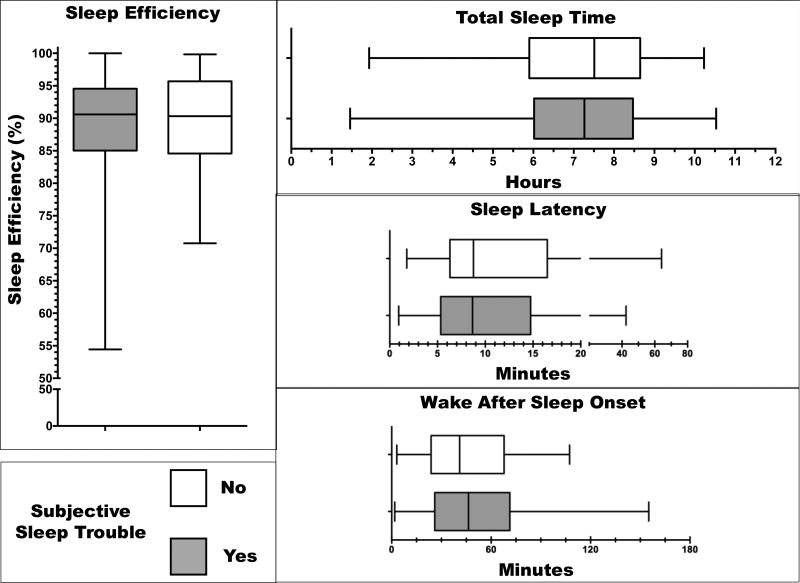
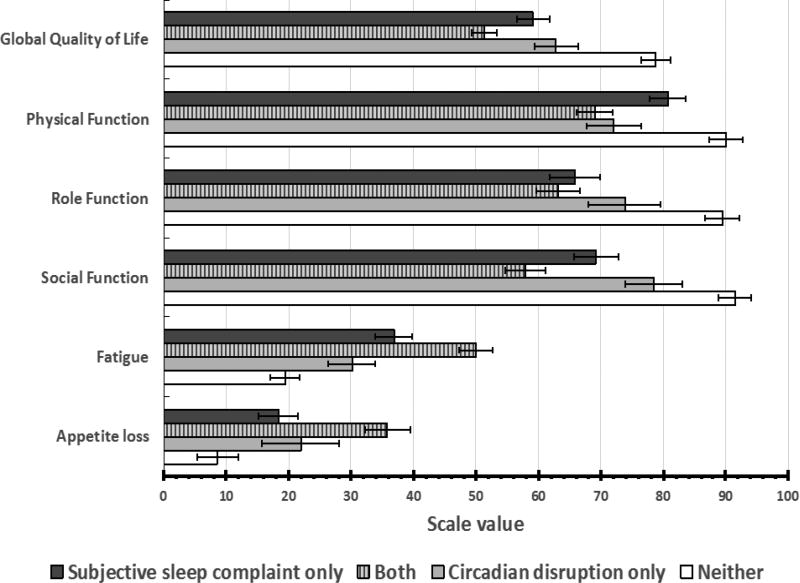
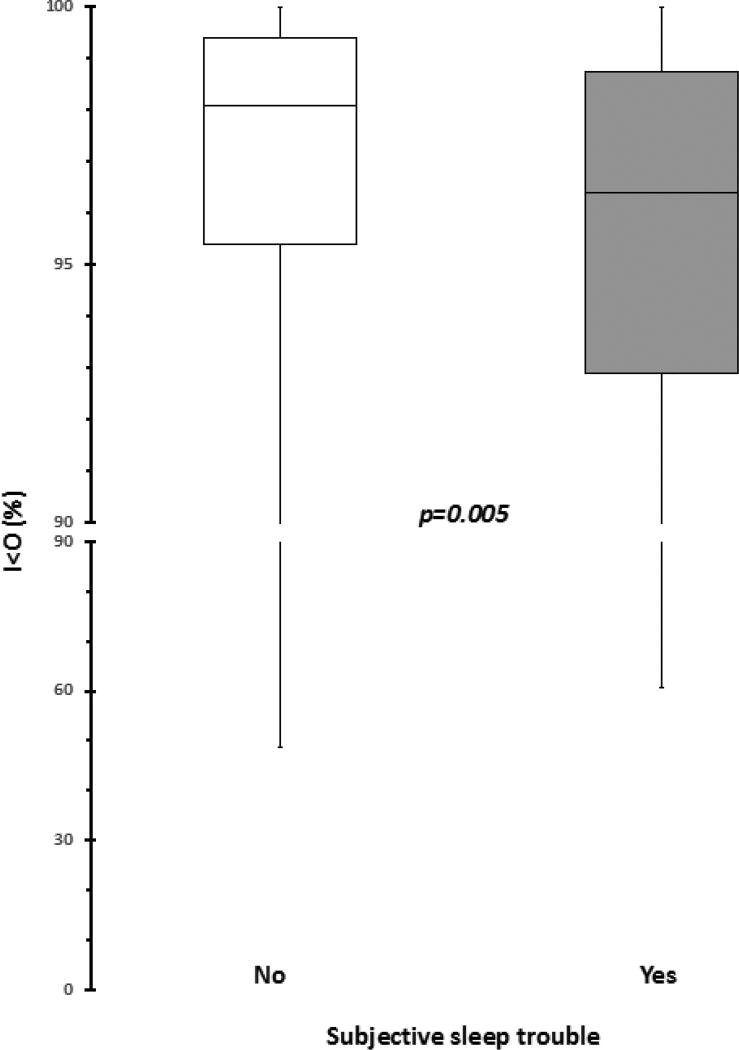
237 Patients with MCC (mean age: 60.4 years; range: 20.7-77.6; Male/Female ratio: 1.66) participated in this cross-sectional study. Subjective sleep problems were reported by 63.4% of patients (S+). No differences in any sleep parameters (sleep efficiency, sleep latency, total sleep time, total time in bed, wake after sleep onset, activity bathyphase) were observed between S+ and S- patients. However, S+ patients displayed a significantly worse circadian function than S- patients (96.4 vs 98.1%; p = 0.005). The presence of poor subjective sleep and objective circadian dysfunction negatively affected symptoms and QOL domains (p = 0.038).
Subjective report of sleep problems was not associated with worse objectively measured sleep parameters in patients with MCC although it was associated with disrupted circadian rest-activity rhythm and poorer QOL. These findings coincide with prior research in cancer patients in that an inconsistent relationship exists between subjective and objective sleep measurements on some sleep domains. This study supports the value of coupled evaluation of self-reported and objective measures of sleep and circadian function in cancer patients.
癌症患者经常经历睡眠和昼夜节律功能障碍。迄今为止,只有少数研究同时使用问卷调查和活动记录仪来评估癌症患者的睡眠和昼夜节律功能。我们旨在评估转移性结肠癌(MCC)患者的客观睡眠和昼夜节律参数及其与症状和生活质量(QOL)的关联。
患者在欧洲癌症研究与治疗组织(EORTC)QLQ-C30问卷上报告主观睡眠问题。使用患者佩戴72小时的手腕活动记录仪计算睡眠和昼夜节律参数。
237例MCC患者(平均年龄:60.4岁;范围:20.7 - 77.6岁;男/女比例:1.66)参与了这项横断面研究。63.4%的患者报告有主观睡眠问题(S+)。S+和S-患者在任何睡眠参数(睡眠效率、入睡潜伏期、总睡眠时间、卧床总时间、睡眠中觉醒时间、活动低谷期)上均未观察到差异。然而,S+患者的昼夜节律功能明显比S-患者差(96.4%对98.1%;p = 0.005)。主观睡眠不佳和客观昼夜节律功能障碍的存在对症状和生活质量领域产生了负面影响(p = 0.038)。
MCC患者主观睡眠问题的报告与客观测量的较差睡眠参数无关,尽管它与昼夜休息 - 活动节律紊乱和较差的生活质量有关。这些发现与之前对癌症患者的研究一致,即在某些睡眠领域,主观和客观睡眠测量之间存在不一致的关系。本研究支持对癌症患者睡眠和昼夜节律功能进行自我报告和客观测量的联合评估的价值。