Grahl Nora, Demers Elora G, Crocker Alex W, Hogan Deborah A
Department of Microbiology and Immunology, Geisel School of Medicine at Dartmouth, Hanover, New Hampshire, USA.
mSphere. 2017 Jun 21;2(3). doi: 10.1128/mSphere.00218-17. eCollection 2017 May-Jun.
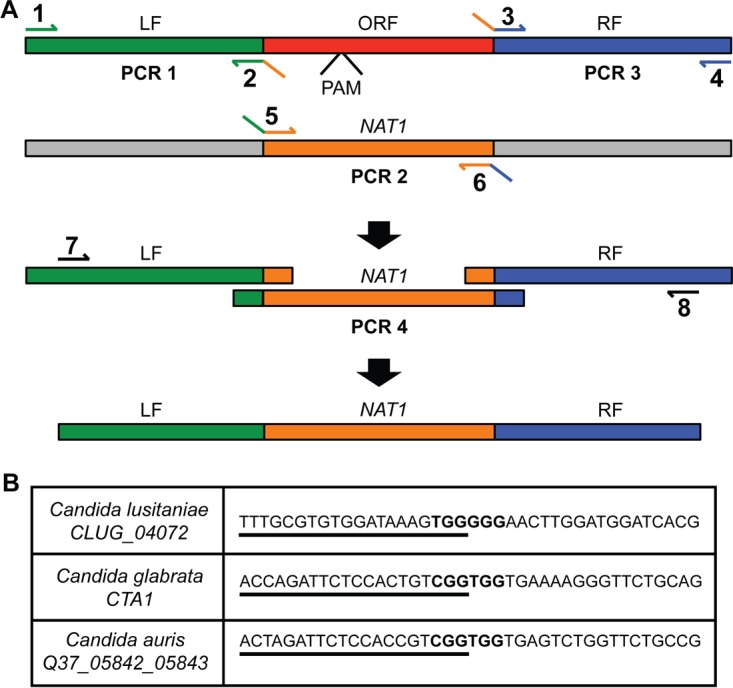
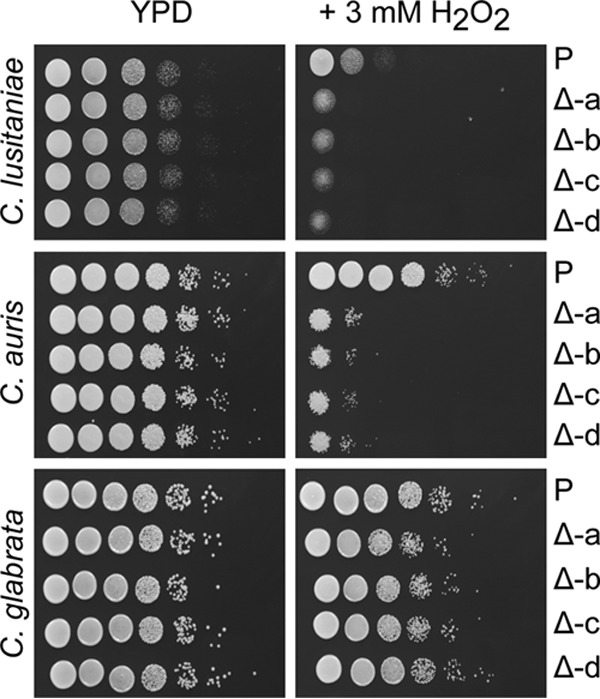
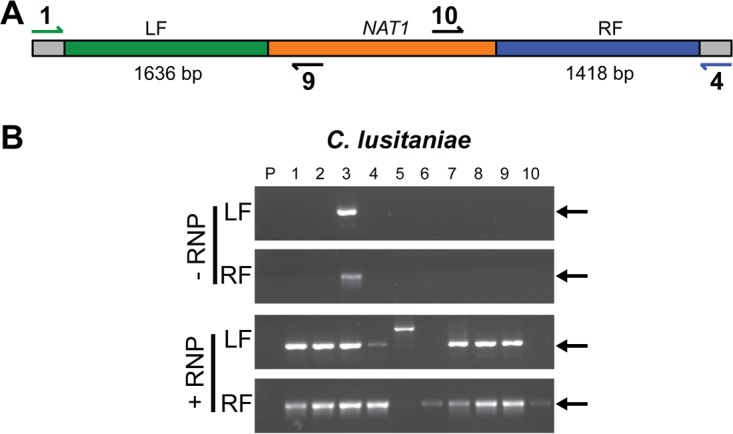
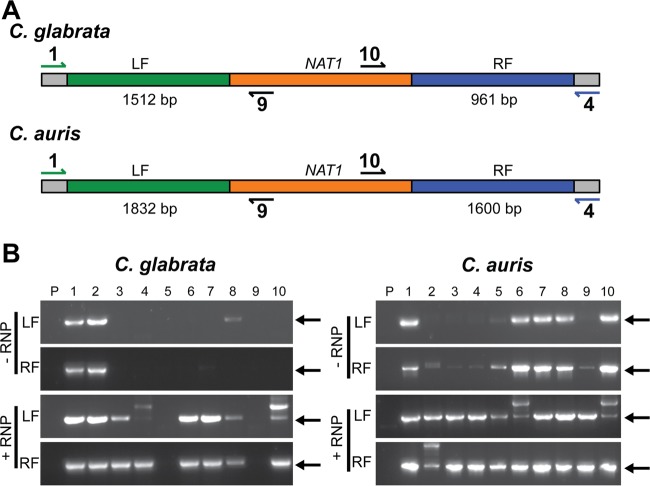
Clustered regularly interspaced short palindromic repeat(CRISPR)-Cas9 genome modification systems have greatly facilitated the genetic analysis of fungal pathogens. In CRISPR-Cas9 genome editing methods designed for use in , DNAs that encode the necessary components are expressed in the target cells. Unfortunately, expression constructs that work efficiently in are not necessarily expressed well in other pathogenic species within the genus or the related genus . To circumvent the need for species-specific expression constructs, we implemented an expression-free CRISPR genome editing system and demonstrated its successful use in three different non- species: () , , and . In CRISPR-Cas9-mediated genome editing methods, a targeted double-stranded DNA break can be repaired by homologous recombination to a template designed by the investigator. In this protocol, the DNA cleavage is induced upon transformation of purified Cas9 protein in complex with gene-specific and scaffold RNAs, referred to as RNA-protein complexes (RNPs). In all three species, the use of RNPs increased both the number of transformants and the percentage of transformants in which the target gene was successfully replaced with a selectable marker. We constructed mutants defective in known or putative catalase genes in , , and and demonstrated that, in all three species, mutants were more susceptible to hydrogen peroxide than the parental strain. This method, which circumvents the need for expression of CRISPR-Cas9 components, may be broadly useful in the study of diverse species and emergent pathogens for which there are limited genetic tools. Existing CRISPR-Cas9 genome modification systems for use in , which rely on constructs to endogenously express the Cas9 protein and guide RNA, do not work efficiently in other species due to inefficient promoter activity. Here, we present an expression-free method that uses RNA-protein complexes and demonstrate its use in three species known for their drug resistance profiles. We propose that this system will aid the genetic analysis of fungi that lack established genetic systems.
成簇规律间隔短回文重复序列(CRISPR)-Cas9基因组编辑系统极大地促进了真菌病原体的遗传分析。在设计用于[具体物种1]的CRISPR-Cas9基因组编辑方法中,编码必要组分的DNA在靶细胞中表达。不幸的是,在[具体物种1]中高效起作用的表达构建体在[具体物种1]属内的其他致病物种或相关属中不一定能很好地表达。为了避免对物种特异性表达构建体的需求,我们实施了一种无表达的CRISPR基因组编辑系统,并证明其在三种不同的非[具体物种1]物种中成功应用:[具体物种2]([具体种名2])、[具体物种3]和[具体物种4]。在CRISPR-Cas9介导的基因组编辑方法中,靶向双链DNA断裂可通过同源重组修复至研究者设计的模板。在本方案中,当与基因特异性RNA和支架RNA复合的纯化Cas9蛋白(称为RNA-蛋白复合物,RNPs)转化时诱导DNA切割。在所有这三个物种中,使用RNPs增加了转化体的数量以及成功用选择标记替换靶基因的转化体百分比。我们在[具体物种2]、[具体物种3]和[具体物种4]中构建了已知或推定的过氧化氢酶基因缺陷型突变体,并证明在所有这三个物种中,突变体比亲本菌株对过氧化氢更敏感。这种避免CRISPR-Cas9组分表达需求的方法可能在多种[具体物种1]物种和遗传工具有限的新兴病原体研究中广泛有用。现有的用于[具体物种1]的CRISPR-Cas9基因组编辑系统依赖构建体来内源性表达Cas9蛋白和引导RNA,由于启动子活性低,在其他[具体物种1]物种中不能有效起作用。在此,我们提出一种使用RNA-蛋白复合物的无表达方法,并证明其在以耐药谱闻名的三种[具体物种1]物种中的应用。我们认为该系统将有助于缺乏成熟遗传系统的真菌的遗传分析。