Šmíd Jan, Kalousová Marie, Mandák Bohumil, Houška Jakub, Chládová Anna, Pinedo Mario, Lojka Bohdan
Department of Crop Sciences and Agroforestry, Faculty of Tropical AgriSciences, Czech University of Life Sciences, Kamýcká 129, Prague, Czech Republic.
Department of Ecology, Faculty of Environmental Sciences, Czech University of Life Sciences, Kamýcká 129, Prague, Czech Republic.
PLoS One. 2017 Jun 28;12(6):e0179886. doi: 10.1371/journal.pone.0179886. eCollection 2017.
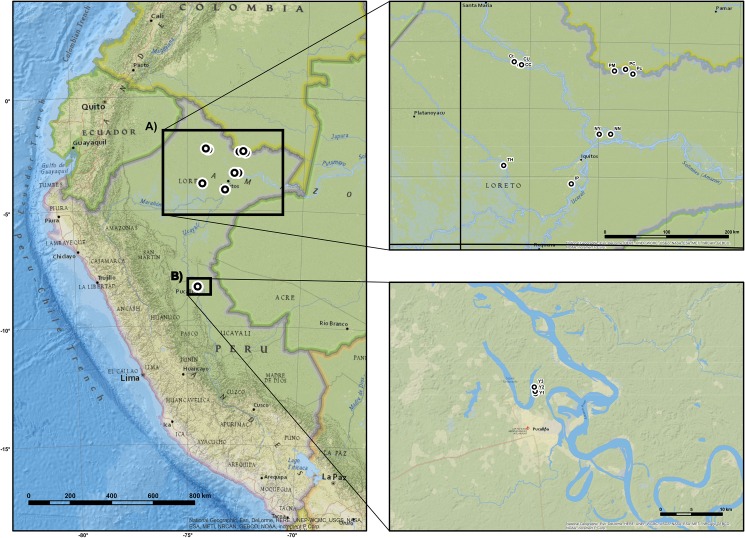
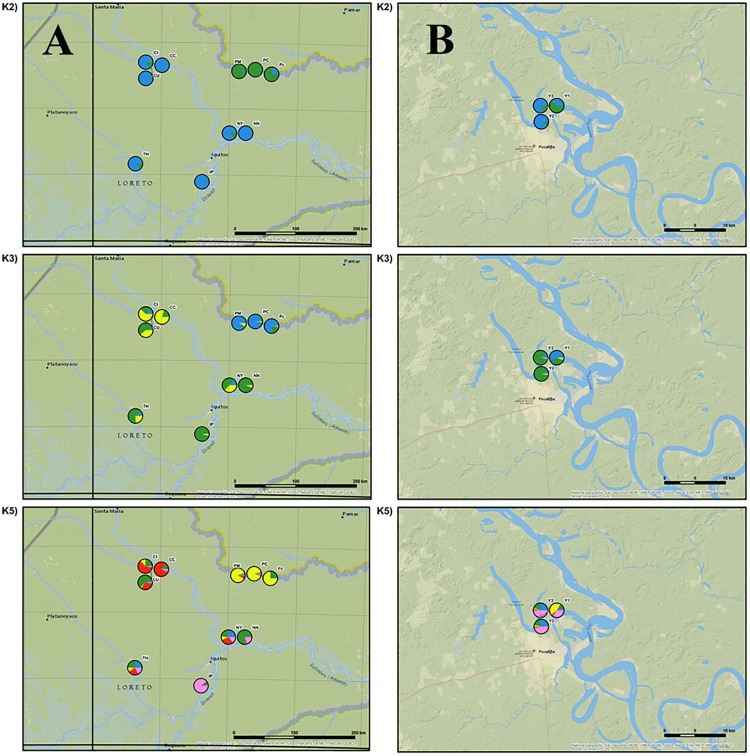
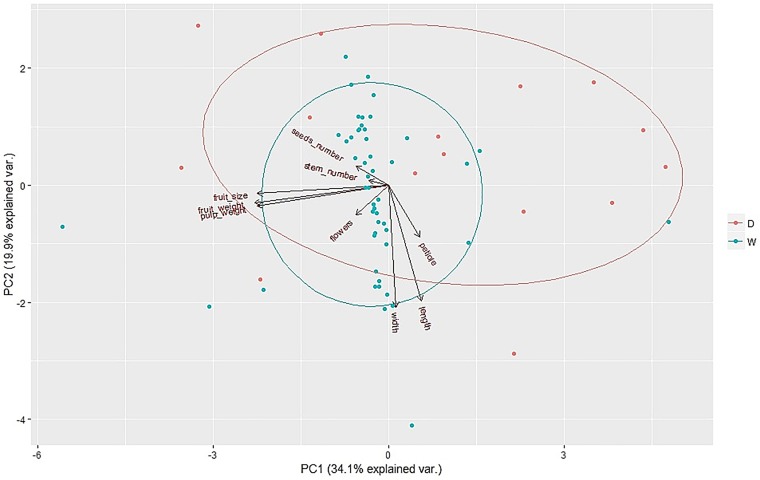
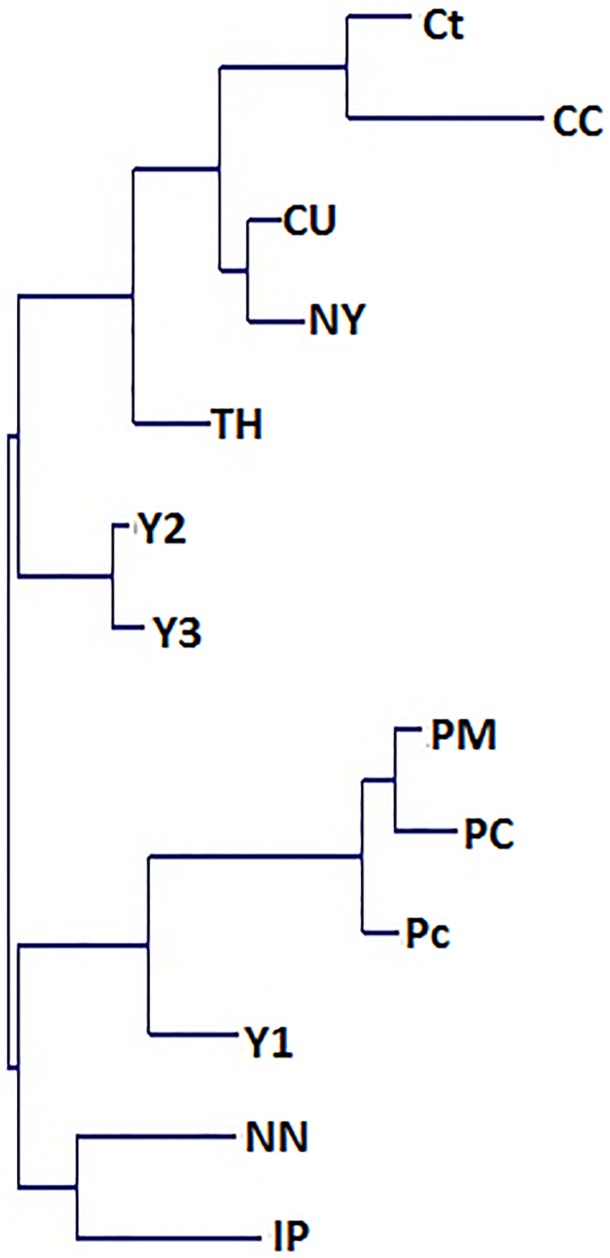
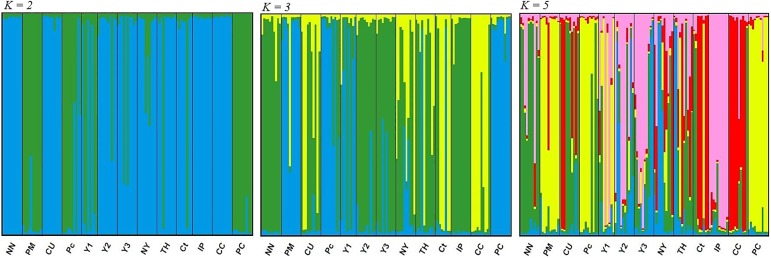
Camu-camu [Myrciaria dubia (Kunth) McVaugh] is currently an important and promising fruit species grown in the Peruvian Amazon, as well as in Brazil, Colombia, and Bolivia. The species is valued for its high content of fruit-based vitamin C. Large plantations have been established only in the last two decades, and a substantial part of the production is still obtained by collecting fruits from the wild. Domestication of the species is at an early stage; most farmers cultivate the plants without any breeding, or only through a simple mass selection process. The main objective of the study was to characterize morphological and genetic variation within and among cultivated and natural populations of camu-camu in the Peruvian Amazon. In total, we sampled 13 populations: ten wild in the Iquitos region, and three cultivated in the Pucallpa region in the Peruvian Amazon. To assess the genetic diversity using seven microsatellite loci, we analyzed samples from ten individual trees per each population (n = 126). Morphological data was collected from five trees from each population (n = 65). The analysis did not reveal statistically significant differences for most of the morphological descriptors. For wild and cultivated populations, the observed heterozygosity was 0.347 and 0.404 (expected 0.516 and 0.506), and the fixation index was 0.328 and 0.200, respectively. Wild populations could be divided into two groups according to the UPGMA and STRUCTURE analysis. In cultivated populations, their approximate origin was determined. Our findings indicate a high genetic diversity among the populations, but also a high degree of inbreeding within the populations. This can be explained by either the isolation of these populations from each other or the low number of individuals in some populations. This high level of genetic diversity can be explored for the selection of superior individuals for further breeding.
卡姆果[Myrciaria dubia (Kunth) McVaugh]目前是一种重要且有前景的水果品种,生长于秘鲁亚马逊地区,以及巴西、哥伦比亚和玻利维亚。该品种因其果实中富含维生素C而受到重视。大型种植园仅在过去二十年才建立起来,且很大一部分产量仍通过从野外采集果实获得。该品种的驯化尚处于早期阶段;大多数农民种植这些植物时没有进行任何育种,或仅通过简单的群体选择过程。本研究的主要目的是描述秘鲁亚马逊地区卡姆果栽培种群和自然种群内部及之间的形态和遗传变异。我们总共采集了13个种群的样本:伊基托斯地区的10个野生种群,以及秘鲁亚马逊地区普卡尔帕地区的3个栽培种群。为了使用7个微卫星位点评估遗传多样性,我们分析了每个种群10棵单株树的样本(n = 126)。形态数据从每个种群的5棵树中收集(n = 65)。分析结果显示,大多数形态学描述符没有统计学上的显著差异。对于野生种群和栽培种群,观察到的杂合度分别为0.347和0.404(预期分别为0.516和0.506),固定指数分别为0.328和0.200。根据UPGMA和STRUCTURE分析,野生种群可分为两组。在栽培种群中,确定了它们大致的起源。我们的研究结果表明,种群之间存在高度的遗传多样性,但种群内部也存在高度的近亲繁殖。这可能是由于这些种群彼此隔离,或者某些种群中的个体数量较少。这种高水平的遗传多样性可用于选择优良个体进行进一步育种。