Couto Antoine, Mitra Aniruddha, Thiéry Denis, Marion-Poll Frédéric, Sandoz Jean-Christophe
Evolution Genomes Behavior and Ecology, Centre National de la Recherche Scientifique, Univ Paris-Sud, IRD, Université Paris SaclayGif-sur-Yvette, France.
UMR 1065 Santé et Agroécologie du Vignoble, INRA, Université de Bordeaux, ISVVVillenave d'Ornon, France.
Front Neuroanat. 2017 Jun 14;11:48. doi: 10.3389/fnana.2017.00048. eCollection 2017.
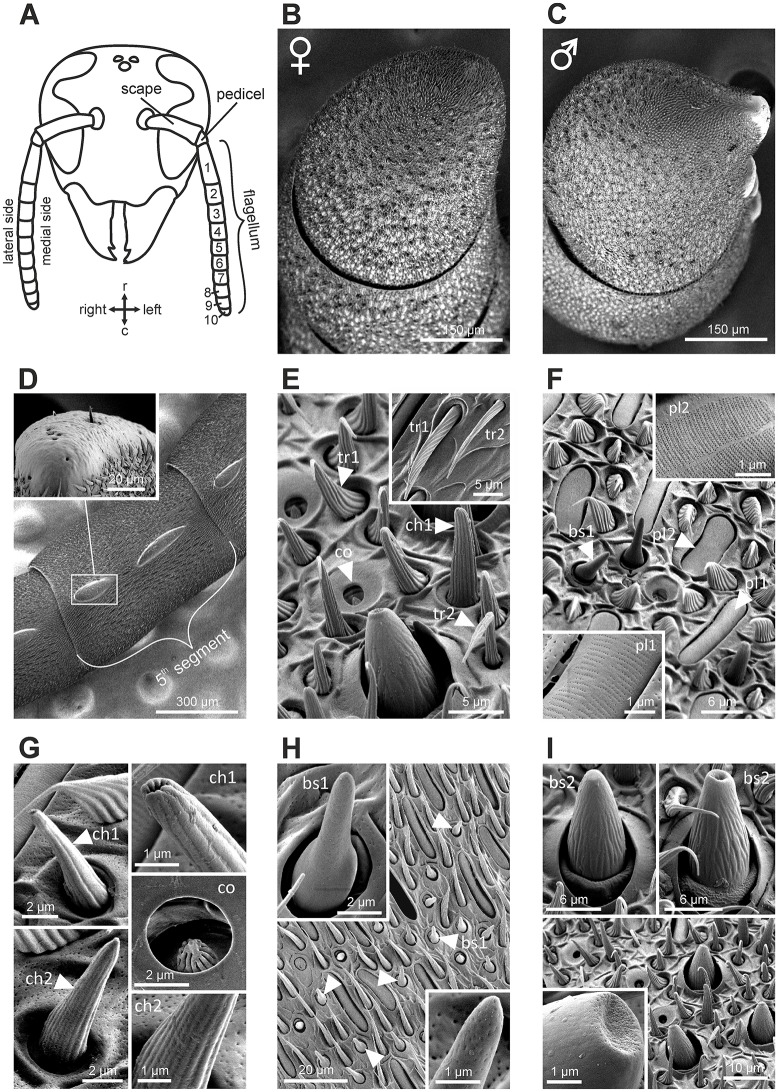
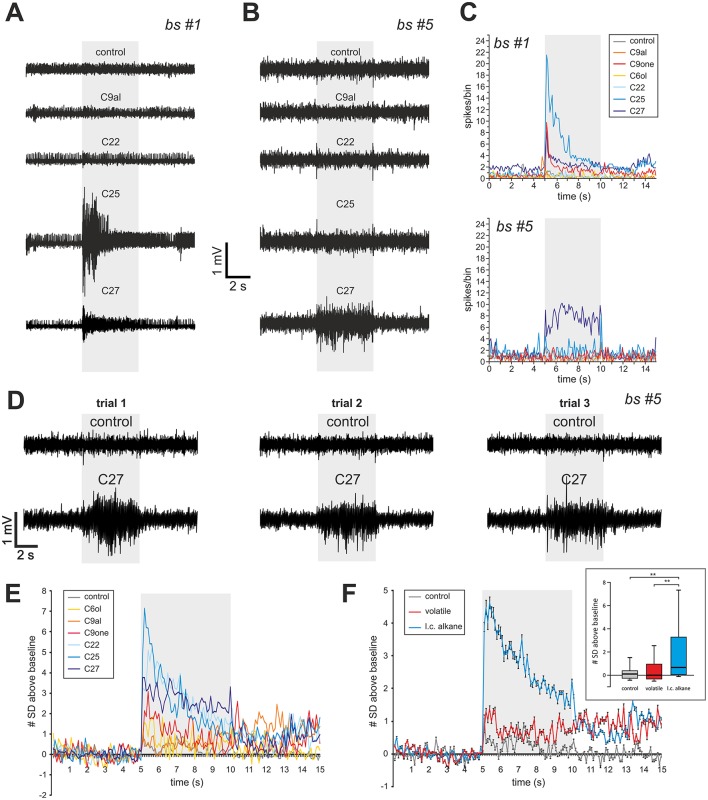
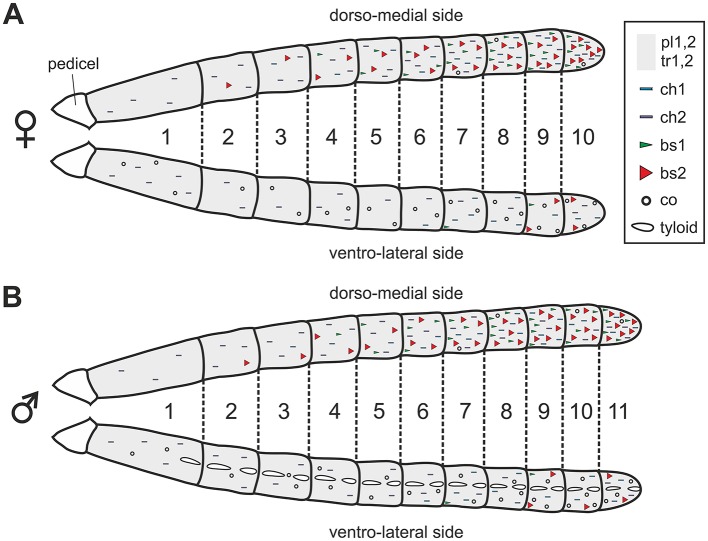
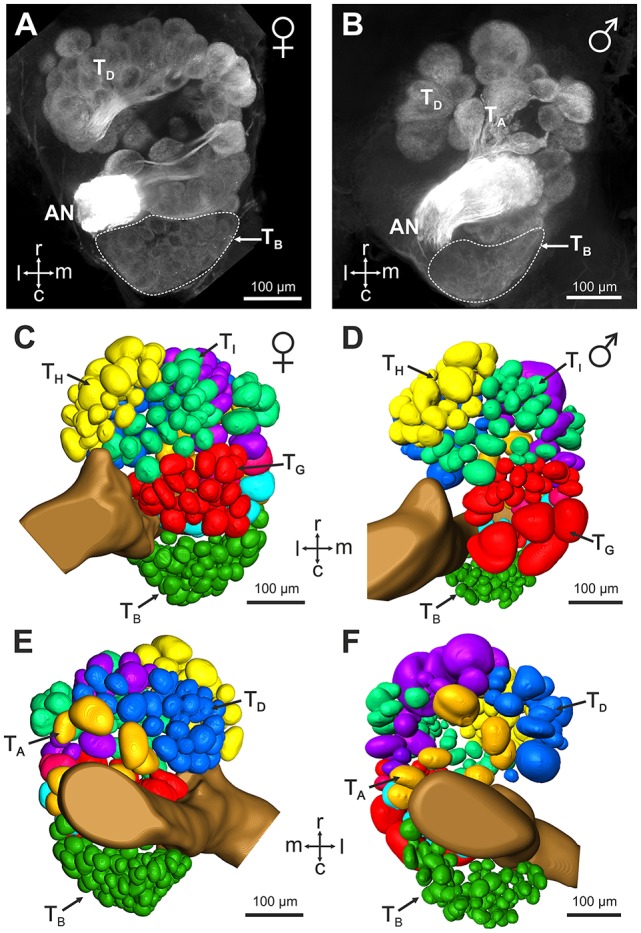
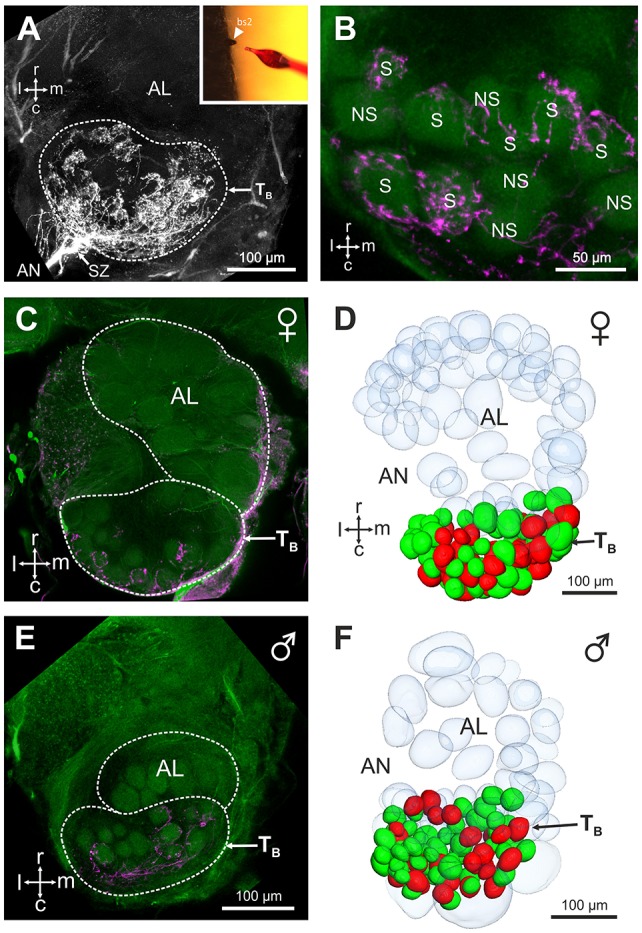
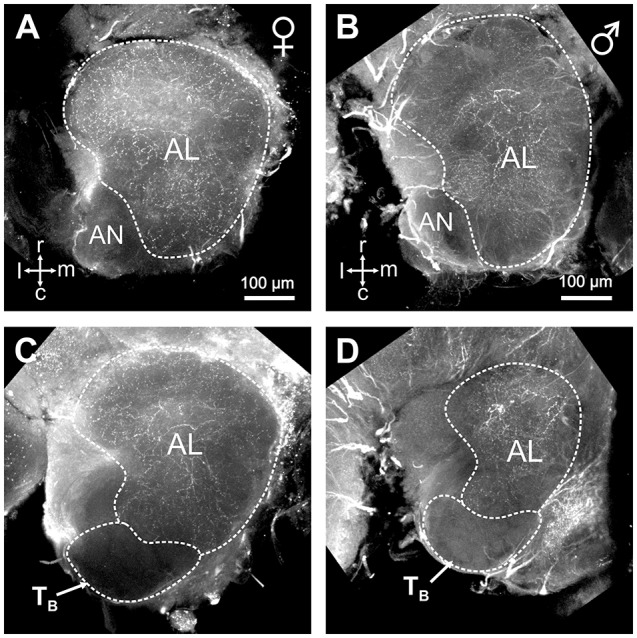
Eusocial Hymenoptera colonies are characterized by the presence of altruistic individuals, which rear their siblings instead of their own offspring. In the course of evolution, such sterile castes are thought to have emerged through the process of kin selection, altruistic traits being transmitted to following generation if they benefit relatives. By allowing kinship recognition, the detection of cuticular hydrocarbons (CHCs) might be instrumental for kin selection. In carpenter ants, a female-specific olfactory subsystem processes CHC information through antennal detection by basiconic sensilla. It is still unclear if other families of eusocial Hymenoptera use the same subsystem for sensing CHCs. Here, we examined the existence of such a subsystem in Vespidae (using the hornet ), a family in which eusociality emerged independently of ants. The antennae of both males and female hornets contain large basiconic sensilla. Sensory neurons from the large basiconic sensilla exclusively project to a conspicuous cluster of small glomeruli in the antennal lobe, with anatomical and immunoreactive features that are strikingly similar to those of the ant CHC-sensitive subsystem. Extracellular electrophysiological recordings further show that sensory neurons within hornet basiconic sensilla preferentially respond to CHCs. Although this subsystem is not female-specific in hornets, the observed similarities with the olfactory system of ants are striking. They suggest that the basiconic sensilla subsystem could be an ancestral trait, which may have played a key role in the advent of eusociality in these hymenopteran families by allowing kin recognition and the production of altruistic behaviors toward relatives.
真社会性膜翅目昆虫群落的特点是存在利他个体,这些个体抚养自己的兄弟姐妹而非自己的后代。在进化过程中,人们认为这种不育阶层是通过亲缘选择过程出现的,如果利他性状对亲属有益,它们就会传递给下一代。通过允许亲缘识别,表皮碳氢化合物(CHCs)的检测可能有助于亲缘选择。在木匠蚁中,一个雌性特异性嗅觉子系统通过触角上的锥形感器检测来处理CHC信息。目前尚不清楚其他真社会性膜翅目昆虫家族是否使用相同的子系统来感知CHCs。在这里,我们研究了胡蜂科(以黄蜂为例)中是否存在这样一个子系统,胡蜂科的真社会性是独立于蚂蚁出现的。雄性和雌性黄蜂的触角都含有大型锥形感器。来自大型锥形感器的感觉神经元专门投射到触角叶中一个明显的小嗅球簇,其解剖学和免疫反应特征与蚂蚁的CHC敏感子系统惊人地相似。细胞外电生理记录进一步表明,黄蜂锥形感器内的感觉神经元对CHCs有优先反应。虽然这个子系统在黄蜂中并非雌性特异性,但观察到的与蚂蚁嗅觉系统的相似之处非常显著。它们表明,锥形感器子系统可能是一种祖先特征,通过允许亲缘识别以及对亲属产生利他行为,可能在这些膜翅目昆虫家族真社会性的出现中发挥了关键作用。