Center for Mindfulness, University of Massachusetts Medical School, Worcester, MA, USA.
Department of Psychiatry, Brain Center Rudolf Magnus, University Medical Center Utrecht, Utrecht, The Netherlands.
Neuroimage. 2017 Sep;158:18-25. doi: 10.1016/j.neuroimage.2017.06.071. Epub 2017 Jun 27.
This study aims to identify novel quantitative EEG measures associated with mindfulness meditation. As there is some evidence that meditation is associated with higher integration of brain networks, we focused on EEG measures of network integration.
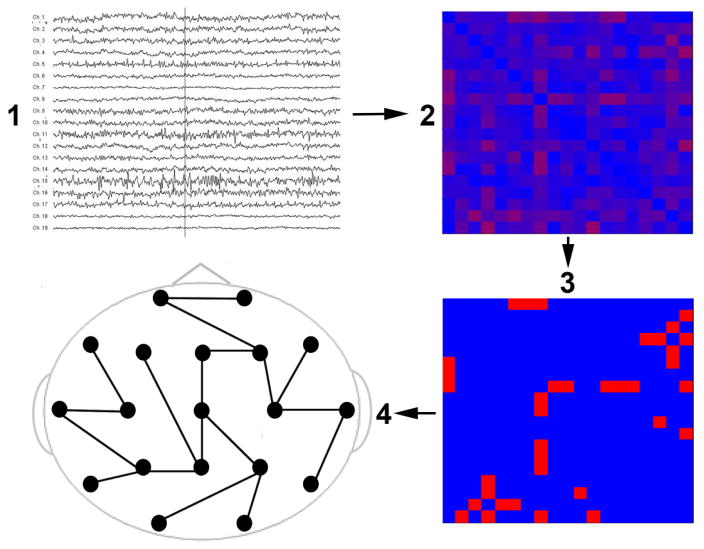
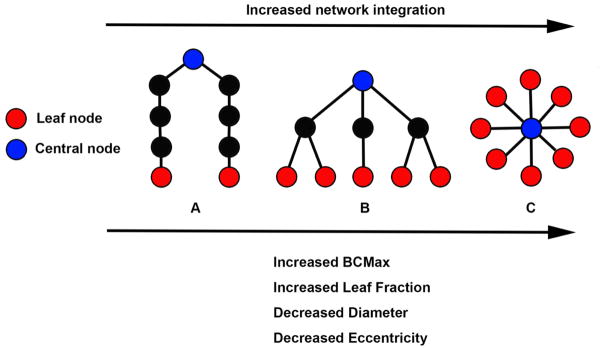
Sixteen novice meditators and sixteen experienced meditators participated in the study. Novice meditators performed a basic meditation practice that supported effortless awareness, which is an important quality of experience related to mindfulness practices, while their EEG was recorded. Experienced meditators performed a self-selected meditation practice that supported effortless awareness. Network integration was analyzed with maximum betweenness centrality and leaf fraction (which both correlate positively with network integration) as well as with diameter and average eccentricity (which both correlate negatively with network integration), based on a phase-lag index (PLI) and minimum spanning tree (MST) approach. Differences between groups were assessed using repeated-measures ANOVA for the theta (4-8 Hz), alpha (8-13 Hz) and lower beta (13-20 Hz) frequency bands.
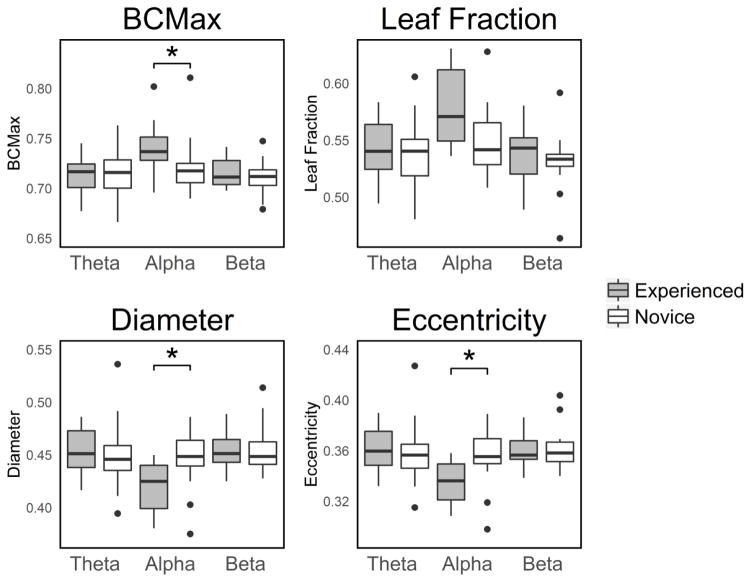
Maximum betweenness centrality was significantly higher in experienced meditators than in novices (P = 0.012) in the alpha band. In the same frequency band, leaf fraction showed a trend toward being significantly higher in experienced meditators than in novices (P = 0.056), while diameter and average eccentricity were significantly lower in experienced meditators than in novices (P = 0.016 and P = 0.028 respectively). No significant differences between groups were observed for the theta and beta frequency bands.
These results show that alpha band functional network topology is better integrated in experienced meditators than in novice meditators during meditation. This novel finding provides the rationale to investigate the temporal relation between measures of functional connectivity network integration and meditation quality, for example using neurophenomenology experiments.
本研究旨在确定与正念冥想相关的新型定量脑电图测量指标。由于有证据表明冥想与大脑网络的更高整合有关,因此我们专注于网络整合的脑电图测量。
16 名新手冥想者和 16 名经验丰富的冥想者参加了这项研究。新手冥想者进行了基本的冥想练习,支持不费力的意识,这是与正念实践相关的重要体验质量,同时记录他们的脑电图。经验丰富的冥想者进行了自我选择的冥想练习,支持不费力的意识。使用基于相位滞后指数(PLI)和最小生成树(MST)方法的最大介数中心性和叶分数(两者均与网络整合呈正相关)以及直径和平均离心率(两者均与网络整合呈负相关)来分析网络整合。使用重复测量方差分析评估组间差异,分析频段为θ(4-8 Hz)、α(8-13 Hz)和低β(13-20 Hz)。
在α频段,经验丰富的冥想者的最大介数中心性明显高于新手(P = 0.012)。在同一频段,叶分数在经验丰富的冥想者中明显高于新手(P = 0.056),而直径和平均离心率在经验丰富的冥想者中明显低于新手(P = 0.016 和 P = 0.028 分别)。在θ和β频段,组间无显著差异。
这些结果表明,在冥想期间,经验丰富的冥想者的α频段功能网络拓扑结构比新手冥想者更好地整合。这一新颖的发现为研究功能连接网络整合与冥想质量之间的时间关系提供了依据,例如使用神经现象学实验。