Wongkoblap Akkapon, Vadillo Miguel A, Curcin Vasa
Department of Informatics, King's College London, London, United Kingdom.
Primary Care and Public Health Sciences, King's College London, London, United Kingdom.
J Med Internet Res. 2017 Jun 29;19(6):e228. doi: 10.2196/jmir.7215.
Mental illness is quickly becoming one of the most prevalent public health problems worldwide. Social network platforms, where users can express their emotions, feelings, and thoughts, are a valuable source of data for researching mental health, and techniques based on machine learning are increasingly used for this purpose.
The objective of this review was to explore the scope and limits of cutting-edge techniques that researchers are using for predictive analytics in mental health and to review associated issues, such as ethical concerns, in this area of research.
We performed a systematic literature review in March 2017, using keywords to search articles on data mining of social network data in the context of common mental health disorders, published between 2010 and March 8, 2017 in medical and computer science journals.
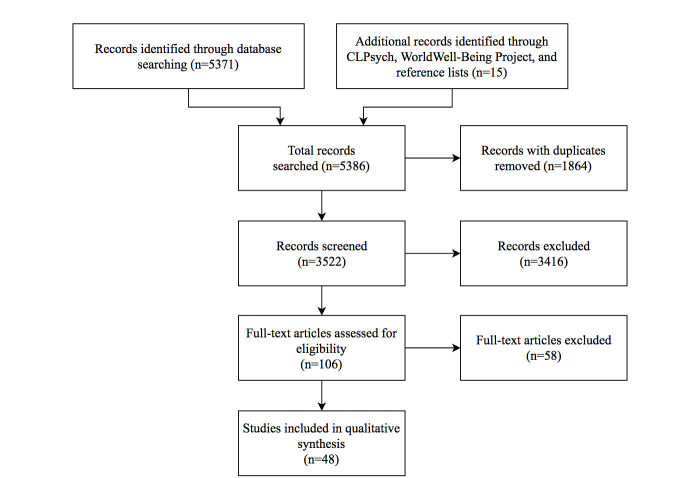
The initial search returned a total of 5386 articles. Following a careful analysis of the titles, abstracts, and main texts, we selected 48 articles for review. We coded the articles according to key characteristics, techniques used for data collection, data preprocessing, feature extraction, feature selection, model construction, and model verification. The most common analytical method was text analysis, with several studies using different flavors of image analysis and social interaction graph analysis.
Despite an increasing number of studies investigating mental health issues using social network data, some common problems persist. Assembling large, high-quality datasets of social media users with mental disorder is problematic, not only due to biases associated with the collection methods, but also with regard to managing consent and selecting appropriate analytics techniques.
精神疾病正迅速成为全球最普遍的公共卫生问题之一。社交网络平台是用户表达情感、感受和想法的地方,是研究心理健康的宝贵数据来源,基于机器学习的技术也越来越多地用于此目的。
本综述的目的是探讨研究人员用于心理健康预测分析的前沿技术的范围和局限性,并综述该研究领域的相关问题,如伦理问题。
我们在2017年3月进行了一项系统的文献综述,使用关键词搜索2010年至2017年3月8日期间发表在医学和计算机科学期刊上的关于常见精神疾病背景下社交网络数据挖掘的文章。
初步搜索共返回5386篇文章。在对标题、摘要和正文进行仔细分析后,我们选择了48篇文章进行综述。我们根据关键特征、用于数据收集、数据预处理、特征提取、特征选择、模型构建和模型验证的技术对文章进行编码。最常见的分析方法是文本分析,有几项研究使用了不同类型的图像分析和社交互动图分析。
尽管越来越多的研究使用社交网络数据调查心理健康问题,但一些常见问题仍然存在。收集患有精神障碍的社交媒体用户的大型高质量数据集存在问题,这不仅是因为与收集方法相关的偏差,还涉及管理同意和选择合适的分析技术。