Hughes Alec, Hynynen Kullervo
Sunnybrook Research Institute, Physical Sciences Platform, Toronto, M4N 3M5, Canada. Department of Medical Biophysics, University of Toronto, Toronto, Canada.
Phys Med Biol. 2017 Aug 3;62(17):L9-L19. doi: 10.1088/1361-6560/aa7cd5.
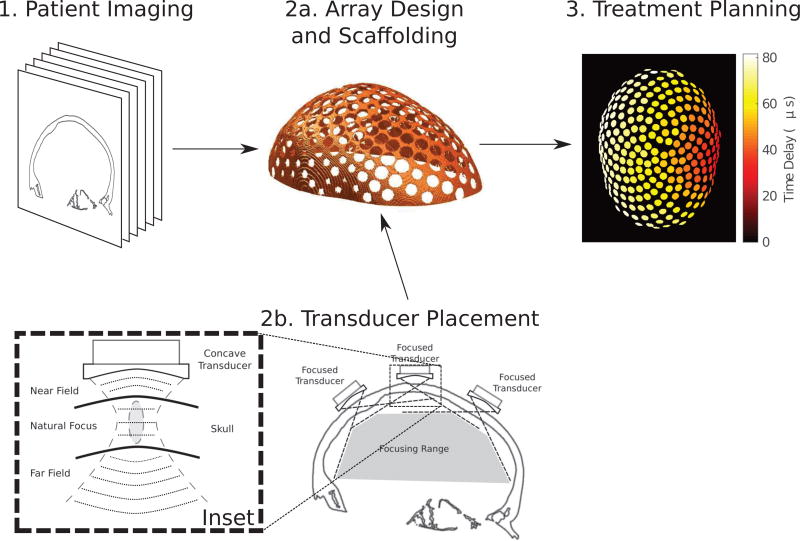
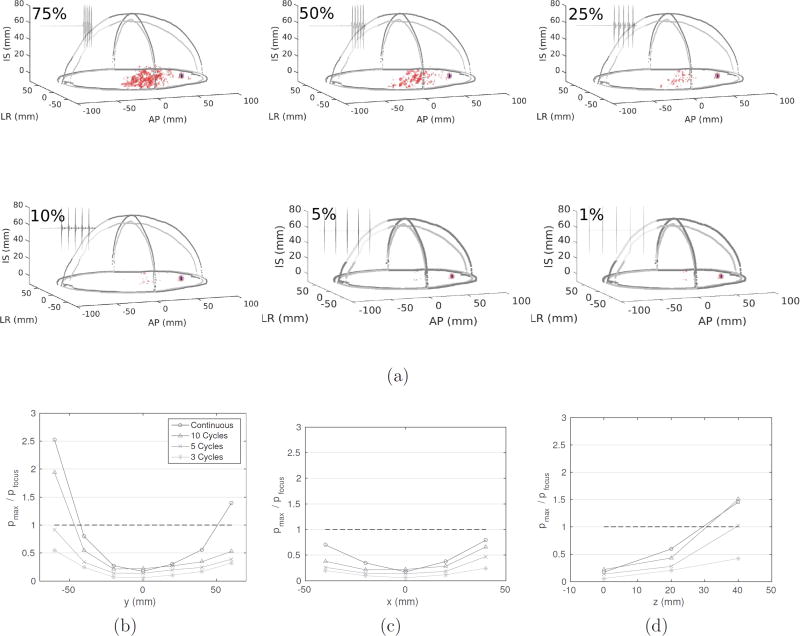
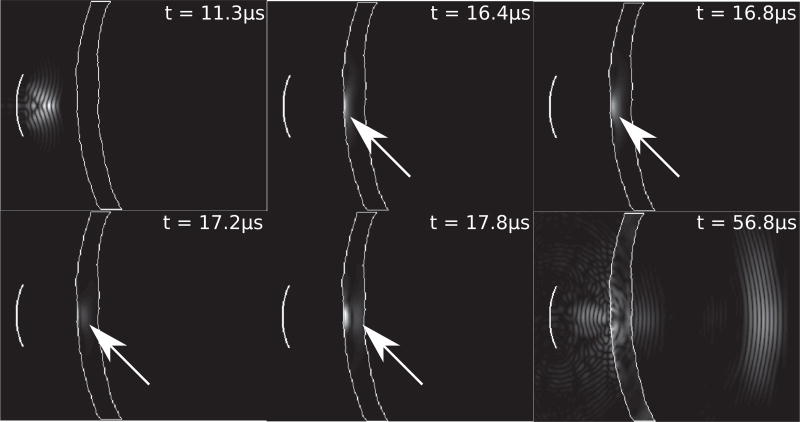
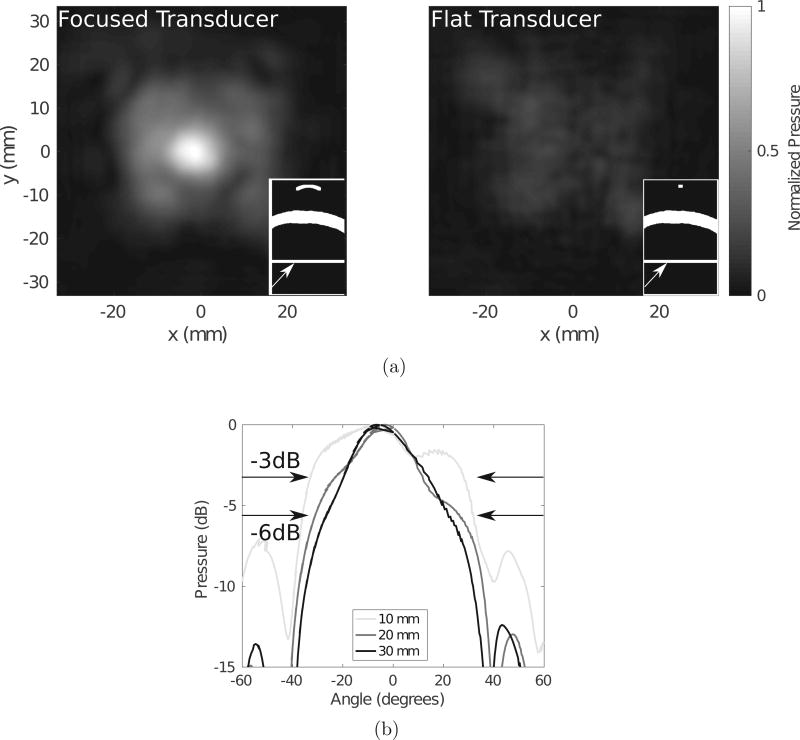
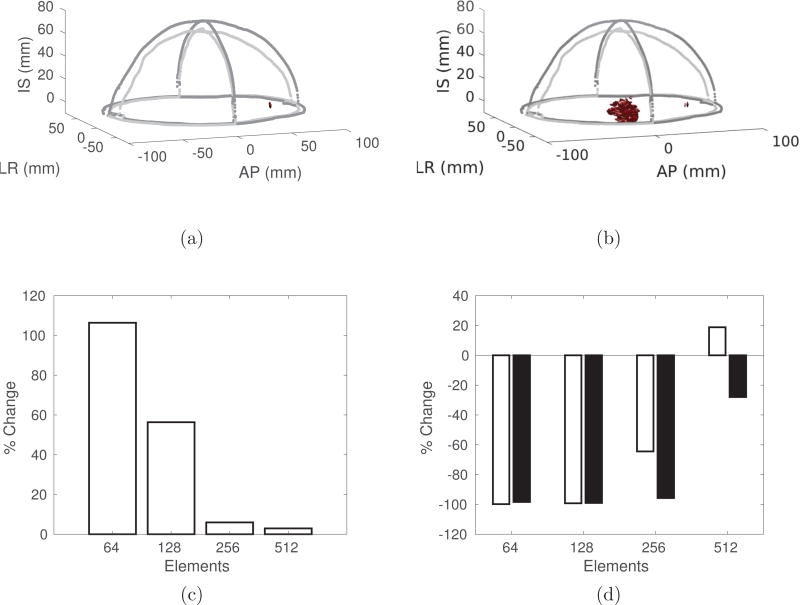
The use of a phased array of ultrasound transducer elements to sonicate through the skull has opened the way for new treatments and the delivery of therapeutics beyond the blood-brain barrier. The limited steering range of current clinical devices, particularly at higher frequencies, limits the regions of the brain that are considered treatable by ultrasound. A new array design is introduced that allows for high levels of beam steering and increased transmission throughout the brain. These improvements are achieved using concave transducers normal to the outer-skull surface in a patient-specific configuration to target within the skull, so that the far-field of each beam is within the brain. It is shown that by using pulsed ultrasound waves timed to arrive in-phase at the desired target, sufficient levels of acoustic energy are delivered for blood-brain barrier opening throughout the brain.
使用相控阵超声换能器元件透过颅骨进行超声处理,为新的治疗方法以及突破血脑屏障递送治疗药物开辟了道路。当前临床设备的有限转向范围,尤其是在较高频率下,限制了被认为可通过超声治疗的脑区。本文介绍了一种新的阵列设计,该设计能够实现高水平的波束转向并增强在整个大脑中的传输。这些改进是通过在患者特定配置中使用垂直于颅骨外表面的凹面换能器来靶向颅骨内区域实现的,这样每个波束的远场都在脑内。结果表明,通过使用经定时使其在期望目标处同相到达的脉冲超声波,能够在整个大脑中递送足够水平的声能以打开血脑屏障。