Biering Scott B, Choi Jayoung, Halstrom Rachel A, Brown Hailey M, Beatty Wandy L, Lee Sanghyun, McCune Broc T, Dominici Erin, Williams Lelia E, Orchard Robert C, Wilen Craig B, Yamamoto Masahiro, Coers Jörn, Taylor Gregory A, Hwang Seungmin
Committee on Microbiology, University of Chicago, Chicago, IL 60637, USA.
Department of Pathology, University of Chicago, Chicago, IL 60637, USA.
Cell Host Microbe. 2017 Jul 12;22(1):74-85.e7. doi: 10.1016/j.chom.2017.06.005. Epub 2017 Jun 29.
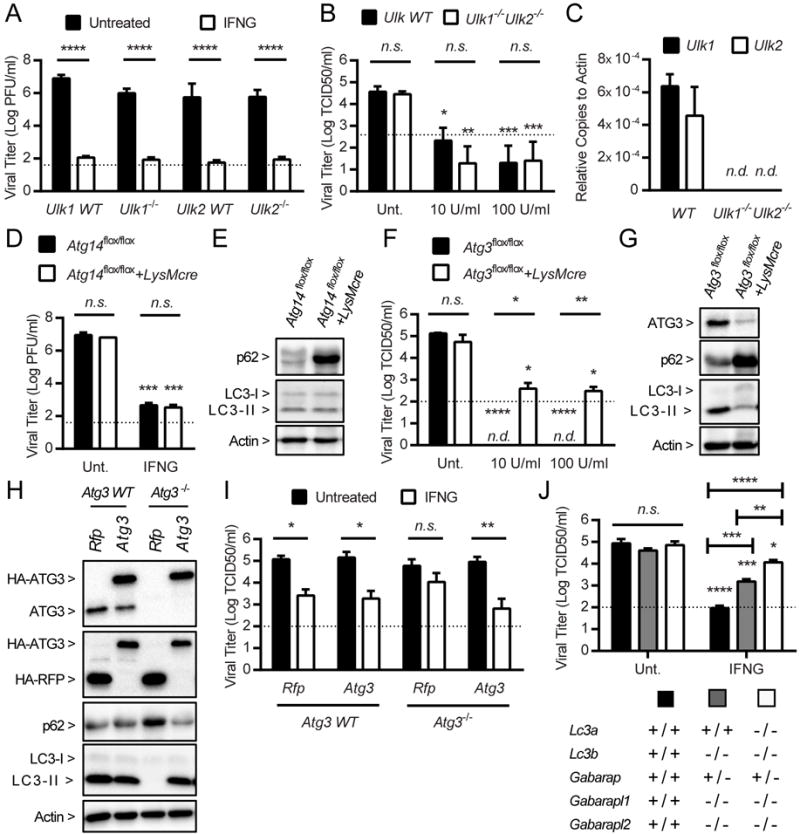
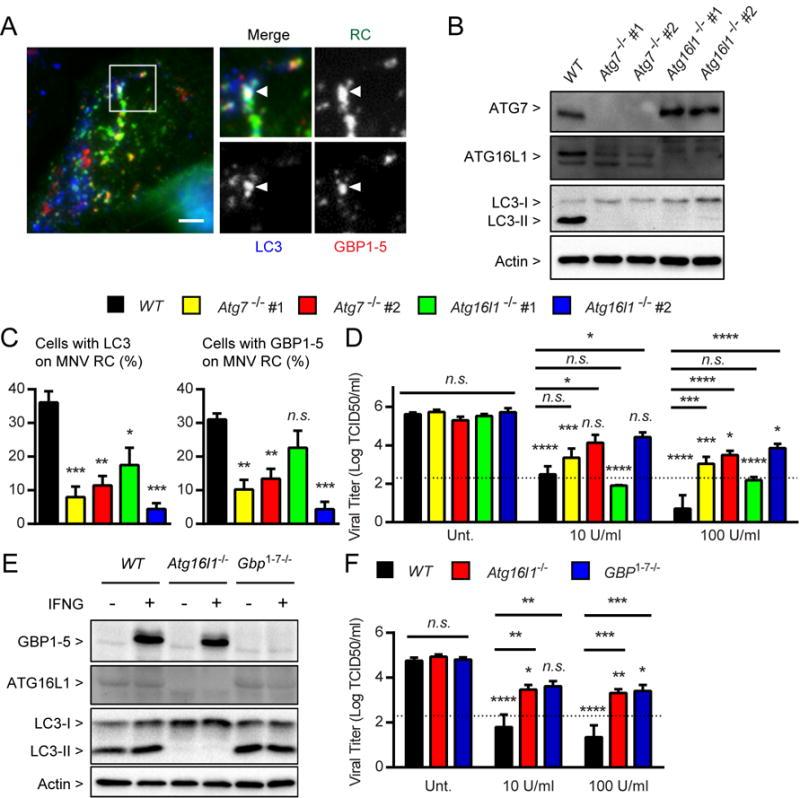
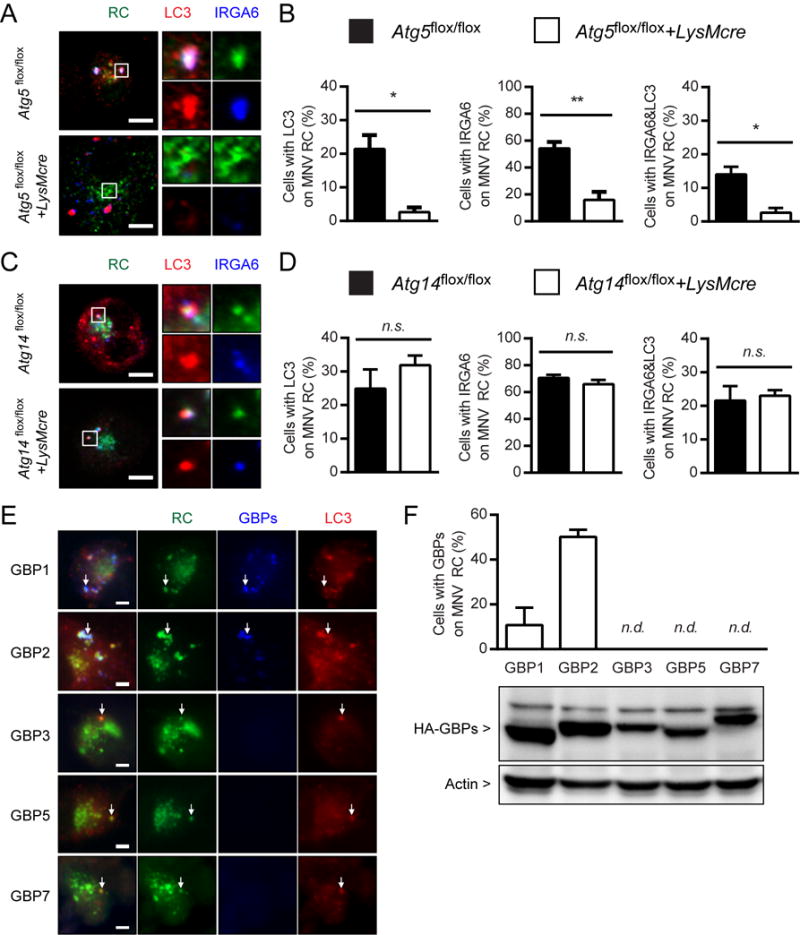
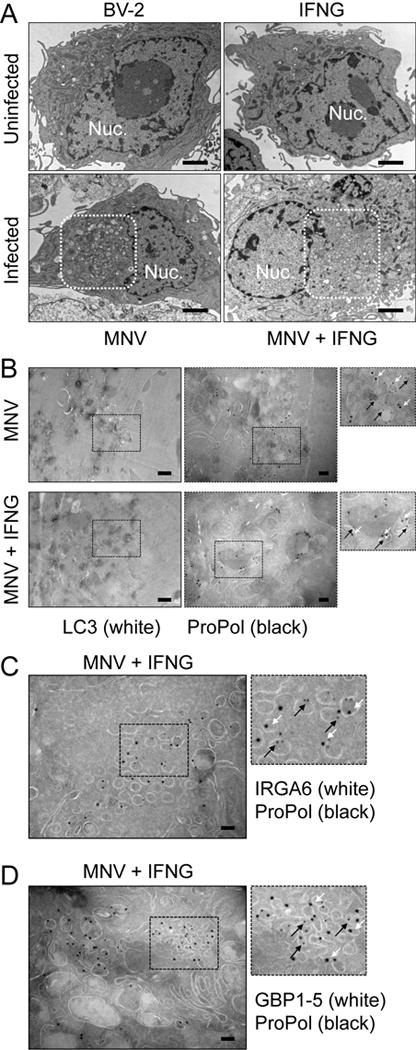
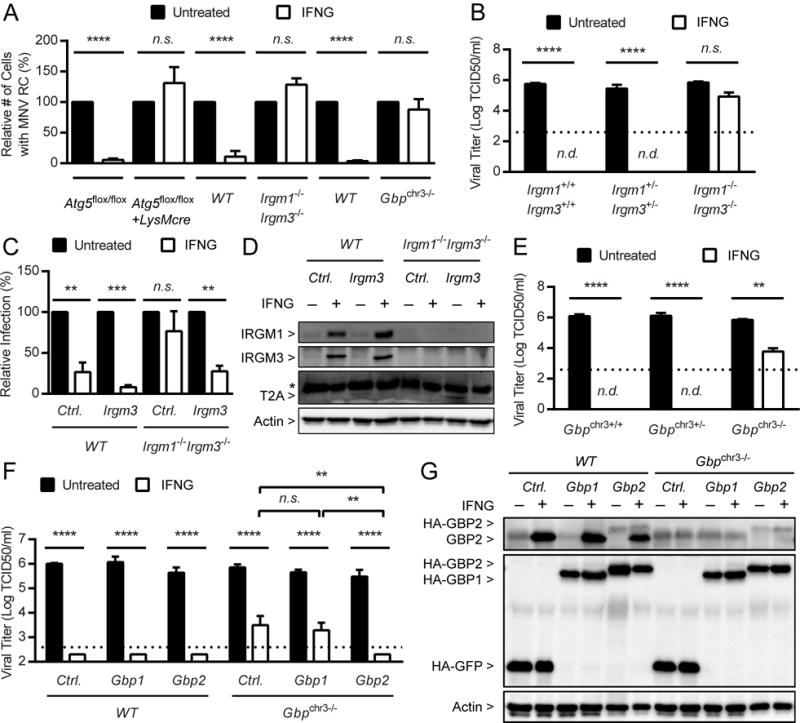
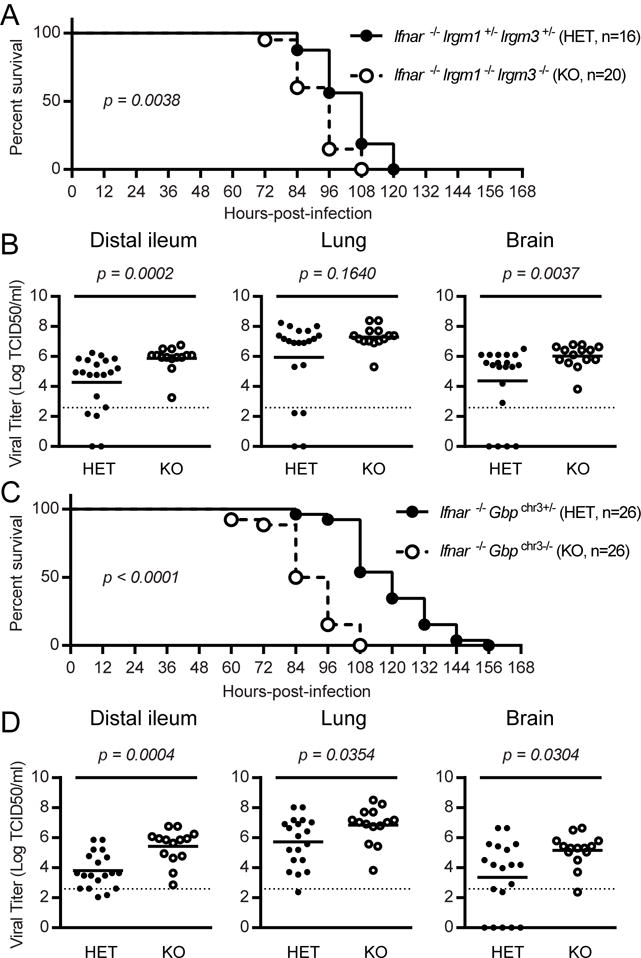
All viruses with positive-sense RNA genomes replicate on membranous structures in the cytoplasm called replication complexes (RCs). RCs provide an advantageous microenvironment for viral replication, but it is unknown how the host immune system counteracts these structures. Here we show that interferon-gamma (IFNG) disrupts the RC of murine norovirus (MNV) via evolutionarily conserved autophagy proteins and the induction of IFN-inducible GTPases, which are known to destroy the membrane of vacuoles containing bacteria, protists, or fungi. The MNV RC was marked by the microtubule-associated-protein-1-light-chain-3 (LC3) conjugation system of autophagy and then targeted by immunity-related GTPases (IRGs) and guanylate-binding proteins (GBPs) upon their induction by IFNG. Further, the LC3 conjugation system and the IFN-inducible GTPases were necessary to inhibit MNV replication in mice and human cells. These data suggest that viral RCs can be marked and antagonized by a universal immune defense mechanism targeting diverse pathogens replicating in cytosolic membrane structures.
所有具有正链RNA基因组的病毒都在细胞质中称为复制复合体(RCs)的膜结构上进行复制。复制复合体为病毒复制提供了有利的微环境,但宿主免疫系统如何对抗这些结构尚不清楚。在这里,我们表明,干扰素-γ(IFNG)通过进化上保守的自噬蛋白和IFN诱导的GTP酶的诱导来破坏小鼠诺如病毒(MNV)的复制复合体,已知这些酶会破坏含有细菌、原生生物或真菌的液泡膜。MNV复制复合体通过自噬的微管相关蛋白1轻链3(LC3)缀合系统进行标记,然后在IFNG诱导后被免疫相关GTP酶(IRGs)和鸟苷酸结合蛋白(GBPs)靶向。此外,LC3缀合系统和IFN诱导的GTP酶对于抑制小鼠和人类细胞中的MNV复制是必需的。这些数据表明,病毒复制复合体可以被一种针对在胞质膜结构中复制的多种病原体的通用免疫防御机制标记和拮抗。