Held Michael F G, Hoppe Sven, Laubscher Maritz, Mears Stewart, Dix-Peek Stewart, Zar Heather J, Dunn Robert N
Orthopaedic Research Unit, Department of Orthopaedic Surgery, Groote Schuur Hospital, University of Cape Town, Cape Town, South Africa.
Department of Pediatrics and Child Health, Red Cross War Memorial Children's Hospital, University of Cape Town and MRC Unit on Child & Adolescent Health, University of Cape Town, Cape Town, South Africa.
Asian Spine J. 2017 Jun;11(3):405-411. doi: 10.4184/asj.2017.11.3.405. Epub 2017 Jun 15.
Retrospective observational study.
The aim of this study was to assess the distribution of age and site of infection in patients with musculoskeletal tuberculosis (TB) and determine the number of TB/human immunodeficiency virus (HIV) coinfections as well as the incidence of multidrugresistant (MDR) TB.
Of all TB cases, 1%-3% show skeletal system involvement and 30% are HIV coinfected. Although the reported distribution of skeletal TB is majorly in the spine, followed by the hip, knee, and foot/ankle, the epidemiology of extrapulmonary TB and especially musculoskeletal TB remains largely unknown, particularly in areas with a high prevalence of the disease.
This is a retrospective study of a consecutive series of patients admitted to a tertiary care facility in an area with the highest prevalence of TB worldwide. TB was confirmed on tissue biopsy with polymerase chain reaction testing (Xpert for Mycobacterium tuberculosis and rifampicin resistance), culturing, or histological analysis. Data were analyzed regarding demographic information, location of the disease, HIV coinfections, and drug resistance.
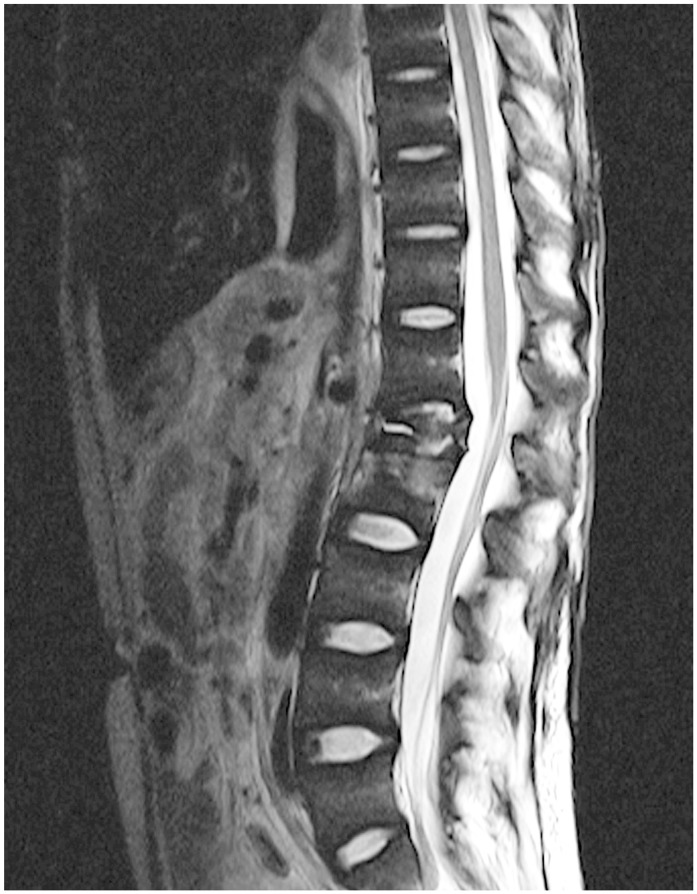
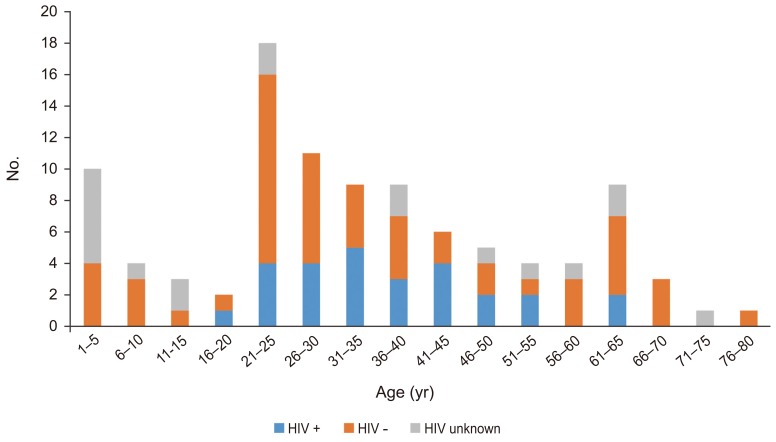
In all, 125 patients (44 children; 35%) with a mean age of 27 years (range, 1-78 years) were included. Age peaks were observed at 5, 25, and 65 years. Spinal disease was evident in 98 patients (78%). There were 66 HIV-negative (53%) and 29 (23%) HIVpositive patients, and in 30 (24%), the HIV status was unknown. Five patients (4%) showed MDR TB.
The age distribution was trimodal, spinal disease was predominant, MDR TB rate in our cohort was high, and a large portion of TB patients in our hospital were HIV coinfected. Hence, spinal services with sufficient access to operating facilities are required for tertiary care facilities in areas with a high TB prevalence.
回顾性观察研究。
本研究旨在评估肌肉骨骼结核(TB)患者的年龄分布及感染部位,确定结核/人类免疫缺陷病毒(HIV)合并感染的数量以及耐多药(MDR)结核的发病率。
在所有结核病病例中,1%-3%表现为骨骼系统受累,30%合并HIV感染。尽管报道的骨骼结核分布主要在脊柱,其次是髋部、膝部和足/踝部,但肺外结核尤其是肌肉骨骼结核的流行病学在很大程度上仍不清楚,特别是在该病高发地区。
这是一项对全球结核病患病率最高地区的一家三级医疗机构连续收治患者的回顾性研究。通过聚合酶链反应检测(结核分枝杆菌和利福平耐药性的Xpert检测)、培养或组织学分析对组织活检确诊结核病。分析了有关人口统计学信息、疾病部位、HIV合并感染和耐药性的数据。
共纳入125例患者(44例儿童;35%),平均年龄27岁(范围1-78岁)。年龄高峰出现在5岁、25岁和65岁。98例患者(78%)有脊柱疾病。66例(53%)患者HIV阴性,29例(23%)患者HIV阳性,30例(24%)患者HIV状态未知。5例患者(4%)表现为耐多药结核。
年龄分布呈三峰型,脊柱疾病为主,我们队列中的耐多药结核率较高,且我院很大一部分结核病患者合并HIV感染。因此,结核病高发地区的三级医疗机构需要具备充足手术设施的脊柱服务。