Fairbrother J M, Larivière S, Lallier R
Infect Immun. 1986 Jan;51(1):10-5. doi: 10.1128/iai.51.1.10-15.1986.
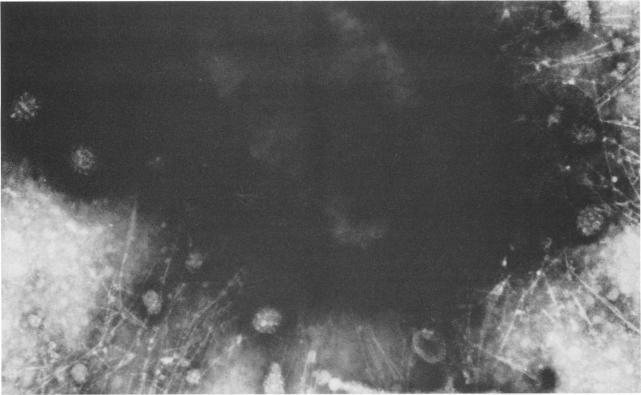
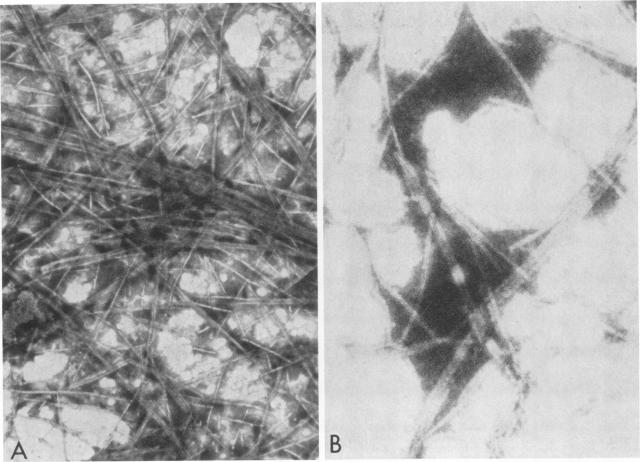
Sixteen strains of Escherichia coli serogroup O115 isolated from piglets with diarrhea were examined for mannose-sensitive or mannose-resistant hemagglutination (MSHA or MRHA, respectively) for the presence of fimbriae by electron microscopy and for enterotoxigenicity by the ligated gut loop technique in 10-day-old piglets. Four strains demonstrated MRHA of sheep, goat, pig, dog, cat, chicken, and human erythrocytes but no MRHA of calf, horse, guinea pig, and rabbit erythrocytes. They were divided into pattern I (MSHA negative) and pattern II (MSHA positive). The remaining 12 strains were classified as pattern III (MRHA negative, MSHA positive) and pattern IV (hemagglutination negative). An antiserum produced against the MRHA-positive, MSHA-negative strain 4787 and absorbed by the same strain grown at 15 degrees C agglutinated all of the MRHA-positive strains but none of the MRHA-negative strains and completely inhibited the MRHA of these strains. The surface antigen against which this absorbed antiserum was directed was designated "F165." Fimbriae (pili) purified from strain 4787 hemagglutinated erythrocytes in the same mannose-resistant pattern as the strain itself and reacted with the anti-F165 antiserum in an enzyme-linked immunosorbent assay, thus demonstrating the fimbrial nature of the hemagglutinating F165 antigen. The F165 antigen showed no serological relationship with the fimbrial antigens F4, F5, F6, and "F41". A positive correlation between the presence of F165 and the lack of enterotoxigenicity was demonstrated. Thus, we found a new mannose-resistant, hemagglutinating fimbrial antigen, F165, which is produced only by nonenterotoxigenic strains of E. coli serogroup O115. The possible role of F165 as a virulence attribute of E. coli strains causing extraintestinal disease is discussed.
从腹泻仔猪中分离出16株大肠杆菌O115血清型菌株,检测其对甘露糖敏感或甘露糖抗性血凝反应(分别为MSHA或MRHA)、通过电子显微镜检查菌毛的存在情况,并采用结扎肠袢技术在10日龄仔猪中检测其产肠毒素能力。4株菌株对绵羊、山羊、猪、狗、猫、鸡和人的红细胞表现出MRHA,但对小牛、马、豚鼠和兔的红细胞无MRHA。它们被分为I型(MSHA阴性)和II型(MSHA阳性)。其余12株菌株被分类为III型(MRHA阴性,MSHA阳性)和IV型(血凝阴性)。用针对MRHA阳性、MSHA阴性菌株4787产生并经15℃培养的同一菌株吸收的抗血清,能凝集所有MRHA阳性菌株,但不凝集任何MRHA阴性菌株,并完全抑制这些菌株的MRHA。该吸收抗血清所针对的表面抗原被命名为“F165”。从菌株4787纯化的菌毛以与该菌株本身相同的甘露糖抗性模式凝集红细胞,并在酶联免疫吸附试验中与抗F165抗血清反应,从而证明血凝性F165抗原的菌毛性质。F165抗原与菌毛抗原F4、F5、F6和“F41”无血清学关系。F165的存在与不产肠毒素之间呈正相关。因此,我们发现了一种新的甘露糖抗性血凝菌毛抗原F165,它仅由大肠杆菌O115血清型的非产肠毒素菌株产生。讨论了F165作为引起肠外疾病的大肠杆菌菌株毒力属性的可能作用。