Kerr Zachary Y, Pierpoint Lauren A, Currie Dustin W, Wasserman Erin B, Comstock R Dawn
Department of Exercise and Sport Science, University of North Carolina, 313 Woollen Gym CB#8700, Chapel Hill, NC, 27599-8700, USA.
Department of Epidemiology, Colorado School of Public Health, University of Colorado Anschutz, Mail Stop B119, 13001 E 17th Pl, Aurora, CO, 80045, USA.
Inj Epidemiol. 2017 Dec;4(1):19. doi: 10.1186/s40621-017-0116-9. Epub 2017 Jul 3.
Few studies compare sports injury patterns in different settings. This study described the epidemiology of soccer injuries presenting to emergency departments (EDs) and compared injuries presenting to EDs to injuries presenting to collegiate and high school athletic trainers (ATs).
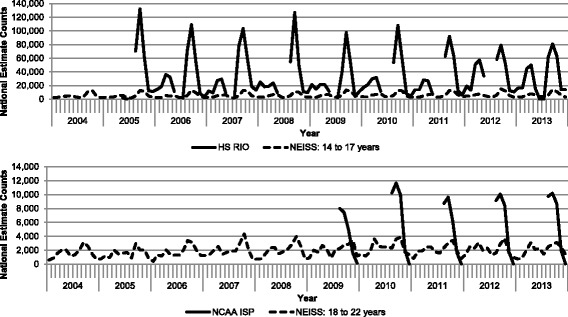
Soccer-related injuries (product code 1267) in the National Electronic Injury Surveillance System (NEISS) that were sustained by individuals at least two years of age in 2004-2013 were included. High School Reporting Information Online (HS RIO) data for high school soccer injuries during the 2005/06-2013/14 academic years were compared to NEISS data for those aged 14-17 years in 2005-2013. National Collegiate Athletic Association Injury Surveillance Program (NCAA-ISP) data for collegiate soccer injuries during the 2009/10-2013/14 academic years were compared to NEISS data for those aged 18-22 years in 2009-2013. All datasets included weights to calculate national estimates. Injury proportion ratios (IPRs) with 95% confidence intervals (CIs) compared nationally estimated injury distributions between the HS RIO/NCAA-ISP and NEISS data subsets.
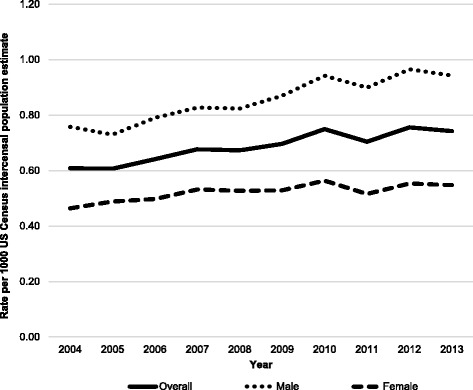
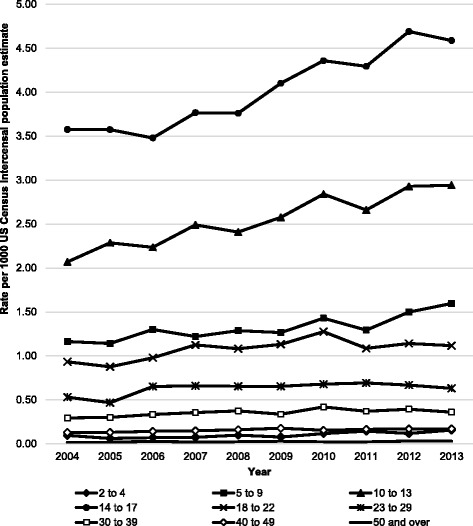
During the study period, 63,258 soccer-related injuries were captured by NEISS, which translates to an estimated 2,039,250 injuries seen at US EDs nationwide. Commonly injured body parts included the head/face (19.1%), ankle (17.6%), hand/wrist (15.3%), and knee (12.2%). Common diagnoses included sprains/strains (34.0%), fractures (22.2%), and contusions (17.7%). Compared to their respective age ranges in NEISS, sprains/strains comprised a larger proportion of injuries in HS RIO (48.3% vs. 33.7%; IPR = 1.38; 95% CI: 1.33, 1.42) and NCAA-ISP (51.3% vs. 37.0%; IPR = 1.39; 95% CI: 1.31, 1.46). In contrast, fractures comprised a smaller proportion of injuries in HS RIO than in NEISS (7.5% vs. 18.6%; IPR = 0.43; 95% CI: 0.39, 0.47) and NCAA-ISP (2.8% vs. 15.7%; IPR = 0.18; 95% CI: 0.14, 0.22).
ATs more commonly reported injuries that are easily diagnosed and treated (e.g., sprains/strains); EDs more commonly reported injuries with longer recovery times and rehabilitation (e.g., fractures). Although ED surveillance data can identify the most severe sports-related injuries, high school and college sports surveillance may better describe the breadth of sports-related injuries. Our findings may provide further support for school-based sports medicine professionals, but further research is needed to comprehensively examine the potential economic and health-related benefits.
很少有研究比较不同环境下的运动损伤模式。本研究描述了急诊科收治的足球损伤的流行病学情况,并将急诊科收治的损伤与大学和高中运动训练师(AT)所处理的损伤进行了比较。
纳入2004 - 2013年国家电子损伤监测系统(NEISS)中至少2岁个体所遭受的与足球相关的损伤(产品代码1267)。将2005/06 - 2013/14学年高中足球损伤的高中在线报告信息(HS RIO)数据与2005 - 2013年14 - 17岁人群的NEISS数据进行比较。将2009/10 - 2013/14学年大学足球损伤的美国国家大学体育协会损伤监测项目(NCAA - ISP)数据与2009 - 2013年18 - 22岁人群的NEISS数据进行比较。所有数据集都包含用于计算全国估计数的权重。使用95%置信区间(CI)的损伤比例比(IPR)来比较HS RIO/NCAA - ISP与NEISS数据子集之间的全国估计损伤分布。
在研究期间,NEISS记录了63,258例与足球相关的损伤,这相当于全国急诊科估计有2,039,250例损伤。常见受伤身体部位包括头部/面部(19.1%)、脚踝(17.6%)、手/腕(15.3%)和膝盖(12.2%)。常见诊断包括扭伤/拉伤(34.0%)、骨折(22.2%)和挫伤(17.7%)。与NEISS中各自的年龄范围相比,扭伤/拉伤在HS RIO损伤中占比更大(48.3%对33.7%;IPR = 1.38;95% CI:1.33, 1.42)以及在NCAA - ISP损伤中占比更大(51.3%对37.0%;IPR = 1.39;95% CI:1.31, 1.46)。相比之下,骨折在HS RIO损伤中占比低于NEISS(7.5%对18.6%;IPR = 0.43;95% CI:0.39, 0.47)以及低于NCAA - ISP(2.8%对15.7%;IPR = 0.18;95% CI:0.14, 0.22)。
运动训练师更常报告易于诊断和治疗的损伤(如扭伤/拉伤);急诊科更常报告恢复时间和康复期更长的损伤(如骨折)。尽管急诊科监测数据可以识别最严重的运动相关损伤,但高中和大学运动监测可能能更好地描述运动相关损伤的范围。我们的研究结果可能为学校体育医学专业人员提供进一步支持,但需要进一步研究以全面考察潜在的经济和健康相关益处。