Lee Charles C, Kim Jong Hun, Kim Ji Seung, Oh Yun Sil, Han Seung Min, Park Jung Han Yoon, Lee Ki Won, Lee Chang Yong
Department of Food Science, Cornell University, Ithaca, NY 14853, USA.
Research Institute of Agriculture and Life Sciences, Seoul National University, Seoul 08826, Korea.
Int J Mol Sci. 2017 Jun 26;18(7):1363. doi: 10.3390/ijms18071363.
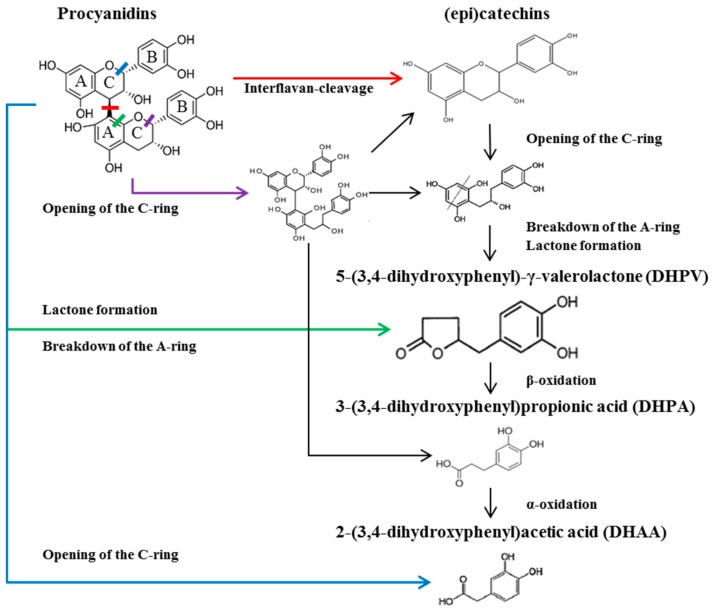
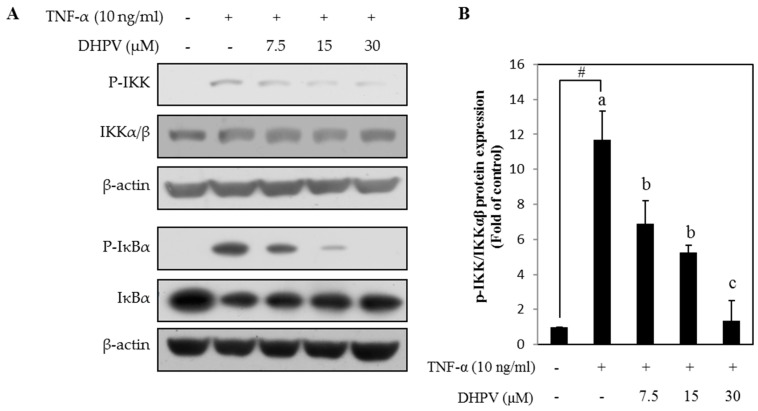
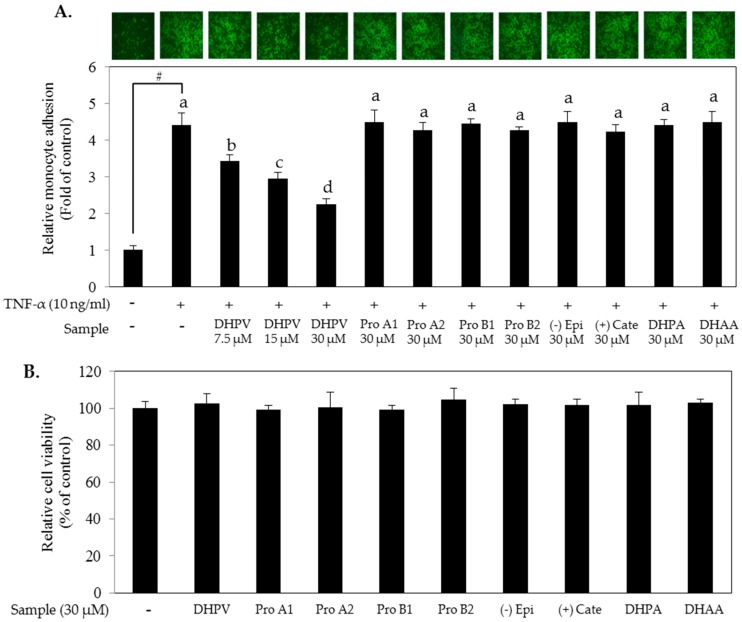
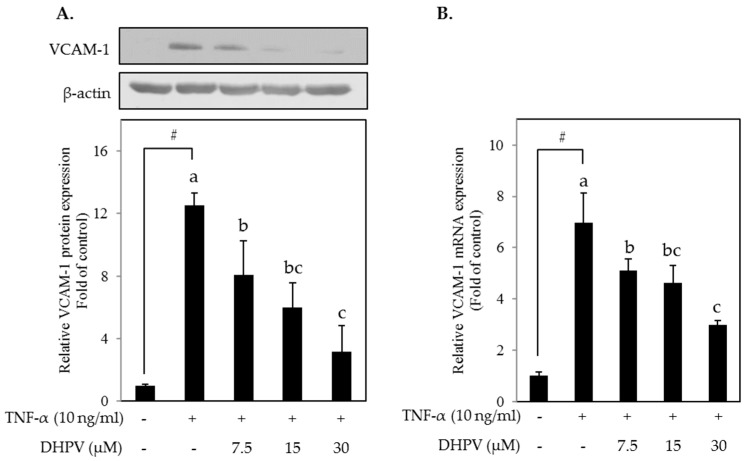
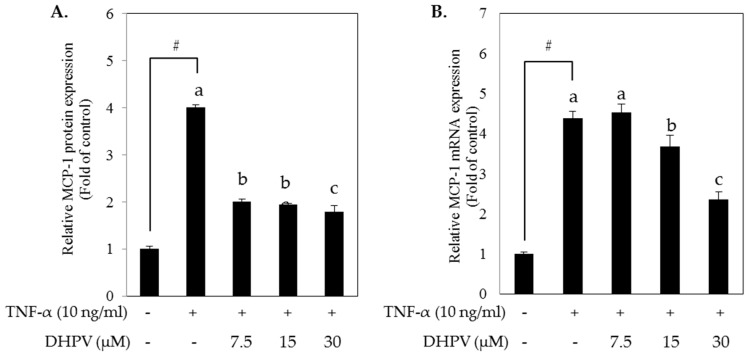
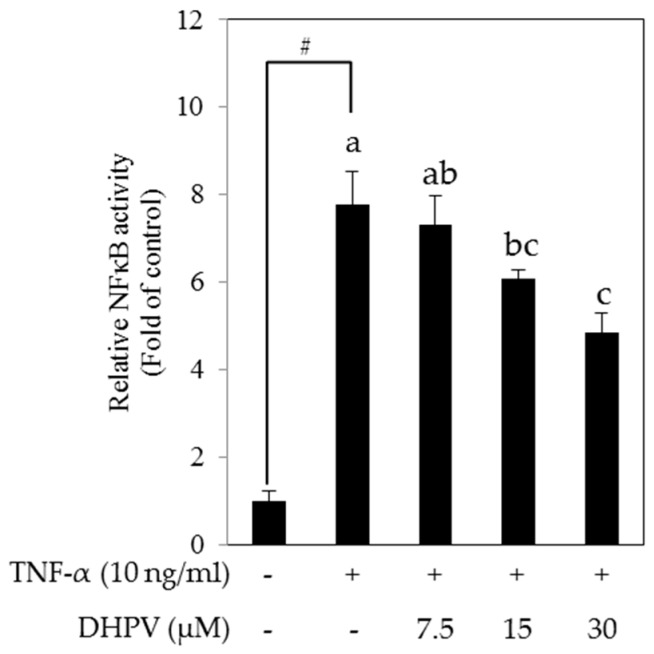
Several metabolomics of polymeric flavan-3-ols have reported that proanthocyanidins are extensively metabolized by gut microbiota. 5-(3',4'-dihydroxyphenyl)-γ-valerolactone (DHPV) has been reported to be the major microbial metabolite of proanthocyanidins. We demonstrated that DHPV has stronger prevention effect on tumor necrosis factor (TNF)-α-stimulated adhesion of THP-1 human monocytic cells to human umbilical vein endothelial cells compared to its potential precursors such as procyanidin A1, A2, B1 and B2, (+)catechin, (-)epicatechin and its microbial metabolites such as 3-(3,4-dihydroxyphenyl)propionic acid and 2-(3,4-dihydroxyphenyl)acetic acid. Mechanism study showed that DHPV prevents THP-1 monocyte-endothelial cell adhesion by downregulating TNF-α-stimulated expressions of the two biomarkers of atherosclerosis such as vascular cell adhesion molecule-1 and monocyte chemotactic protein-1, activation of nuclear factor kappa B transcription and phosphorylation of I kappa-B kinase and IκBα. We suggested that DHPV has higher potentiality in prevention of atherosclerosis among the proanthocyanidin metabolites.
多项关于聚合型黄烷-3-醇的代谢组学研究报告称,原花青素可被肠道微生物群广泛代谢。据报道,5-(3',4'-二羟基苯基)-γ-戊内酯(DHPV)是原花青素的主要微生物代谢产物。我们证明,与原花青素A1、A2、B1和B2、(+)儿茶素、(-)表儿茶素等潜在前体及其微生物代谢产物如3-(3,4-二羟基苯基)丙酸和2-(3,4-二羟基苯基)乙酸相比,DHPV对肿瘤坏死因子(TNF)-α刺激的THP-1人单核细胞与人脐静脉内皮细胞的黏附具有更强的预防作用。机制研究表明,DHPV通过下调TNF-α刺激的两种动脉粥样硬化生物标志物即血管细胞黏附分子-1和单核细胞趋化蛋白-1的表达、核因子κB转录的激活以及IκB激酶和IκBα的磷酸化来预防THP-1单核细胞与内皮细胞的黏附。我们认为,在原花青素代谢产物中,DHPV在预防动脉粥样硬化方面具有更高的潜力。