Annunziata Maria Grazia, Apelt Federico, Carillo Petronia, Krause Ursula, Feil Regina, Mengin Virginie, Lauxmann Martin A, Köhl Karin, Nikoloski Zoran, Stitt Mark, Lunn John E, Raines Christine
Max Planck Institute of Molecular Plant Physiology, Am Mühlenberg 1, 14476 Potsdam-Golm, Germany.
University of Campania "Luigi Vanvitelli", Via Vivaldi 43, 81100 Caserta, Italy.
J Exp Bot. 2017 Jul 20;68(16):4463-4477. doi: 10.1093/jxb/erx220.
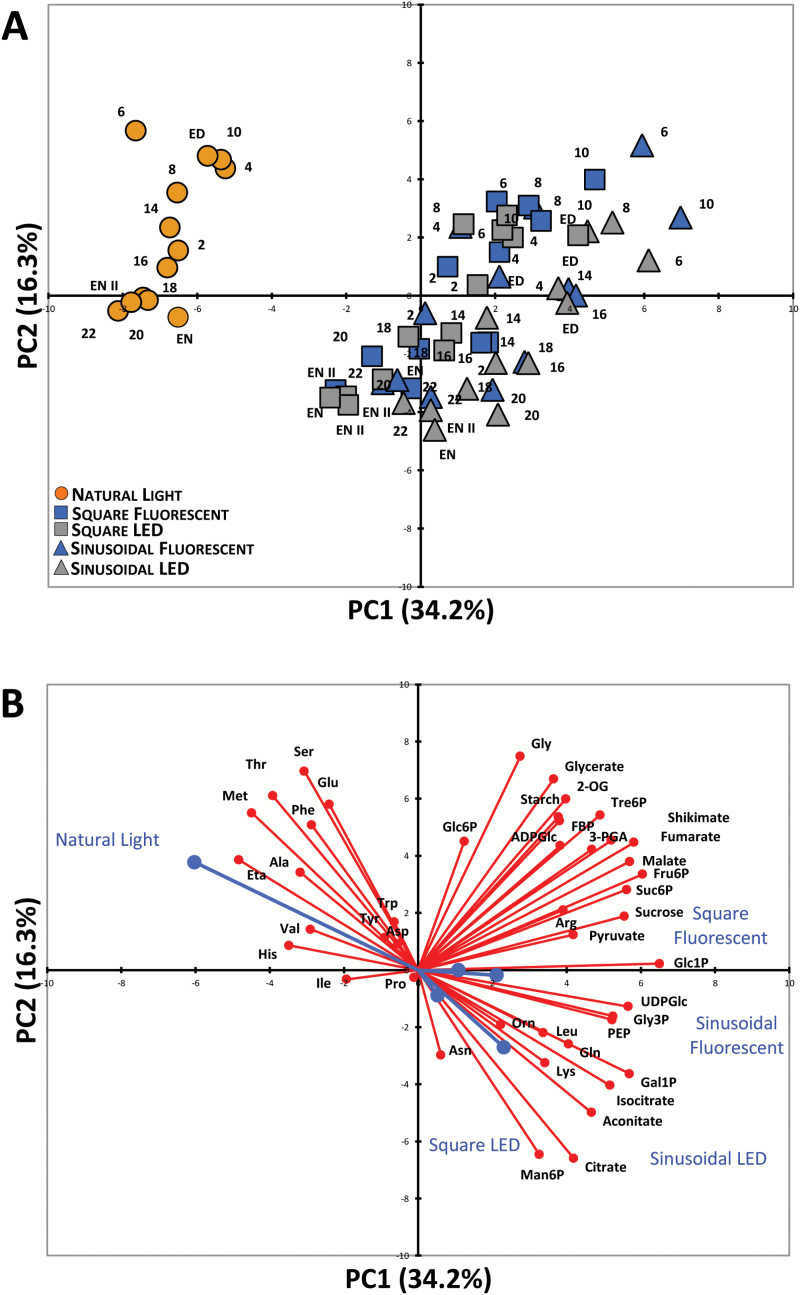
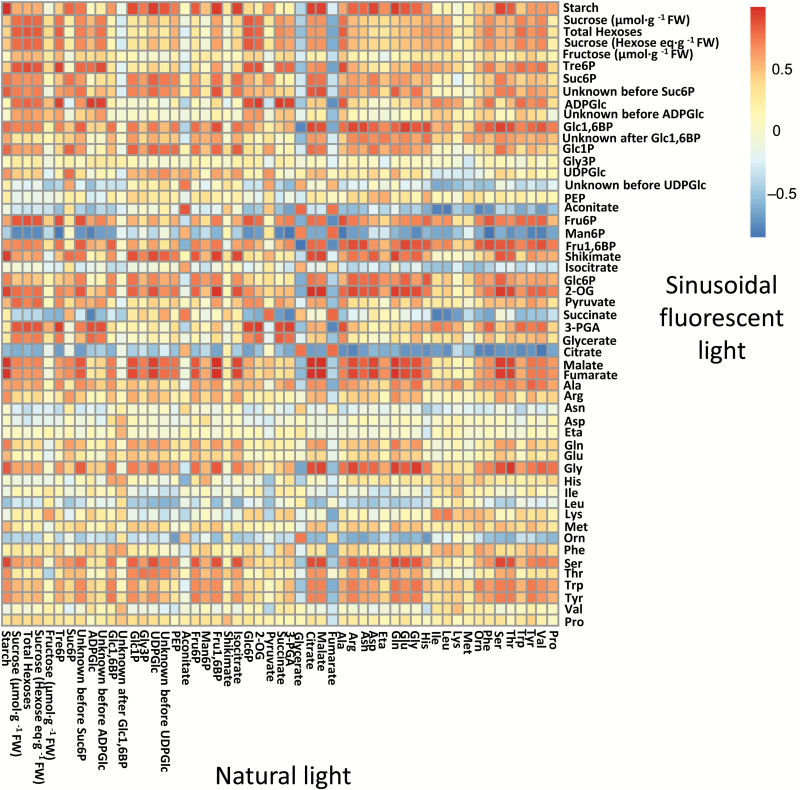
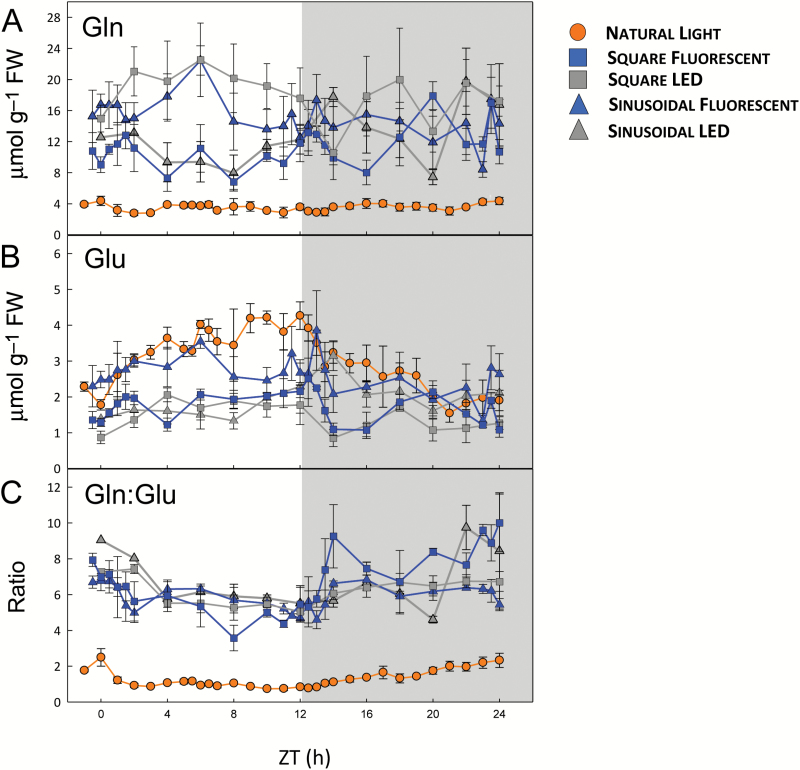
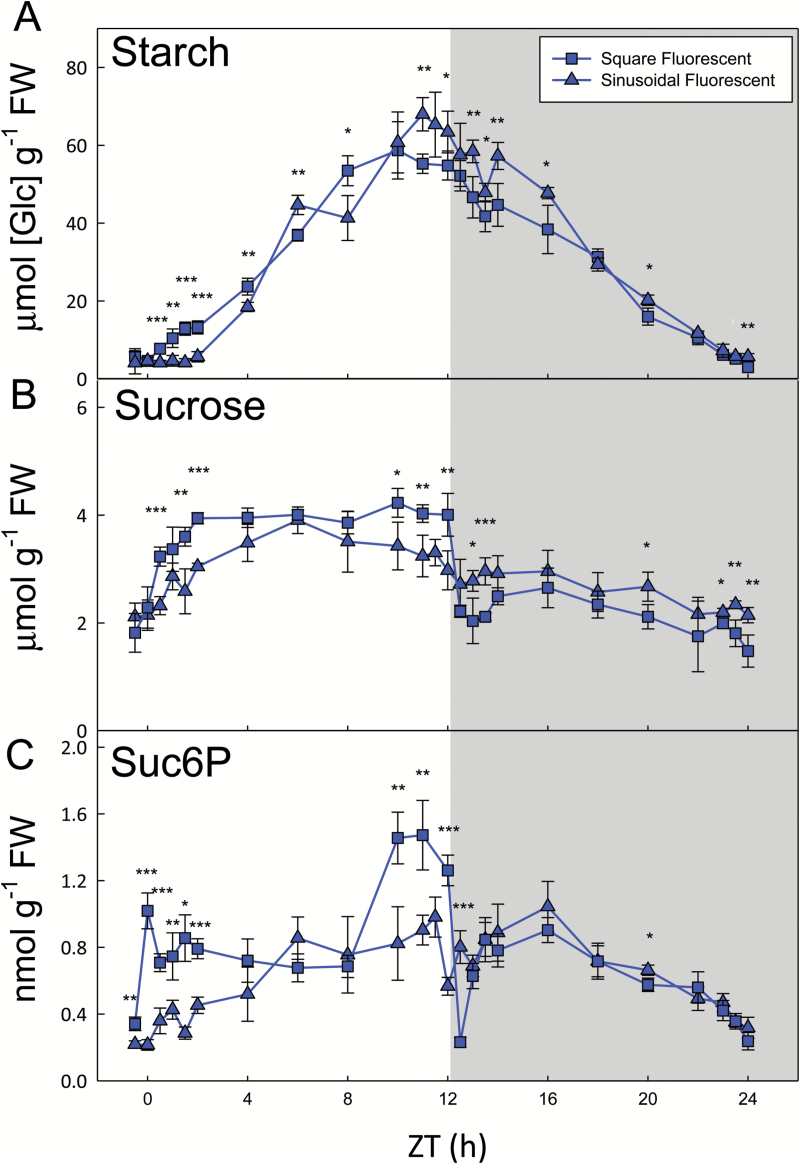
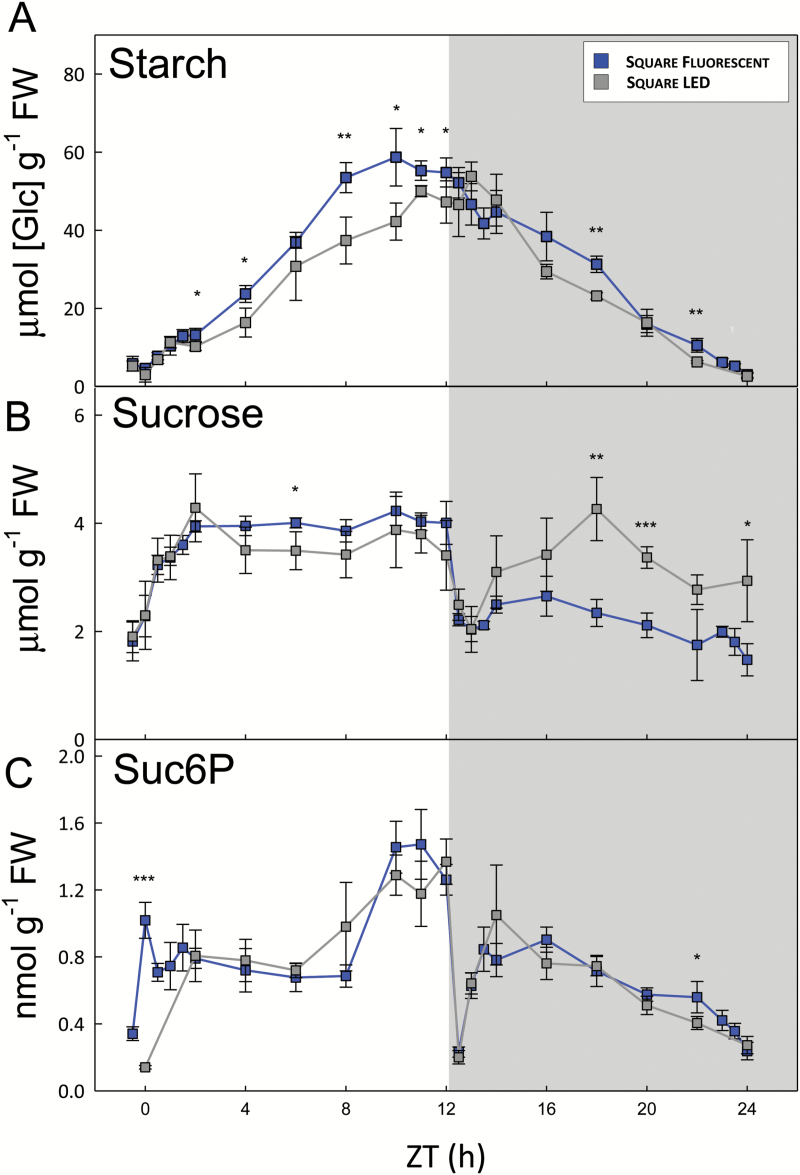
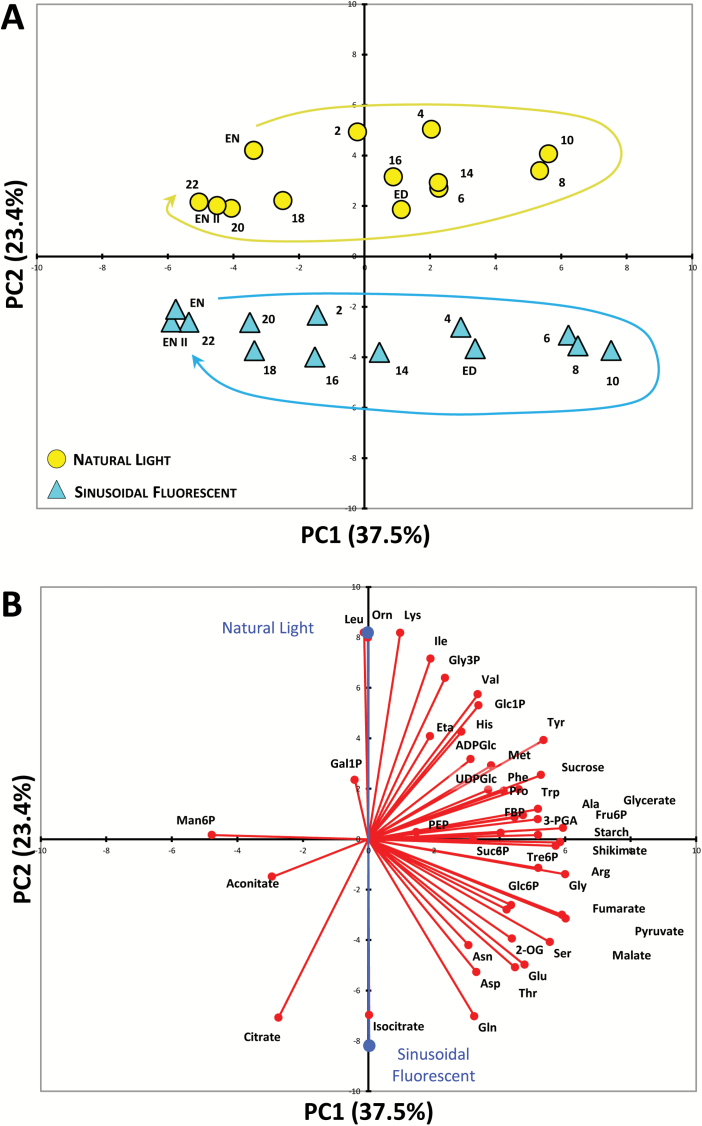
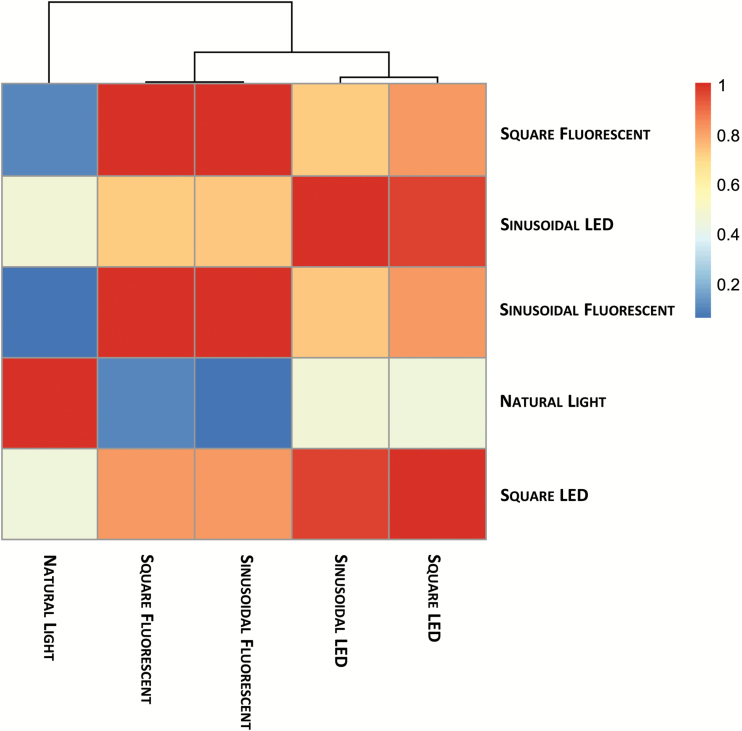
Irradiance from sunlight changes in a sinusoidal manner during the day, with irregular fluctuations due to clouds, and light-dark shifts at dawn and dusk are gradual. Experiments in controlled environments typically expose plants to constant irradiance during the day and abrupt light-dark transitions. To compare the effects on metabolism of sunlight versus artificial light regimes, Arabidopsis thaliana plants were grown in a naturally illuminated greenhouse around the vernal equinox, and in controlled environment chambers with a 12-h photoperiod and either constant or sinusoidal light profiles, using either white fluorescent tubes or light-emitting diodes (LEDs) tuned to a sunlight-like spectrum as the light source. Rosettes were sampled throughout a 24-h diurnal cycle for metabolite analysis. The diurnal metabolite profiles revealed that carbon and nitrogen metabolism differed significantly between sunlight and artificial light conditions. The variability of sunlight within and between days could be a factor underlying these differences. Pairwise comparisons of the artificial light sources (fluorescent versus LED) or the light profiles (constant versus sinusoidal) showed much smaller differences. The data indicate that energy-efficient LED lighting is an acceptable alternative to fluorescent lights, but results obtained from plants grown with either type of artificial lighting might not be representative of natural conditions.
白天,阳光的辐照度呈正弦变化,由于云层影响会出现不规则波动,黎明和黄昏时的明暗转换较为平缓。在可控环境中进行的实验通常使植物在白天接受恒定辐照度,并经历突然的明暗转换。为了比较阳光与人工光照模式对新陈代谢的影响,拟南芥植株分别在春分前后的自然光照温室中生长,以及在可控环境舱中生长,环境舱采用12小时光周期,光照模式为恒定或正弦,使用白色荧光灯管或调至类似阳光光谱的发光二极管(LED)作为光源。在整个24小时昼夜周期内采集莲座叶样本进行代谢物分析。昼夜代谢物谱显示,阳光和人工光照条件下碳和氮的代谢存在显著差异。不同日期之间以及同一天内阳光的变化可能是造成这些差异的一个因素。对人工光源(荧光灯与LED)或光照模式(恒定与正弦)进行两两比较,结果显示差异要小得多。数据表明,高能效的LED照明是荧光灯的可接受替代方案,但使用这两种人工照明方式种植的植物所获得的结果可能无法代表自然条件。