How Martin J, Norman Mark D, Finn Julian, Chung Wen-Sung, Marshall N Justin
Ecology of Vision Group, School of Biological Sciences, University of BristolBristol, United Kingdom.
Marine Sciences, Museum VictoriaMelbourne, VIC, Australia.
Front Physiol. 2017 Jun 19;8:393. doi: 10.3389/fphys.2017.00393. eCollection 2017.
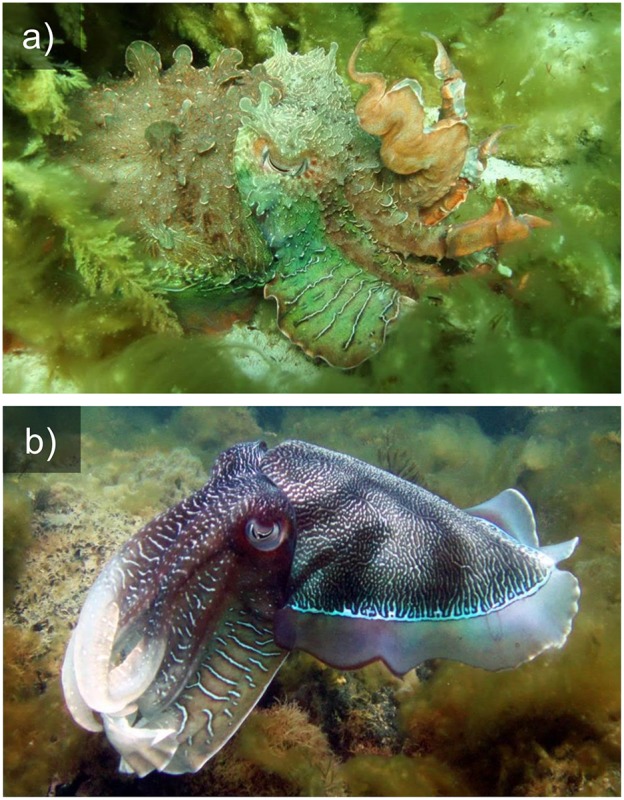
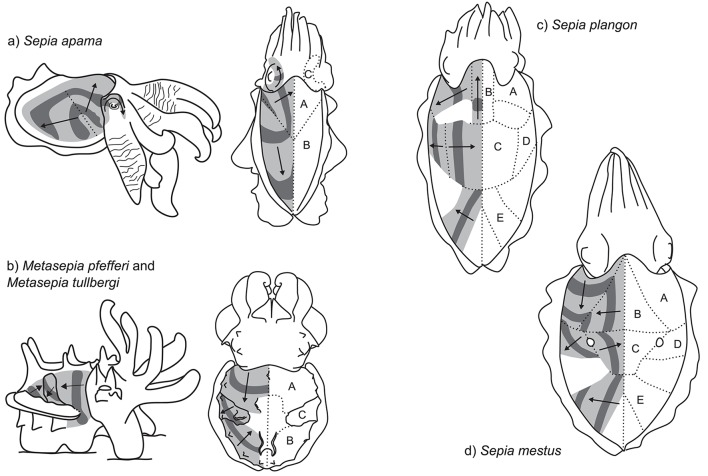
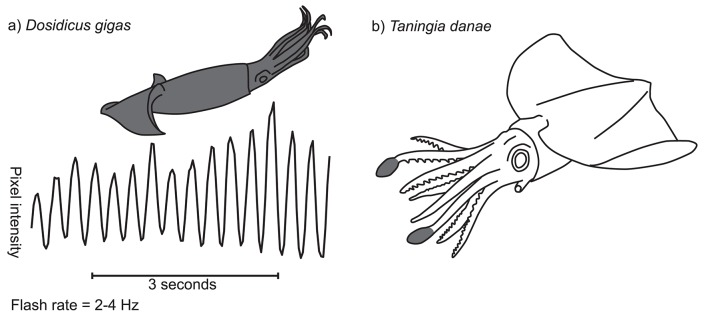
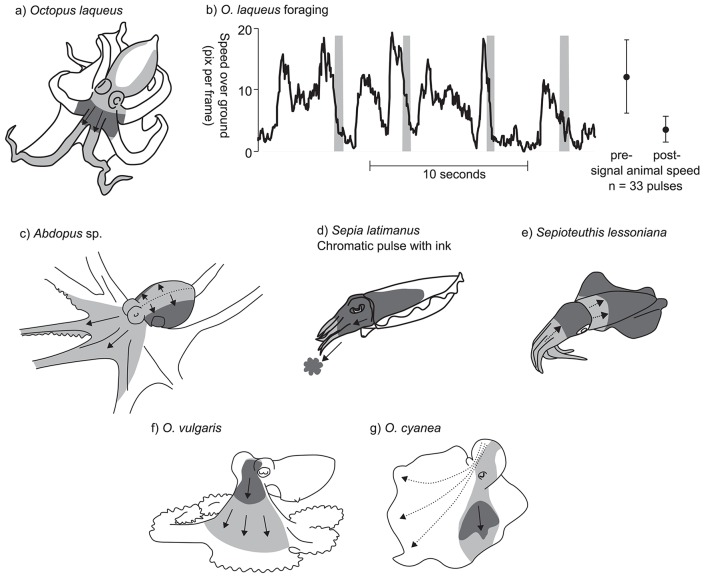
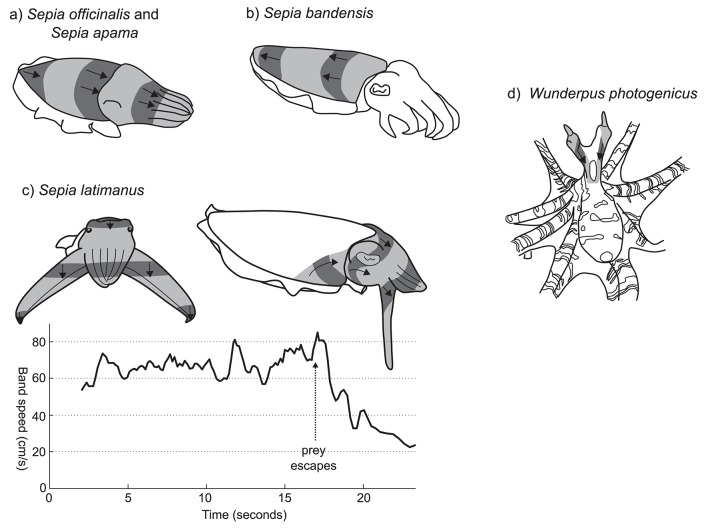
Cephalopods are unrivaled in the natural world in their ability to alter their visual appearance. These mollusks have evolved a complex system of dermal units under neural, hormonal, and muscular control to produce an astonishing variety of body patterns. With parallels to the pixels on a television screen, cephalopod chromatophores can be coordinated to produce dramatic, dynamic, and rhythmic displays, defined collectively here as "dynamic patterns." This study examines the nature, context, and potential functions of dynamic patterns across diverse cephalopod taxa. Examples are presented for 21 species, including 11 previously unreported in the scientific literature. These range from simple flashing or flickering patterns, to highly complex passing wave patterns involving multiple skin fields.
头足类动物改变视觉外观的能力在自然界中无与伦比。这些软体动物进化出了一个在神经、激素和肌肉控制下的复杂真皮单元系统,以产生令人惊叹的各种身体图案。与电视屏幕上的像素类似,头足类动物的色素细胞可以协同工作,产生戏剧性、动态且有节奏的展示,在此统称为“动态图案”。本研究探讨了不同头足类分类群中动态图案的性质、背景和潜在功能。文中给出了21个物种的例子,其中包括11个科学文献中此前未报道过的物种。这些图案从简单的闪烁或闪动图案,到涉及多个皮肤区域的高度复杂的 passing wave 图案。