Dominick P. Purpura Department of Neuroscience, Albert Einstein College of Medicine, Bronx, NY 10461.
eNeuro. 2017 Jun 30;4(3). doi: 10.1523/ENEURO.0144-17.2017. eCollection 2017 May-Jun.
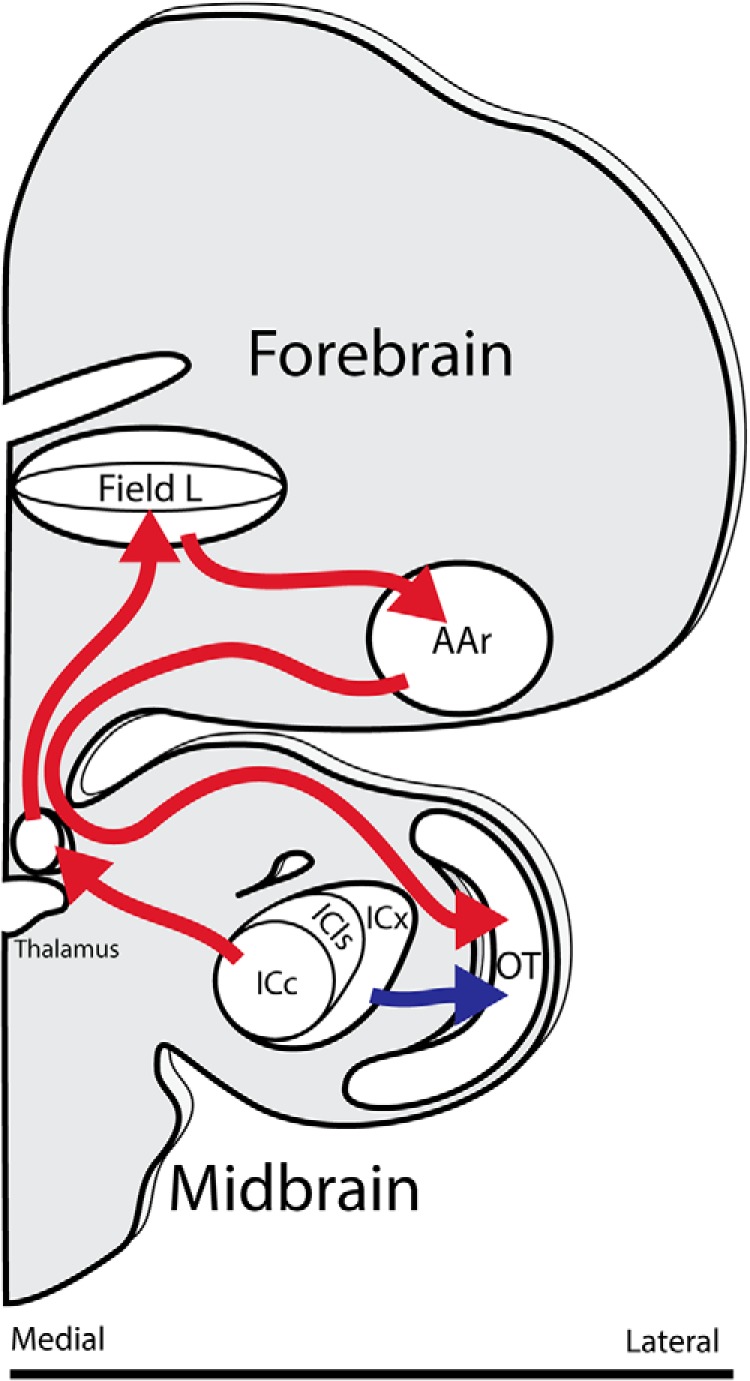
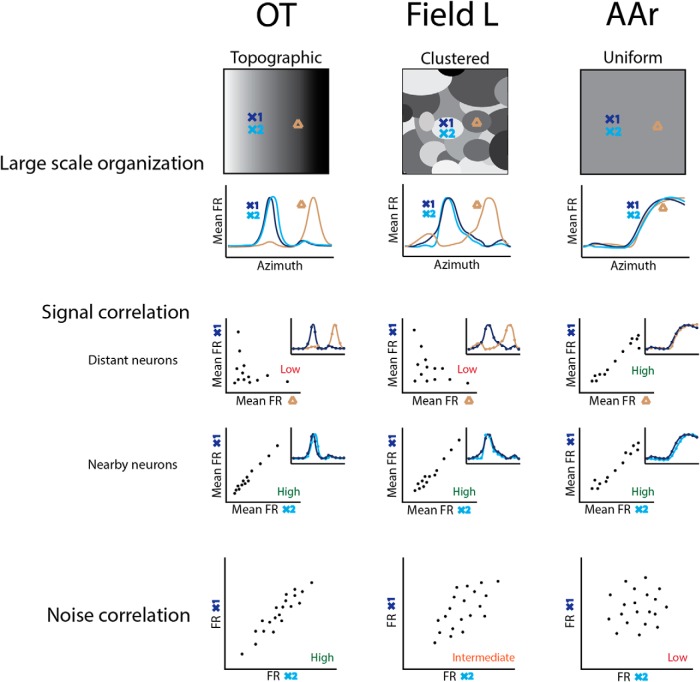
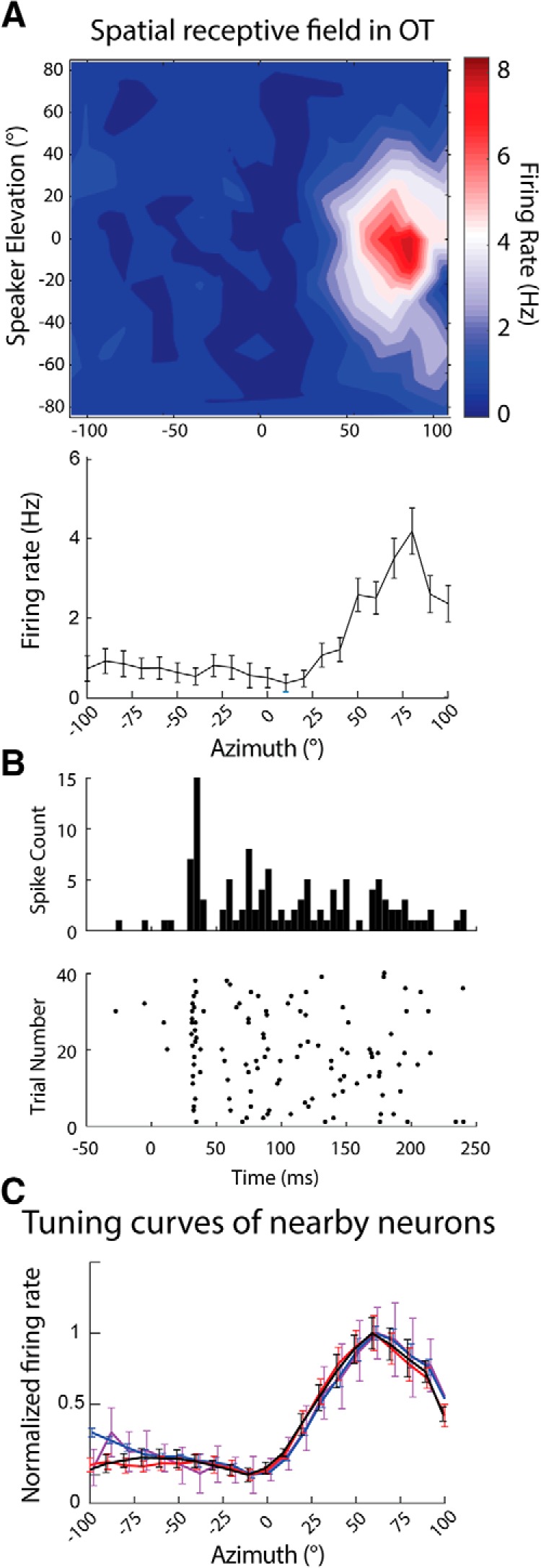
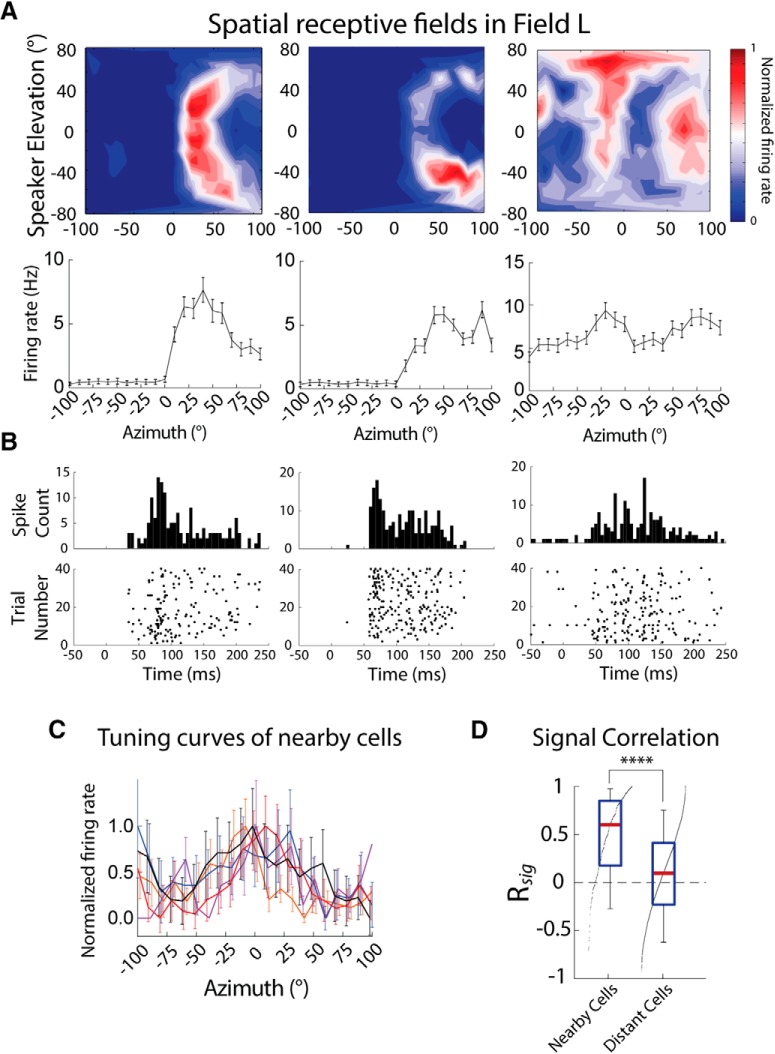
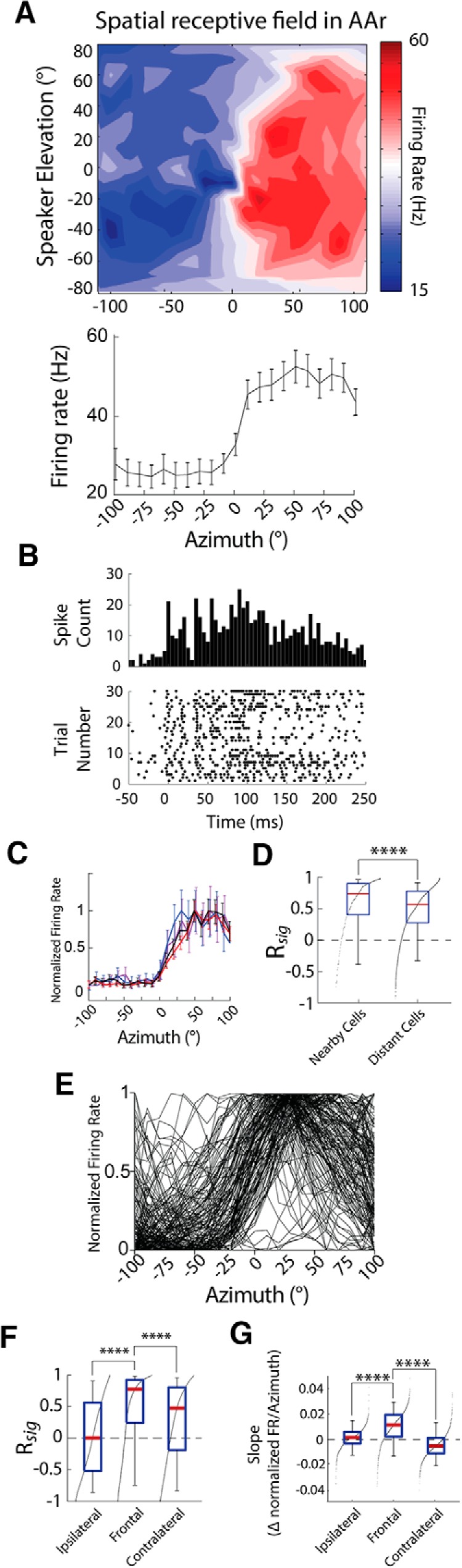
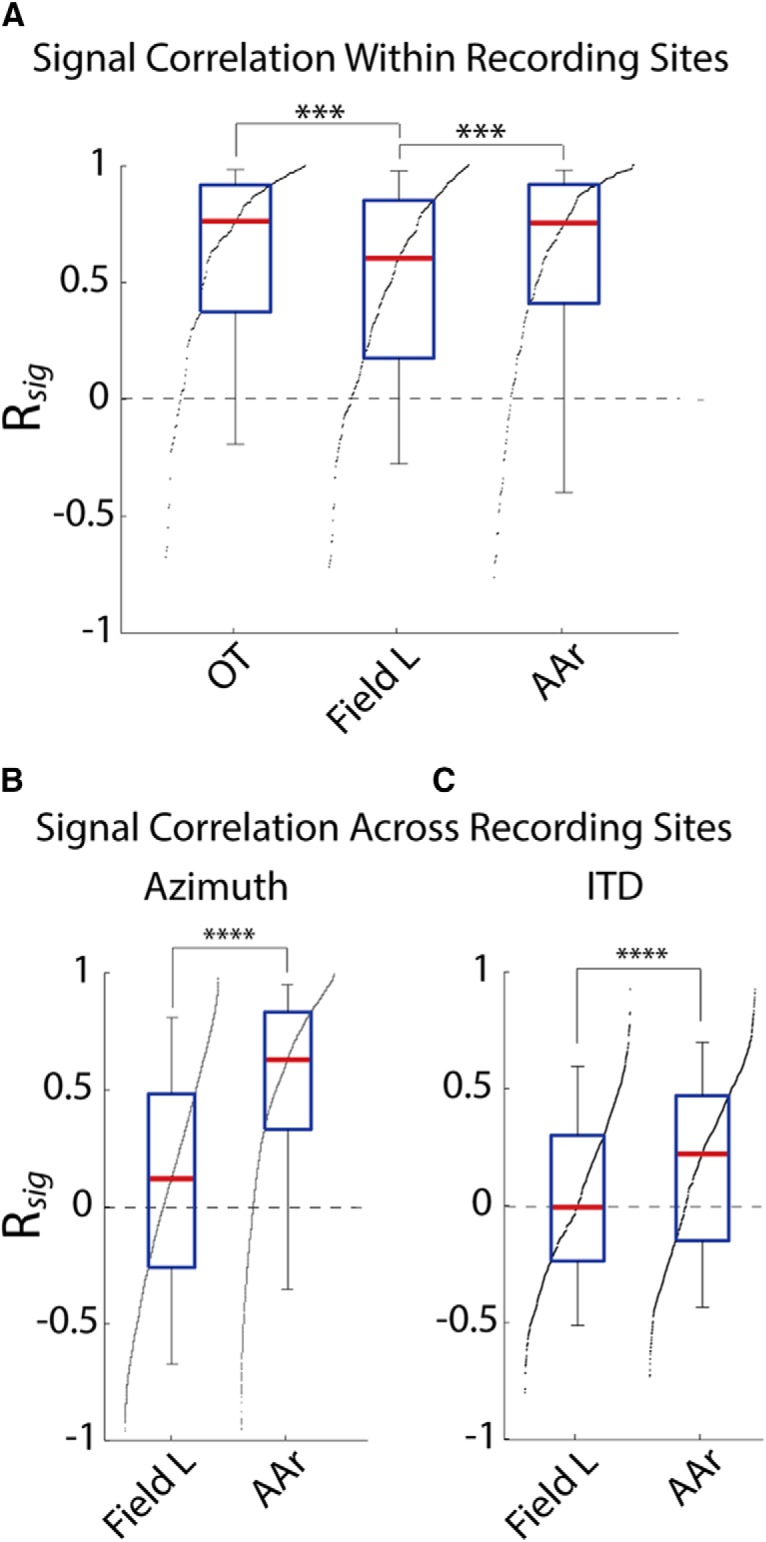
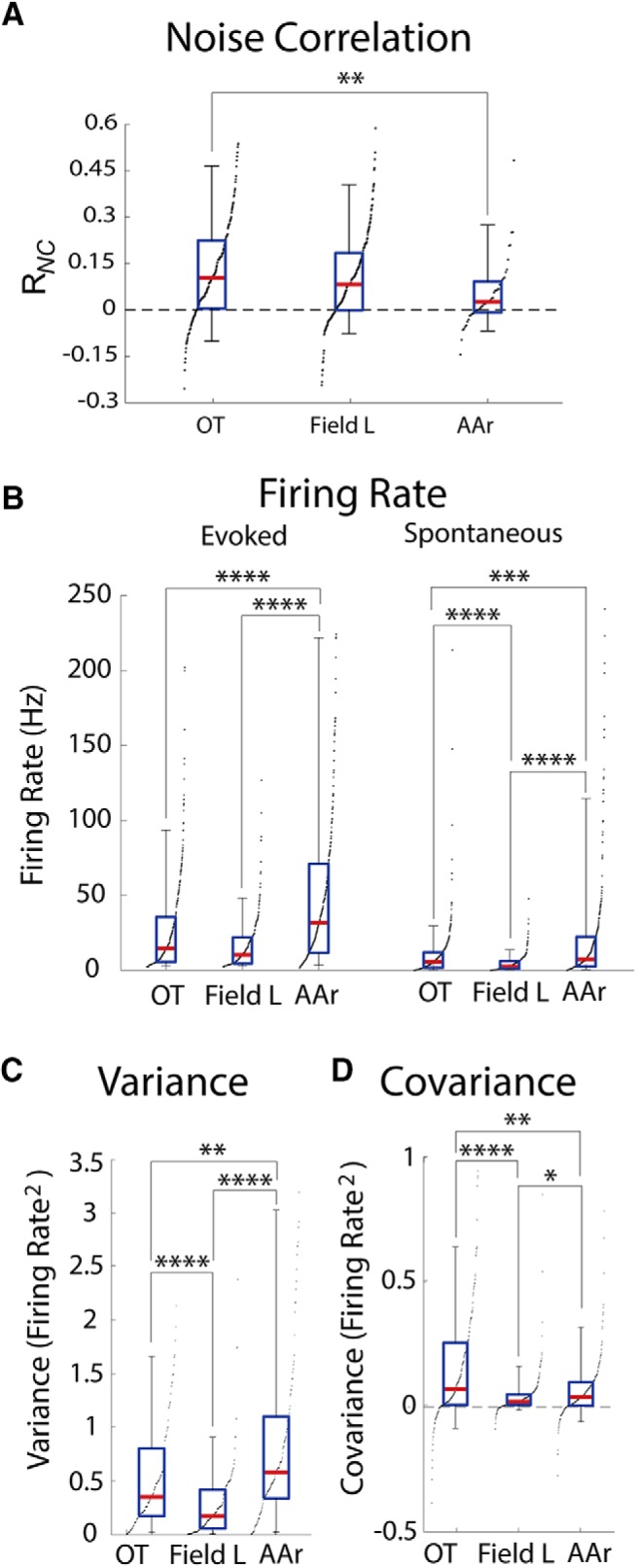
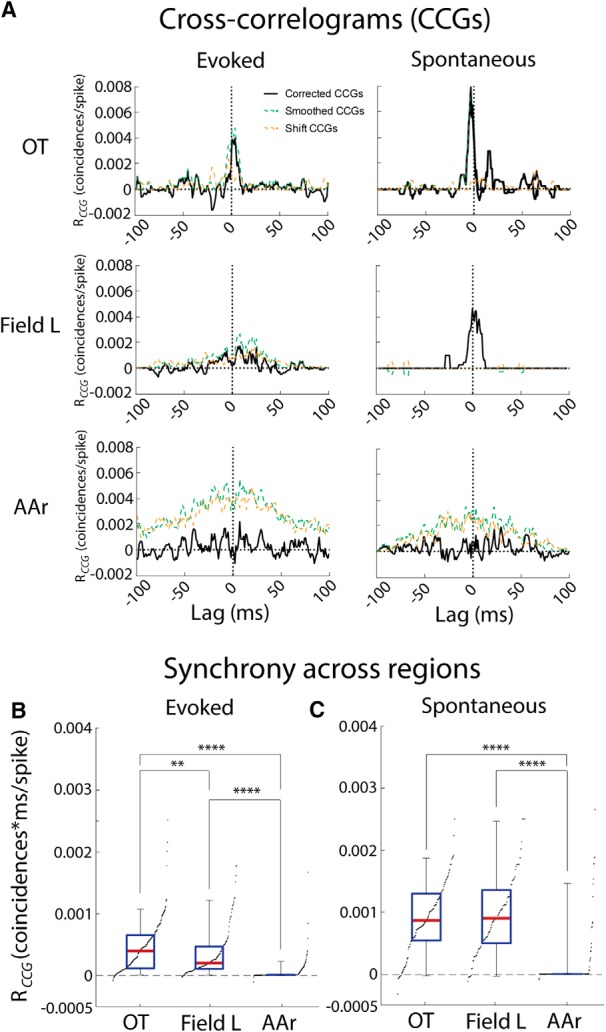
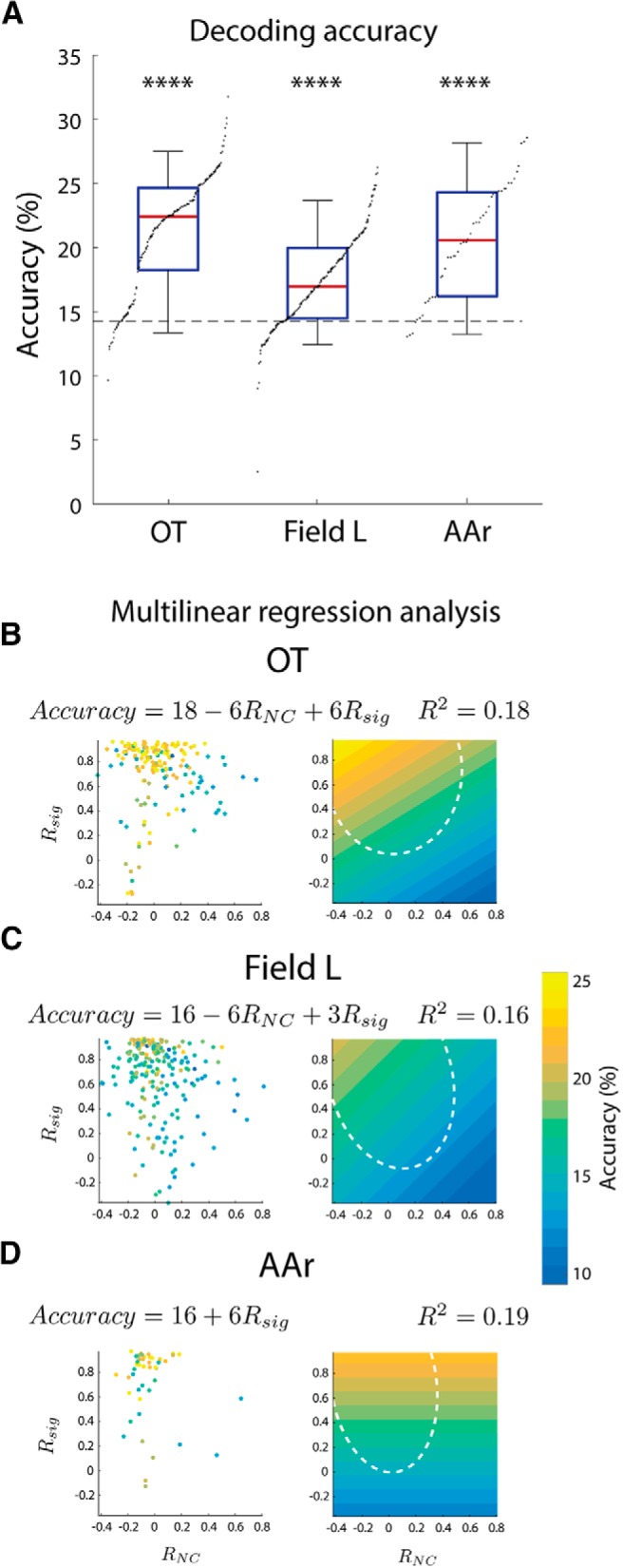
While a topographic map of auditory space exists in the vertebrate midbrain, it is absent in the forebrain. Yet, both brain regions are implicated in sound localization. The heterogeneous spatial tuning of adjacent sites in the forebrain compared to the midbrain reflects different underlying circuitries, which is expected to affect the correlation structure, i.e., signal (similarity of tuning) and noise (trial-by-trial variability) correlations. Recent studies have drawn attention to the impact of response correlations on the information readout from a neural population. We thus analyzed the correlation structure in midbrain and forebrain regions of the barn owl's auditory system. Tetrodes were used to record in the midbrain and two forebrain regions, Field L and the downstream auditory arcopallium (AAr), in anesthetized owls. Nearby neurons in the midbrain showed high signal and noise correlations (R s), consistent with shared inputs. As previously reported, Field L was arranged in random clusters of similarly tuned neurons. Interestingly, AAr neurons displayed homogeneous monotonic azimuth tuning, while response variability of nearby neurons was significantly less correlated than the midbrain. Using a decoding approach, we demonstrate that low R in AAr restricts the potentially detrimental effect it can have on information, assuming a rate code proposed for mammalian sound localization. This study harnesses the power of correlation structure analysis to investigate the coding of auditory space. Our findings demonstrate distinct correlation structures in the auditory midbrain and forebrain, which would be beneficial for a rate-code framework for sound localization in the nontopographic forebrain representation of auditory space.
虽然脊椎动物中脑存在听觉空间的地形图,但在前脑中却不存在。然而,这两个脑区都与声音定位有关。与中脑相比,前脑相邻部位的空间调谐存在异质性,这反映了不同的基础回路,预计会影响相关结构,即信号(调谐相似性)和噪声(试验间变异性)相关。最近的研究引起了人们对反应相关性对神经群体信息读取的影响的关注。因此,我们分析了Barn Owl 听觉系统的中脑和前脑区域的相关结构。在麻醉的猫头鹰中,使用四极管记录中脑和两个前脑区域,即 Field L 和下游的听觉arcopallium(AAr)。中脑的邻近神经元表现出高信号和噪声相关性(R s),这与共享输入一致。如前所述,Field L 排列在具有相似调谐神经元的随机聚类中。有趣的是,AAr 神经元表现出均匀的单调方位调谐,而邻近神经元的反应变异性相关性明显低于中脑。使用解码方法,我们证明了 AAr 中的低 R s 限制了它对信息可能产生的潜在有害影响,假设了用于哺乳动物声音定位的速率编码。本研究利用相关结构分析的力量来研究听觉空间的编码。我们的发现表明,听觉中脑和前脑具有不同的相关结构,这对于在听觉空间的非地形前脑表示中进行声音定位的速率编码框架是有益的。