Sci Data. 2017 Jul 4;4:170077. doi: 10.1038/sdata.2017.77.
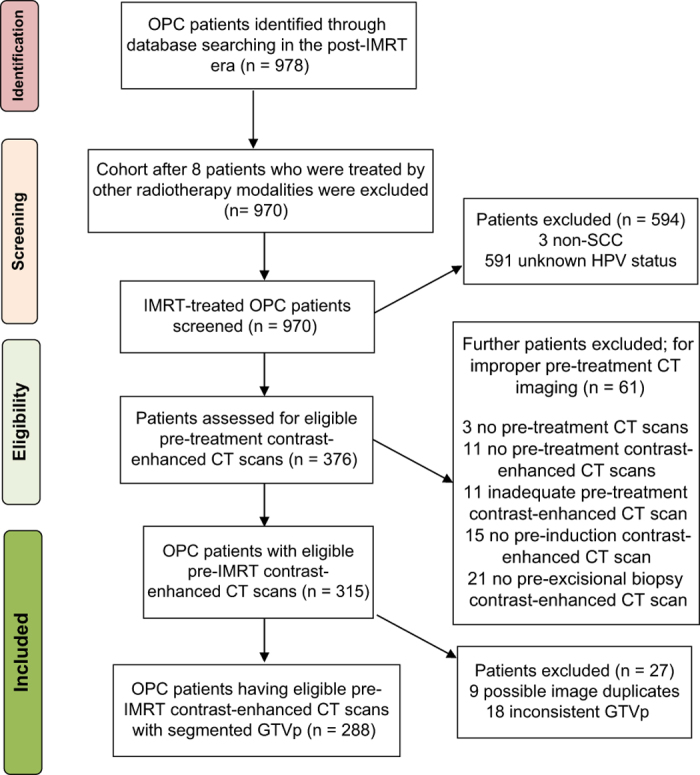
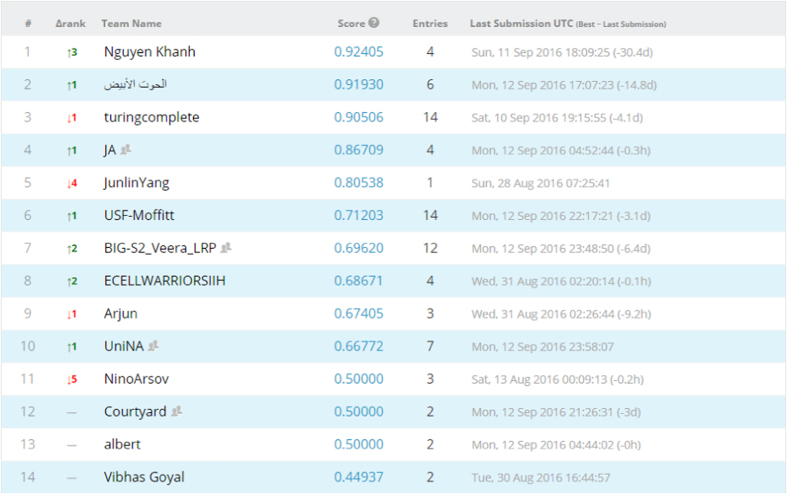
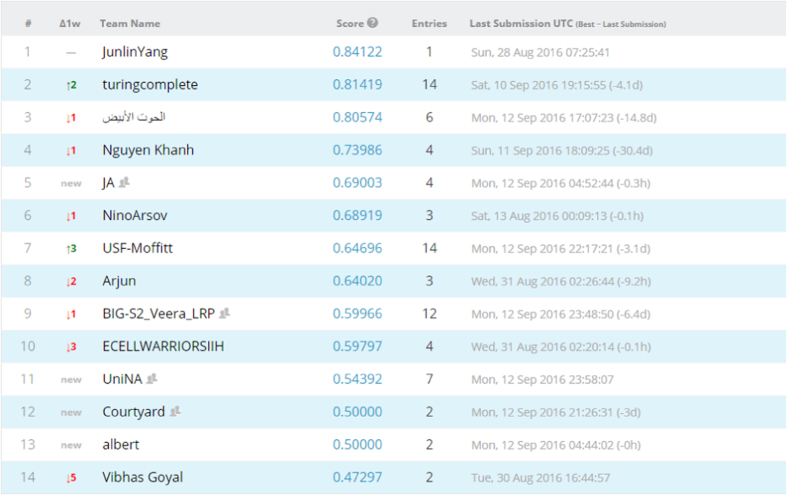
Cancers arising from the oropharynx have become increasingly more studied in the past few years, as they are now epidemic domestically. These tumors are treated with definitive (chemo)radiotherapy, and have local recurrence as a primary mode of clinical failure. Recent data suggest that 'radiomics', or extraction of image texture analysis to generate mineable quantitative data from medical images, can reflect phenotypes for various cancers. Several groups have shown that developed radiomic signatures, in head and neck cancers, can be correlated with survival outcomes. This data descriptor defines a repository for head and neck radiomic challenges, executed via a Kaggle in Class platform, in partnership with the MICCAI society 2016 annual meeting.These public challenges were designed to leverage radiomics and/or machine learning workflows to discriminate HPV phenotype in one challenge (HPV status challenge) and to identify patients who will develop a local recurrence in the primary tumor volume in the second one (Local recurrence prediction challenge) in a segmented, clinically curated anonymized oropharyngeal cancer (OPC) data set.
近年来,口咽癌的研究越来越多,因为它们在国内已经流行起来。这些肿瘤采用根治性(放化疗)治疗,局部复发是主要的临床失败模式。最近的数据表明,“放射组学”,即从医学图像中提取图像纹理分析以生成可挖掘的定量数据,可以反映各种癌症的表型。一些研究小组已经表明,在头颈部癌症中开发的放射组学特征可以与生存结果相关联。本数据描述符定义了一个头颈部放射组学挑战的存储库,通过 Kaggle in Class 平台执行,与 MICCAI 学会 2016 年年会合作。这些公开挑战旨在利用放射组学和/或机器学习工作流程,在一个挑战(HPV 表型挑战)中区分 HPV 表型,并在第二个挑战(局部复发预测挑战)中识别出在分割的、经过临床审核的匿名口咽癌(OPC)数据集中原发性肿瘤体积中发生局部复发的患者。