CIAS, Section of Microbiology, Department of Medical Sciences, University of Ferrara, via L. Borsari 46, 44121, Ferrara, Italy.
Microb Biotechnol. 2017 Sep;10(5):1079-1083. doi: 10.1111/1751-7915.12755. Epub 2017 Jul 5.
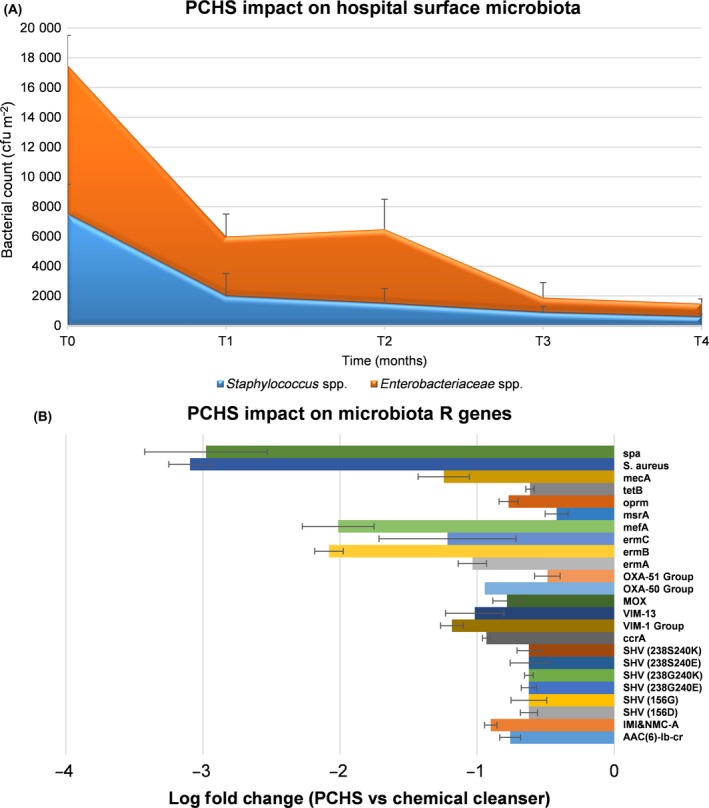
Healthcare-associated infections (HAIs) are a global concern, affecting all western hospitals, and profoundly impairing the clinical outcome of up to 15% of all hospitalized patients. Persistent microbial contamination of hospital surfaces has been suggested to contribute to HAIs onset, representing a reservoir for hospital pathogens. On the other hand, conventional chemicals-based sanitation do not prevent recontamination and can select drug-resistant strains, resulting in over 50% of surfaces persistently contaminated. There is therefore an urgent need for alternative sustainable and effective ways to control pathogens contamination and transmission. Toward this goal, we recently reported that a probiotic-based sanitation can stably decrease surface pathogens up to 90% more than conventional disinfectants, without selecting resistant species. This paper summarizes some of our most significant results.
医疗机构相关性感染(HAIs)是一个全球性的问题,影响着所有西方国家的医院,并使多达 15%的住院患者的临床预后受到严重影响。医院表面持续存在的微生物污染被认为是导致 HAIs 发生的原因之一,是医院病原体的储存库。另一方面,传统的基于化学物质的清洁方法并不能防止再次污染,并且会选择出耐药菌株,导致超过 50%的表面持续受到污染。因此,迫切需要寻找替代的可持续和有效的方法来控制病原体的污染和传播。为此,我们最近报道了一种基于益生菌的清洁方法可以比传统消毒剂更稳定地减少表面病原体,降幅高达 90%,且不会选择出耐药物种。本文总结了我们的一些最重要的研究结果。