Lee Nami, Lee Jeong Dong, Lee Hyun Young, Kang Dae Ryong, Ye Young Min
Department of Allergy and Clinical Immunology, Ajou University School of Medicine and Graduate School of Medicine, Suwon, Korea.
Office of Biostatistics, Ajou University School of Medicine and Graduate School of Medicine, Suwon, Korea.
Allergy Asthma Immunol Res. 2017 Sep;9(5):438-445. doi: 10.4168/aair.2017.9.5.438.
There are very few epidemiological studies on chronic urticaria (CU). We aimed to investigate the prevalence of CU and to depict demographics and medication patterns for the disease in a nationwide population-based study.
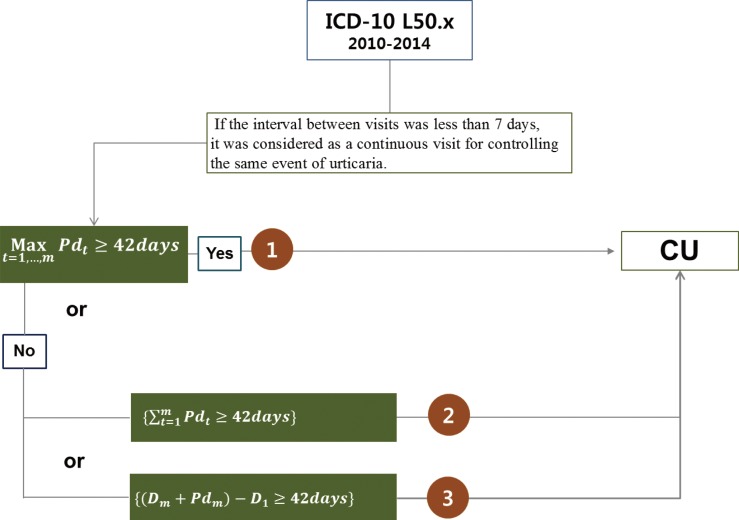
Data on urticaria (L50 of the International Classification of Diseases, 10th revision) from 2010 to 2014 were obtained from the Korean Health Insurance Review and Assessment Service. Algorithms designed to evaluate prescription drug claims for antihistamines were applied to identify CU.
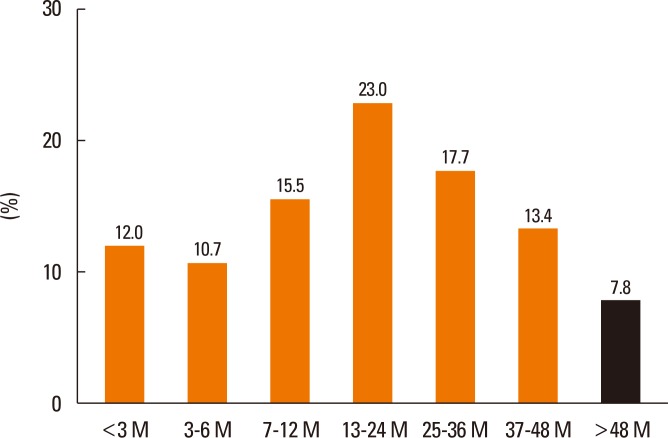
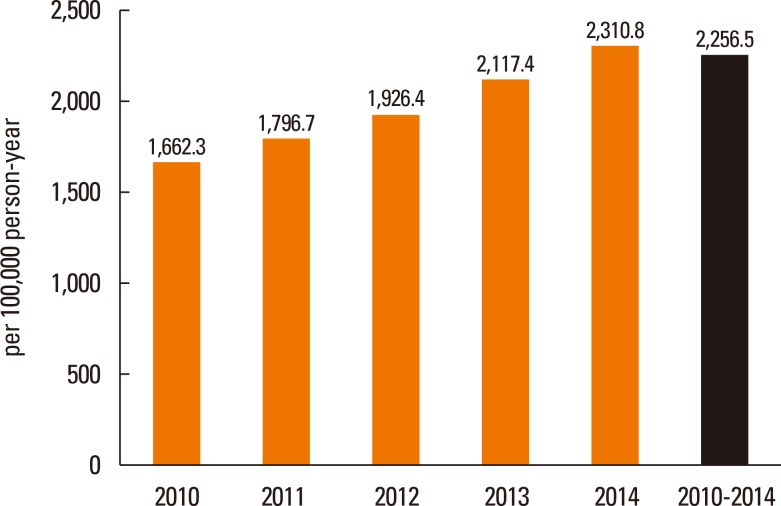
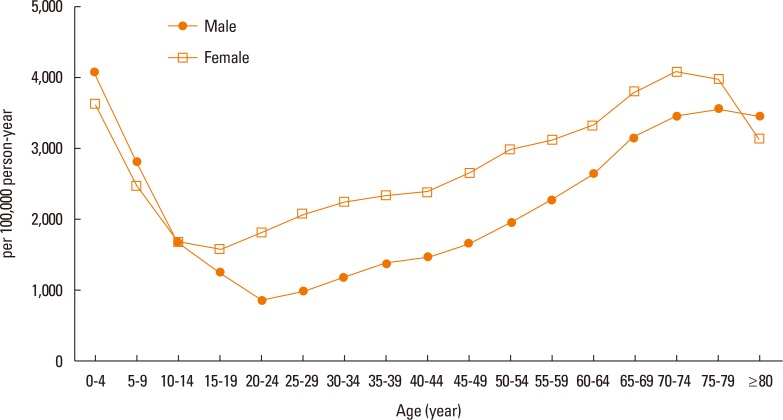
The crude prevalence of CU was 2,256.5 per 100,000 person-years and tended to increase every year. The age-standardized prevalence of CU was significantly higher in females than in males (2,466.8 vs 1,819.2 per 100,000 person-years, P<0.001). Age-specific prevalence was highest for older adults over the age of 65 years and lowest for ages 10-29 years. The median duration of CU was 591 days, and symptoms lasted for at least 1 year in 61.9% of patients. Gastrointestinal disease was the most common comorbidity in adults, whereas allergic rhinitis and common cold were more prevalent in children with CU. Around a third of CU patients were taking antihistamine treatment alone, and 70% were treated with both antihistamines and systemic corticosteroids. Cyclosporine was prescribed for 0.02% of CU patients.
The present study outlines recent longitudinal epidemiological data on the prevalence of CU in Korea. In light of limitations on the use of claims data, including no specific disease code for CU and a possible discordance between drug claims and the presence of urticaria symptoms, further investigations are necessary to describe the exact epidemiologic profile of CU patients.
关于慢性荨麻疹(CU)的流行病学研究非常少。我们旨在通过一项基于全国人群的研究调查CU的患病率,并描述该疾病的人口统计学特征和用药模式。
从韩国健康保险审查与评估服务机构获取2010年至2014年荨麻疹(国际疾病分类第10版,L50)的数据。应用旨在评估抗组胺药处方药索赔的算法来识别CU。
CU的粗患病率为每10万人年2256.5例,且呈逐年上升趋势。CU的年龄标准化患病率女性显著高于男性(每10万人年分别为2466.8例和1819.2例,P<0.001)。65岁以上老年人的年龄别患病率最高,10 - 29岁年龄组最低。CU的中位病程为591天,61.9%的患者症状持续至少1年。胃肠道疾病是成年人中最常见的合并症,而过敏性鼻炎和普通感冒在患CU的儿童中更为普遍。约三分之一的CU患者仅接受抗组胺药治疗,70%的患者同时接受抗组胺药和全身性糖皮质激素治疗。0.02%的CU患者使用了环孢素。
本研究概述了韩国CU患病率的近期纵向流行病学数据。鉴于索赔数据使用的局限性,包括没有CU的特定疾病编码以及药物索赔与荨麻疹症状存在之间可能存在不一致,需要进一步调查以描述CU患者的确切流行病学特征。